The right side wins both the departure and arrival sequences, showing Dubai's skyline and coast on climb-out and Mount Fuji with Tokyo Bay on descent, giving it the stronger bookend views for this long eastbound flight.
Flight Path
The great-circle route crosses the Zagros Mountains and central Iran, the Karakum and Kyzylkum deserts of Turkmenistan and Uzbekistan, the Tian Shan and Altai mountain ranges near the Kazakhstan-China-Mongolia border, and the open steppe and dunes of the Gobi Desert before descending toward the Sea of Japan and Honshu.
Great circle distance and headings ›.jpg?width=600)
_and_the_Dubai_skyline_(25781049892).jpg?width=600)
.jpg?width=600)
.jpg?width=600)


Phase by phase
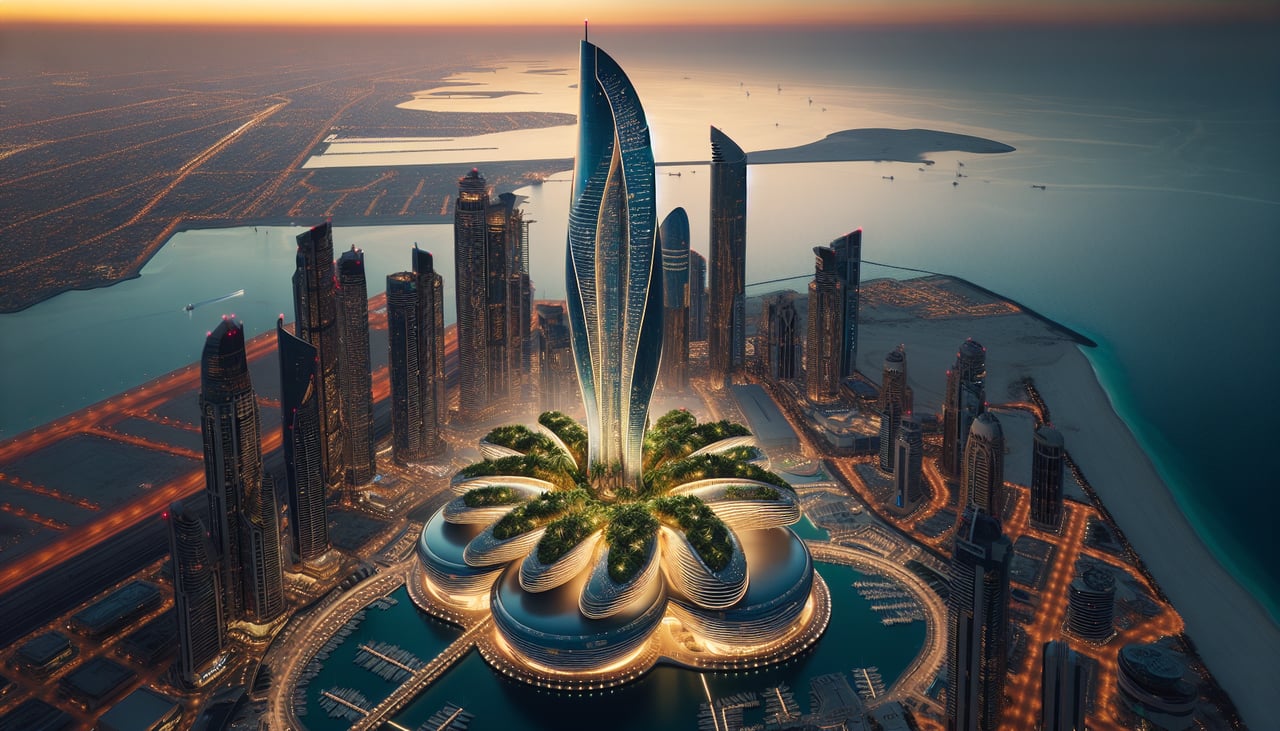
Takeoff from DXB
RIGHTDubai typically departs on the northwest-facing runway during prevailing Shamal winds, requiring a right-hand turn onto the northeast course toward Iran. That turn banks the aircraft toward the right side, opening up a clear view of the Gulf coastline, Palm Jumeirah, and the downtown skyline before the city gives way to desert.
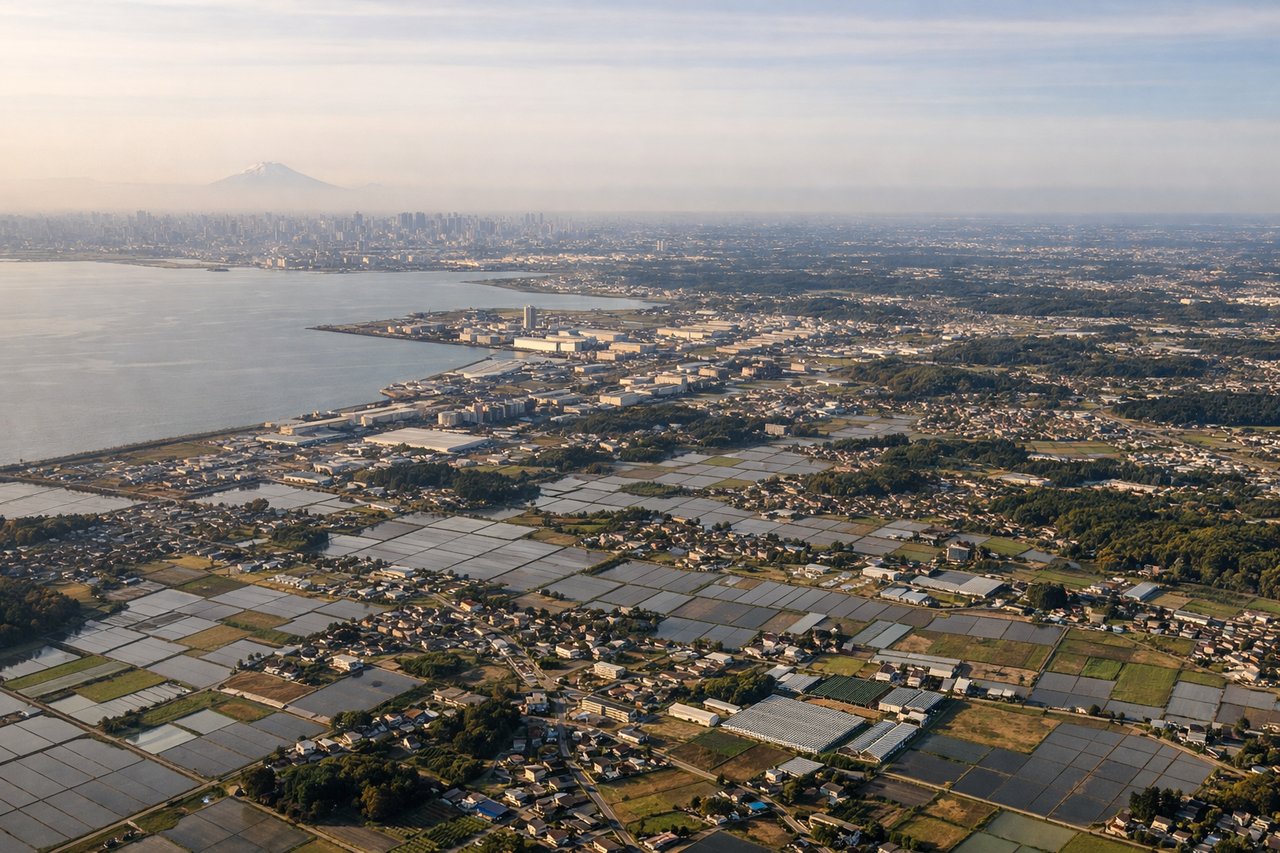
Landing at NRT
RIGHTArriving from the west after crossing Honshu, the descent path into Narita commonly passes north and west of Tokyo before turning south for final approach, putting Mount Fuji and Tokyo Bay off the right side of the aircraft. Passengers get a distant but clear look at Fuji's cone and the bay's shoreline before the plane settles over Chiba's flat farmland into Narita.
Landmarks on this routeAll landmarks →
Will your flight be in sunlight?
See exactly which side of the plane gets sun and shade at your departure time.
About This Route
Which side of the plane should I sit on flying from Dubai International (DXB) to New Tokyo International (NRT)?
Sit on the Right side of the plane for the best views on flights from Dubai to Tokyo. The right side wins both the departure and arrival sequences, showing Dubai's skyline and coast on climb-out and Mount Fuji with Tokyo Bay on descent, giving it the stronger bookend views for this long eastbound flight.
What can I see during takeoff from Dubai International in Dubai?
During takeoff from Dubai International (DXB), sit on the Right side for the best views. Dubai typically departs on the northwest-facing runway during prevailing Shamal winds, requiring a right-hand turn onto the northeast course toward Iran. That turn banks the aircraft toward the right side, opening up a clear view of the Gulf coastline, Palm Jumeirah, and the downtown skyline before the city gives way to desert. Notable sights include: Palm Jumeirah, Burj Al Arab, Downtown Dubai skyline (Burj Khalifa), Persian Gulf coastline.
What can I see when landing at New Tokyo International in Tokyo?
When landing at New Tokyo International (NRT), sit on the Right side for the best views. Arriving from the west after crossing Honshu, the descent path into Narita commonly passes north and west of Tokyo before turning south for final approach, putting Mount Fuji and Tokyo Bay off the right side of the aircraft. Passengers get a distant but clear look at Fuji's cone and the bay's shoreline before the plane settles over Chiba's flat farmland into Narita. Notable sights include: Mount Fuji, Tokyo Bay, Chiba Prefecture farmland and rivers, Boso Peninsula coastline.
How long is the flight from Dubai to Tokyo?
The flight from Dubai International (DXB) to New Tokyo International (NRT) takes 10h 45m.
What does the Dubai to Tokyo flight path pass over?
The great-circle route crosses the Zagros Mountains and central Iran, the Karakum and Kyzylkum deserts of Turkmenistan and Uzbekistan, the Tian Shan and Altai mountain ranges near the Kazakhstan-China-Mongolia border, and the open steppe and dunes of the Gobi Desert before descending toward the Sea of Japan and Honshu.