The Perth arrival on the right side delivers a sustained, genuinely spectacular view of the Swan River, the city, and the Indian Ocean on descent. The Dubai departure left-side views are good but brief. For the full flight, right side also catches the Omani coastline and parts of the Malabar Coast of India during the early southbound routing.
Flight Path
After departing Dubai the route tracks southeast over the Gulf of Oman and the Omani coast, then crosses the Arabian Sea. The flight passes well west of the Indian subcontinent before crossing the equator over the open Indian Ocean. The Maldives atolls may be visible as tiny white rings in the deep blue ocean if routing passes nearby. The vast majority of the flight is over open Indian Ocean with no land features. The Australian coastline appears near the end as the red-brown Western Australian interior gives way to the Swan Coastal Plain approaching Perth.
Great circle distance and headings ›.jpg?width=600)
_and_the_Dubai_skyline_(25781049892).jpg?width=600)
Phase by phase
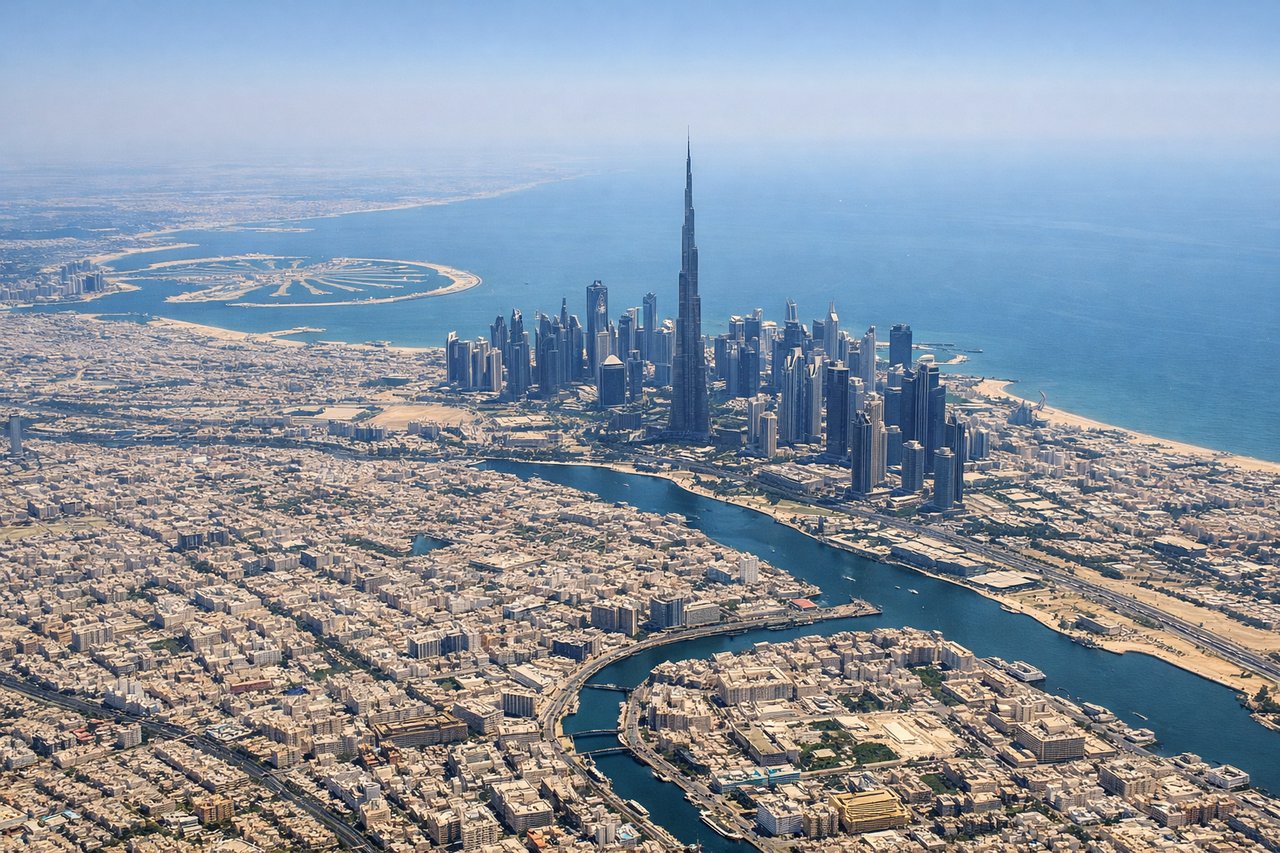
Takeoff from DXB
LEFTDubai International's primary departure runway 30L/30R sends aircraft northwest before turning south, placing the left side over the Dubai Creek, Deira district, and the older city core. The right side faces the desert interior with little of interest.
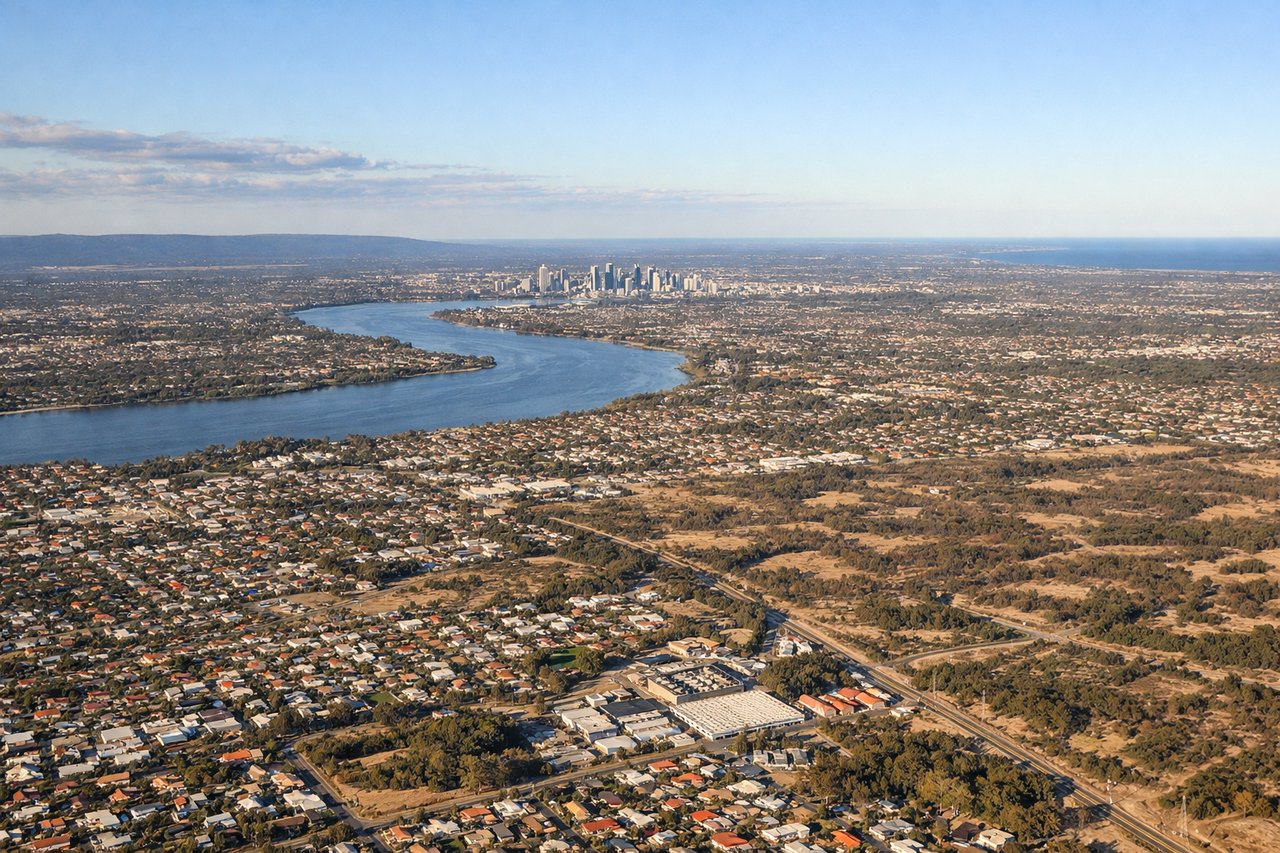
Landing at PER
RIGHTPerth Airport's primary arrival runway 21 brings aircraft in from the north-northeast, placing the right side over the Swan River, the Perth CBD skyline, and Fremantle as the aircraft descends over the coastal plain. The left side faces the flat Darling Scarp and bush interior.
Landmarks on this routeAll landmarks →
Will your flight be in sunlight?
See exactly which side of the plane gets sun and shade at your departure time.
About This Route
Which side of the plane should I sit on flying from Dubai International (DXB) to Perth International (PER)?
Sit on the Right side of the plane for the best views on flights from Dubai to Perth. The Perth arrival on the right side delivers a sustained, genuinely spectacular view of the Swan River, the city, and the Indian Ocean on descent. The Dubai departure left-side views are good but brief. For the full flight, right side also catches the Omani coastline and parts of the Malabar Coast of India during the early southbound routing.
What can I see during takeoff from Dubai International in Dubai?
During takeoff from Dubai International (DXB), sit on the Left side for the best views. Dubai International's primary departure runway 30L/30R sends aircraft northwest before turning south, placing the left side over the Dubai Creek, Deira district, and the older city core. The right side faces the desert interior with little of interest. Notable sights include: Dubai Creek and Deira waterfront, Palm Jumeirah (visible in distance to southwest), Dubai city grid and downtown towers, Sharjah urban sprawl to the northeast.
What can I see when landing at Perth International in Perth?
When landing at Perth International (PER), sit on the Right side for the best views. Perth Airport's primary arrival runway 21 brings aircraft in from the north-northeast, placing the right side over the Swan River, the Perth CBD skyline, and Fremantle as the aircraft descends over the coastal plain. The left side faces the flat Darling Scarp and bush interior. Notable sights include: Swan River and its broad estuary, Perth CBD skyline, Fremantle Harbour and Indian Ocean coastline, Rottnest Island visible offshore to the southwest.
How long is the flight from Dubai to Perth?
The flight from Dubai International (DXB) to Perth International (PER) takes Approximately 10 to 11 hours.
What does the Dubai to Perth flight path pass over?
After departing Dubai the route tracks southeast over the Gulf of Oman and the Omani coast, then crosses the Arabian Sea. The flight passes well west of the Indian subcontinent before crossing the equator over the open Indian Ocean. The Maldives atolls may be visible as tiny white rings in the deep blue ocean if routing passes nearby. The vast majority of the flight is over open Indian Ocean with no land features. The Australian coastline appears near the end as the red-brown Western Australian interior gives way to the Swan Coastal Plain approaching Perth.