While left seats offer excellent takeoff views of the Tanana River and Alaska Range, right seats provide superior landing views of Cook Inlet and the Chugach Mountains, which are more dramatic and visually distinctive. The landing experience outweighs the takeoff advantage.
Flight Path
The flight path crosses the Alaska Range foothills and transitions from the Tanana Valley to the Cook Inlet basin. Notable midpoint features include the Susitna River valley (visible as a major drainage system), the transition zone between interior boreal forest and coastal terrain, and views of the Alaska Range's southern slopes. In clear conditions, peaks like Denali (20,310 ft) may be visible far to the northwest on the horizon during the midpoint of the flight, though it is not directly on the route.
Great circle distance and headings ›

Phase by phase
Takeoff from FAI
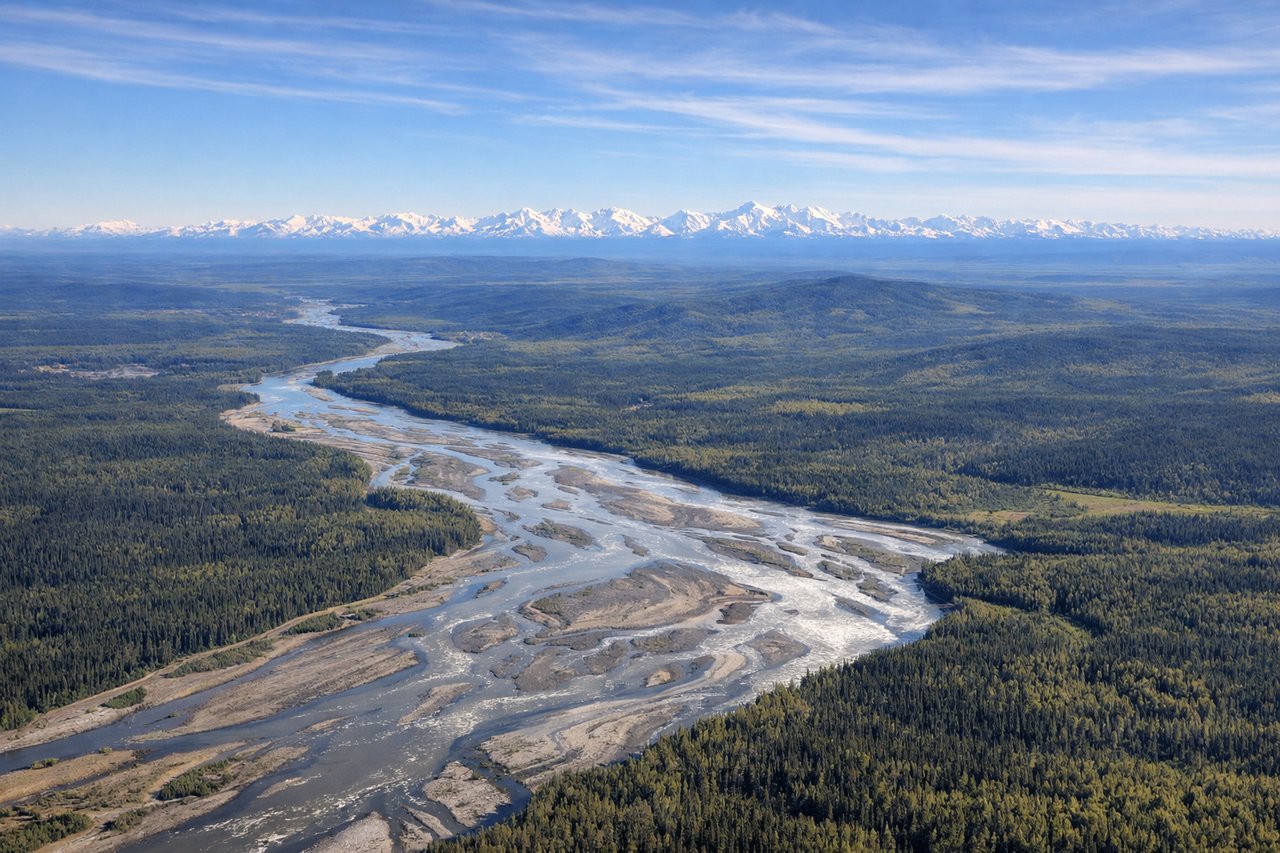
LEFTFAI typically departs runway 01 or 19. Runway 01 (northbound) departures favor left seats for views of the Tanana River valley and the Alaska Range to the south. Left seats capture the river's meandering course and distant peaks as the aircraft climbs.
Landing at ANC
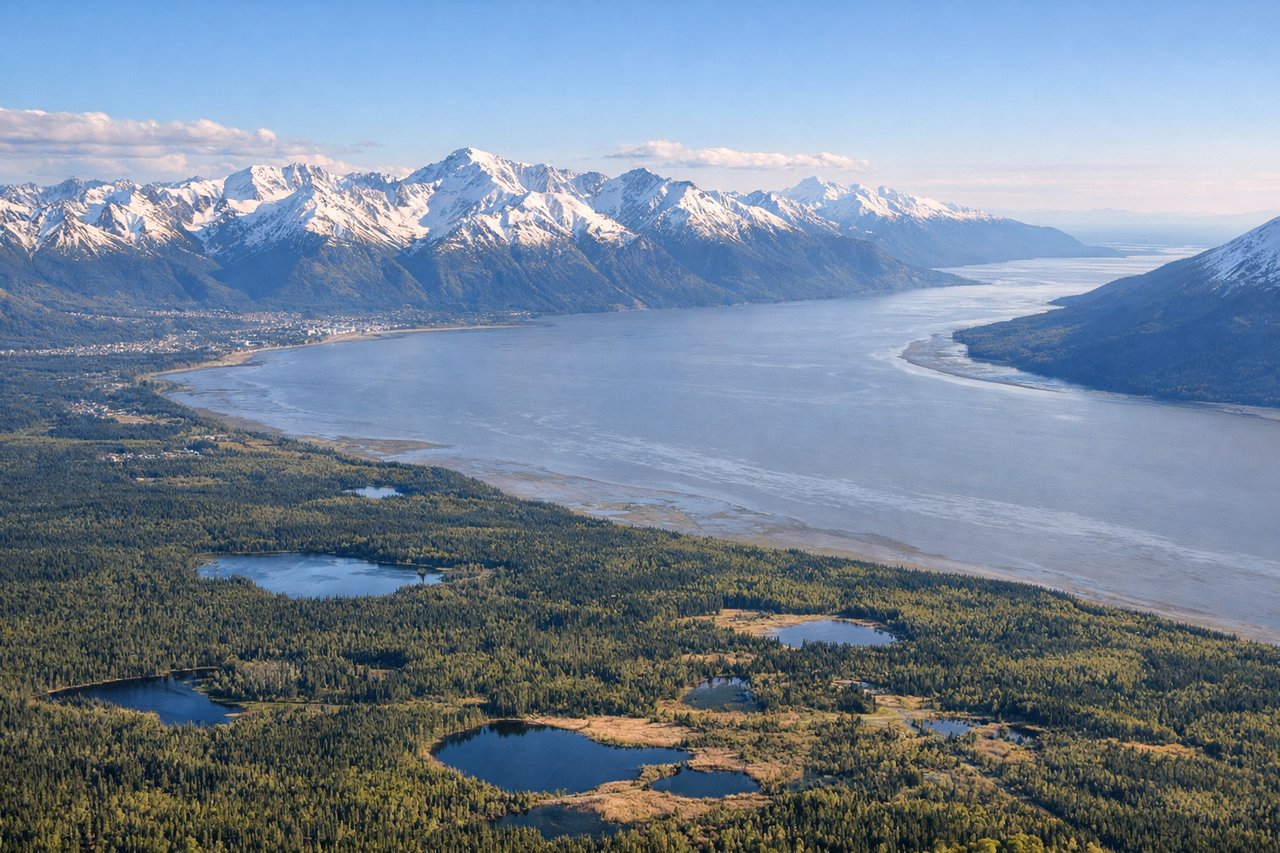
RIGHTANC typically lands runway 01L/01R or 07L/07R depending on wind. Runway 01 approaches favor right seats for views of Cook Inlet, the Chugach Mountains, and Turnagain Arm. Right seats provide clear sightlines to the water and mountain backdrop as the aircraft descends toward the airport.
Landmarks on this routeAll landmarks →
Will your flight be in sunlight?
See exactly which side of the plane gets sun and shade at your departure time.
About This Route
Which side of the plane should I sit on flying from Fairbanks International (FAI) to Ted Stevens Anchorage International (ANC)?
Sit on the Right side of the plane for the best views on flights from Fairbanks to Anchorage. While left seats offer excellent takeoff views of the Tanana River and Alaska Range, right seats provide superior landing views of Cook Inlet and the Chugach Mountains, which are more dramatic and visually distinctive. The landing experience outweighs the takeoff advantage.
What can I see during takeoff from Fairbanks International in Fairbanks?
During takeoff from Fairbanks International (FAI), sit on the Left side for the best views. FAI typically departs runway 01 or 19. Runway 01 (northbound) departures favor left seats for views of the Tanana River valley and the Alaska Range to the south. Left seats capture the river's meandering course and distant peaks as the aircraft climbs. Notable sights include: Tanana River (immediate foreground), Alaska Range (southern horizon), Fairbanks city grid (below and behind), Chena River confluence (visible in valley).
What can I see when landing at Ted Stevens Anchorage International in Anchorage?
When landing at Ted Stevens Anchorage International (ANC), sit on the Right side for the best views. ANC typically lands runway 01L/01R or 07L/07R depending on wind. Runway 01 approaches favor right seats for views of Cook Inlet, the Chugach Mountains, and Turnagain Arm. Right seats provide clear sightlines to the water and mountain backdrop as the aircraft descends toward the airport. Notable sights include: Cook Inlet (left side, receding to horizon), Chugach Mountains (right and background), Turnagain Arm (visible as water body), Anchorage city (below during final approach).
How long is the flight from Fairbanks to Anchorage?
The flight from Fairbanks International (FAI) to Ted Stevens Anchorage International (ANC) takes Approximately 1 hour to 1 hour 15 minutes.
What does the Fairbanks to Anchorage flight path pass over?
The flight path crosses the Alaska Range foothills and transitions from the Tanana Valley to the Cook Inlet basin. Notable midpoint features include the Susitna River valley (visible as a major drainage system), the transition zone between interior boreal forest and coastal terrain, and views of the Alaska Range's southern slopes. In clear conditions, peaks like Denali (20,310 ft) may be visible far to the northwest on the horizon during the midpoint of the flight, though it is not directly on the route.