The landing view of the Great Barrier Reef and Coral Sea is geographically more dramatic and visually distinctive than the takeoff view. The reef's turquoise lagoons and color contrast with deep ocean are reliably visible during approach, whereas Rome's landmarks are more dispersed and subtle from altitude.
Flight Path
The flight path crosses the Mediterranean, Middle East (Persian Gulf or Red Sea region depending on routing), Indian Ocean, and approaches Australia from the northeast. Notable overflights include the Suez Canal region, Arabian Peninsula, and the vast Indian Ocean. The approach to Australia brings views of the Queensland coast, with the Great Barrier Reef becoming visible 100–150 miles northeast of Cairns during descent.
Great circle distance and headings ›


.jpg?width=600)

Phase by phase
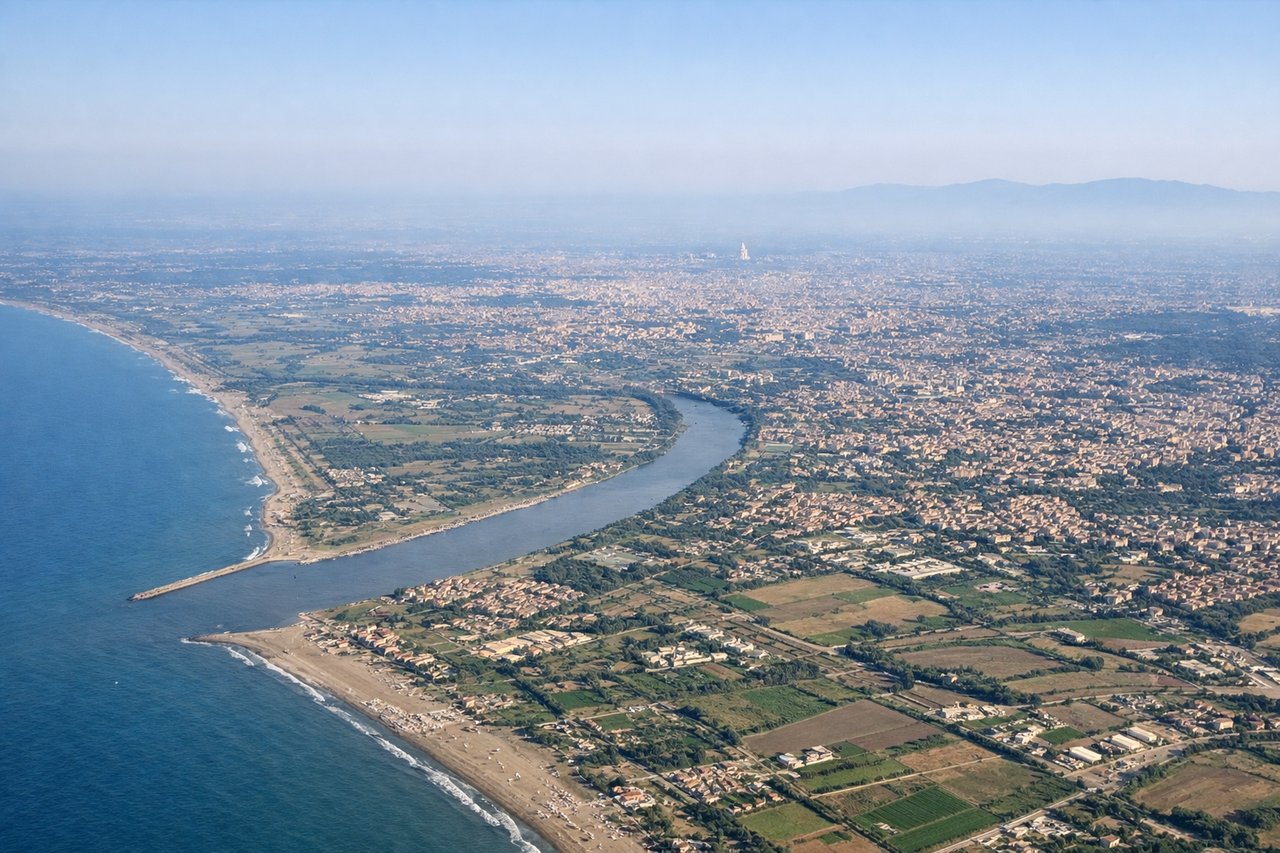
Takeoff from FCO
LEFTFCO typically departs runway 16L/34R (magnetic heading ~160°/340°). Left seats face northwest during initial climb, directly toward the Apennine Mountains and the Tiber River valley. Right seats see the flat Pontine Marshes and Mediterranean, which lack distinctive relief.
Landing at CNS
RIGHTApproach to CNS typically uses runway 15/33 (magnetic heading ~150°/330°). Right seats during descent face southeast toward the Coral Sea and the Great Barrier Reef. The reef's turquoise lagoons and darker ocean create striking color contrast visible from 8,000–15,000 feet. Left seats see inland rainforest and mountains with less visual distinction.
Landmarks on this routeAll landmarks →
Will your flight be in sunlight?
See exactly which side of the plane gets sun and shade at your departure time.
About This Route
Which side of the plane should I sit on flying from Fiumicino (FCO) to Cairns International (CNS)?
Sit on the Right side of the plane for the best views on flights from Rome to Cairns. The landing view of the Great Barrier Reef and Coral Sea is geographically more dramatic and visually distinctive than the takeoff view. The reef's turquoise lagoons and color contrast with deep ocean are reliably visible during approach, whereas Rome's landmarks are more dispersed and subtle from altitude.
What can I see during takeoff from Fiumicino in Rome?
During takeoff from Fiumicino (FCO), sit on the Left side for the best views. FCO typically departs runway 16L/34R (magnetic heading ~160°/340°). Left seats face northwest during initial climb, directly toward the Apennine Mountains and the Tiber River valley. Right seats see the flat Pontine Marshes and Mediterranean, which lack distinctive relief. Notable sights include: Apennine Mountains (distant ridge to the northwest), Tiber River (winding through the Roman Campagna below), Vatican City and Rome's urban sprawl (visible as a dense cluster), Castelli Romani hills (volcanic peaks south of Rome).
What can I see when landing at Cairns International in Cairns?
When landing at Cairns International (CNS), sit on the Right side for the best views. Approach to CNS typically uses runway 15/33 (magnetic heading ~150°/330°). Right seats during descent face southeast toward the Coral Sea and the Great Barrier Reef. The reef's turquoise lagoons and darker ocean create striking color contrast visible from 8,000–15,000 feet. Left seats see inland rainforest and mountains with less visual distinction. Notable sights include: Great Barrier Reef (turquoise lagoon patterns and darker outer reef), Coral Sea (deep blue water), Trinity Bay (the coastal inlet where Cairns sits), Barron River valley (green rainforest cutting inland from the coast).
How long is the flight from Rome to Cairns?
The flight from Fiumicino (FCO) to Cairns International (CNS) takes Approximately 17–18 hours (including one or two stops, typically in Southeast Asia or the Middle East).
What does the Rome to Cairns flight path pass over?
The flight path crosses the Mediterranean, Middle East (Persian Gulf or Red Sea region depending on routing), Indian Ocean, and approaches Australia from the northeast. Notable overflights include the Suez Canal region, Arabian Peninsula, and the vast Indian Ocean. The approach to Australia brings views of the Queensland coast, with the Great Barrier Reef becoming visible 100–150 miles northeast of Cairns during descent.