Right-side seats capture the most dramatic geography: the Tyrrhenian Sea and Italian coastline during departure, then the Atlantic crossing offers consistent ocean views. On arrival into Mexico City, while left seats show the volcanoes, right seats still provide excellent views of the valley's northern rim and the approach path over the city's western suburbs.
Flown FCO to MEX? Did we get it right?
Flight Path
Rome to Mexico City is 6,352 miles (10,223 km), a flight of about 11 hours.
The flight path crosses the Atlantic Ocean for roughly 7-8 hours with no significant landmarks visible—only open ocean and cloud formations. The Azores archipelago (9°W, 38°N) may be visible as small islands if the aircraft passes within 100 miles and cloud cover permits, though this depends on the precise routing. After crossing into the western Atlantic, the Yucatan Peninsula becomes visible during the final 2-3 hours of descent, appearing as a flat, low-lying landmass with shallow turquoise waters (Yucatan Channel and Caribbean shallows) before the aircraft reaches the Mexican highlands.
Great circle distance and headings ›


Phase by phase
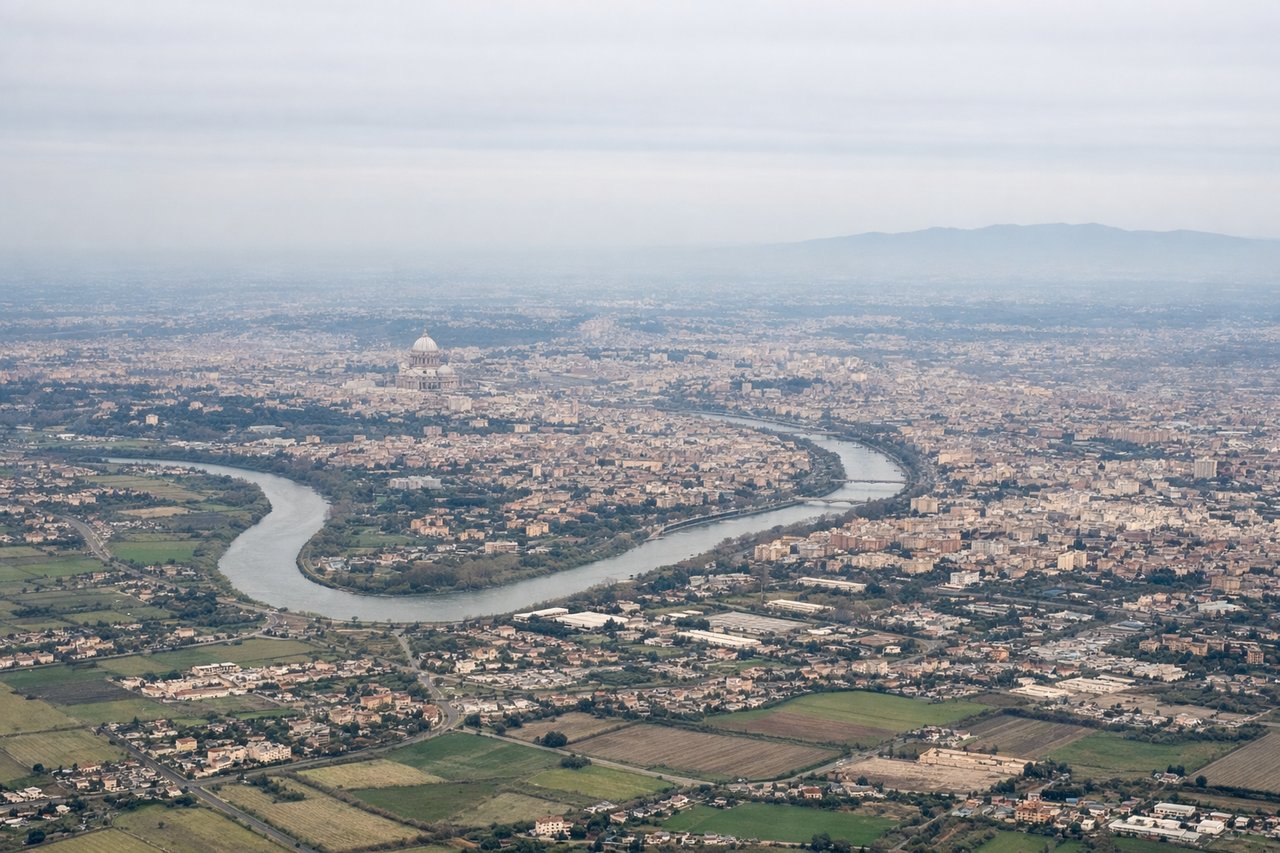
Takeoff from FCO
RIGHTFCO typically departs runway 16L/R heading northwest. Right-side seats offer views of the Tyrrhenian Sea immediately west of the airport, then the Alban Hills volcanic ridge south of Rome as the aircraft climbs and turns on its westbound heading toward the Atlantic.
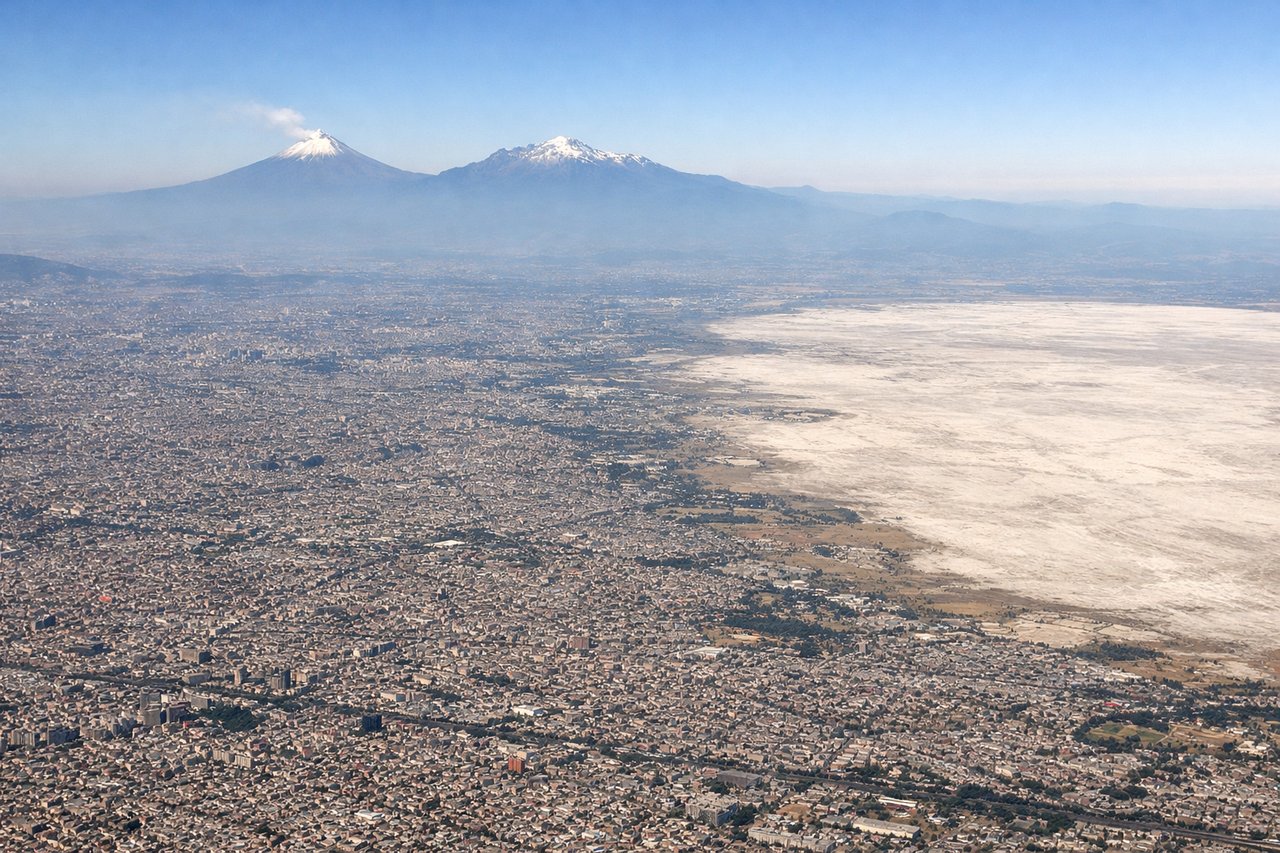
Landing at MEX
LEFTMEX approaches from the east on runways 05L/R or 09L/R depending on wind. Left-side seats during descent offer views of the Valley of Mexico's eastern rim, the snow-capped volcanic peaks of Popocatépetl and Iztaccíhuatl on the southeastern horizon, and the sprawling Mexico City metropolitan area filling the valley floor.
Will your flight be in sunlight?
Pick a date and time in the Sun Map to watch the sun move across your whole flight.
About This Route
Which side of the plane should I sit on flying from Fiumicino (FCO) to Licenciado Benito Juarez International (MEX)?
Sit on the Right side of the plane for the best views on flights from Rome to Mexico City. Right-side seats capture the most dramatic geography: the Tyrrhenian Sea and Italian coastline during departure, then the Atlantic crossing offers consistent ocean views. On arrival into Mexico City, while left seats show the volcanoes, right seats still provide excellent views of the valley's northern rim and the approach path over the city's western suburbs.
What can I see during takeoff from Fiumicino in Rome?
During takeoff from Fiumicino (FCO), sit on the Right side for the best views. FCO typically departs runway 16L/R heading northwest. Right-side seats offer views of the Tyrrhenian Sea immediately west of the airport, then the Alban Hills volcanic ridge south of Rome as the aircraft climbs and turns on its westbound heading toward the Atlantic. Notable sights include: Tyrrhenian Sea (immediate western coastline), Alban Hills (volcanic ridge visible 20 miles southeast), Rome urban sprawl (to the northeast, receding), Pontine Marshes (flat terrain extending south).
What can I see when landing at Licenciado Benito Juarez International in Mexico City?
When landing at Licenciado Benito Juarez International (MEX), sit on the Left side for the best views. MEX approaches from the east on runways 05L/R or 09L/R depending on wind. Left-side seats during descent offer views of the Valley of Mexico's eastern rim, the snow-capped volcanic peaks of Popocatépetl and Iztaccíhuatl on the southeastern horizon, and the sprawling Mexico City metropolitan area filling the valley floor. Notable sights include: Popocatépetl and Iztaccíhuatl volcanoes (southeastern horizon, snow-capped peaks), Mexico City urban expanse (valley floor, dense grid pattern), Lake Texcoco remnants (shallow water bodies and wetlands within the city), Sierra de Guadalupe mountains (northern rim of valley).
How long is the flight from Rome to Mexico City?
The flight from Fiumicino (FCO) to Licenciado Benito Juarez International (MEX) takes about 11 hours. The shortest flight path between them is 6,352 miles (10,223 km); winds and air traffic control usually add a few percent.
What does the Rome to Mexico City flight path pass over?
The flight path crosses the Atlantic Ocean for roughly 7-8 hours with no significant landmarks visible—only open ocean and cloud formations. The Azores archipelago (9°W, 38°N) may be visible as small islands if the aircraft passes within 100 miles and cloud cover permits, though this depends on the precise routing. After crossing into the western Atlantic, the Yucatan Peninsula becomes visible during the final 2-3 hours of descent, appearing as a flat, low-lying landmass with shallow turquoise waters (Yucatan Channel and Caribbean shallows) before the aircraft reaches the Mexican highlands.