While left offers good departure views, right side captures the dramatic volcanic landscape of Oahu's windward coast and the Ko'olau Range during descent—the most visually striking scenery on this transpacific route. The approach to Honolulu provides superior mountain and coastal views.
Flight Path
The flight crosses the North Pacific Ocean with no significant visible landmarks for approximately 5 hours after departing Japanese airspace. The route passes north of the Mariana Islands and Micronesia but at altitude these remain below the horizon. Approaching Hawaii, the Big Island's Mauna Kea and Mauna Loa volcanoes may be visible 200+ miles before Oahu, appearing as distant peaks on the horizon. The final 90 minutes offer views of the Hawaiian island chain: Molokai's north shore cliffs, Lanai, and finally Oahu's windward Ko'olau Range.
Great circle distance and headings ›

Phase by phase
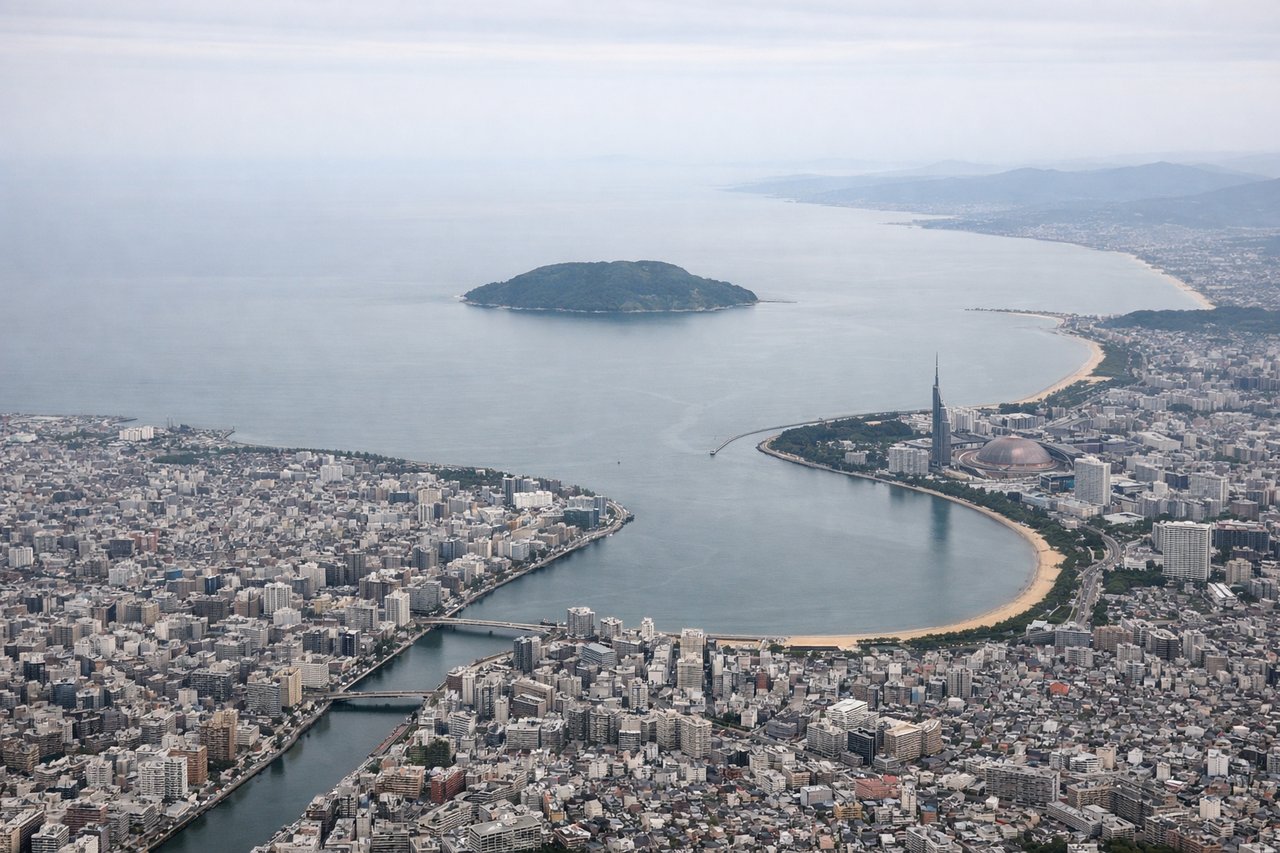
Takeoff from FUK
LEFTLeft side offers views of Fukuoka city and Hakata Bay during initial climb. The urban sprawl and coastal geography provide immediate visual interest as the aircraft departs westward over the Kyushu region.
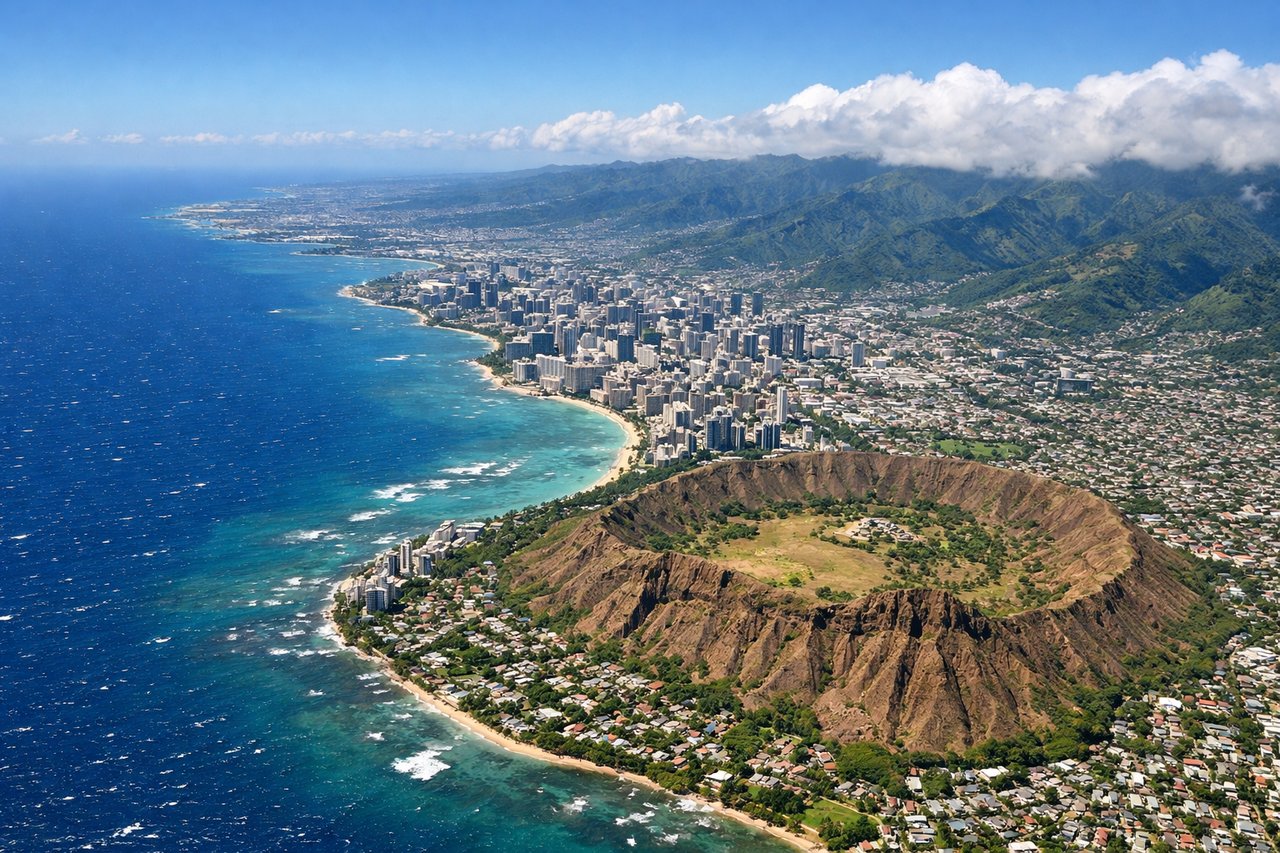
Landing at HNL
RIGHTRight side provides views of the Hawaiian Islands' windward coasts and the Ko'olau and Waianae mountain ranges as the aircraft descends toward Honolulu. The dramatic volcanic topography and green valleys are most visible on approach from the northeast.
Landmarks on this routeAll landmarks →
Will your flight be in sunlight?
See exactly which side of the plane gets sun and shade at your departure time.
About This Route
Which side of the plane should I sit on flying from Fukuoka (FUK) to Honolulu International (HNL)?
Sit on the Right side of the plane for the best views on flights from Fukuoka to Honolulu. While left offers good departure views, right side captures the dramatic volcanic landscape of Oahu's windward coast and the Ko'olau Range during descent—the most visually striking scenery on this transpacific route. The approach to Honolulu provides superior mountain and coastal views.
What can I see during takeoff from Fukuoka in Fukuoka?
During takeoff from Fukuoka (FUK), sit on the Left side for the best views. Left side offers views of Fukuoka city and Hakata Bay during initial climb. The urban sprawl and coastal geography provide immediate visual interest as the aircraft departs westward over the Kyushu region. Notable sights include: Hakata Bay, Fukuoka city grid, Shikano Island, Genkai Sea coastline.
What can I see when landing at Honolulu International in Honolulu?
When landing at Honolulu International (HNL), sit on the Right side for the best views. Right side provides views of the Hawaiian Islands' windward coasts and the Ko'olau and Waianae mountain ranges as the aircraft descends toward Honolulu. The dramatic volcanic topography and green valleys are most visible on approach from the northeast. Notable sights include: Ko'olau Range, Waianae Range, Kailua Bay, Honolulu city and Pearl Harbor.
How long is the flight from Fukuoka to Honolulu?
The flight from Fukuoka (FUK) to Honolulu International (HNL) takes 7h 15m.
What does the Fukuoka to Honolulu flight path pass over?
The flight crosses the North Pacific Ocean with no significant visible landmarks for approximately 5 hours after departing Japanese airspace. The route passes north of the Mariana Islands and Micronesia but at altitude these remain below the horizon. Approaching Hawaii, the Big Island's Mauna Kea and Mauna Loa volcanoes may be visible 200+ miles before Oahu, appearing as distant peaks on the horizon. The final 90 minutes offer views of the Hawaiian island chain: Molokai's north shore cliffs, Lanai, and finally Oahu's windward Ko'olau Range.