While takeoff offers excellent views of Rio's dramatic coastal geography, the landing approach to Lisbon provides more sustained visual interest—the Tagus estuary, bridge, and historic city center are all clearly visible during the critical descent phase. Left seats capture both the approach corridor and the city's defining landmarks.
Flown GIG to LIS? Did we get it right?
Flight Path
Rio De Janeiro to Lisbon is 4,794 miles (7,715 km), a flight of about 10 hours 10 minutes.
The flight crosses the Atlantic at roughly 35,000 feet. No significant land features are visible during the midpoint (roughly 12-18 hours into flight, depending on winds). The route passes south of the Azores archipelago (typically 300+ miles south, not visible). Approaching European airspace, the Iberian Peninsula becomes visible on the horizon roughly 90 minutes before landing; the Portuguese coast and Douro River estuary may be visible during descent into Lisbon.
Great circle distance and headings ›


Phase by phase

Takeoff from GIG
RIGHTGIG typically departs runway 10L/10R (heading northeast). Right-side seats face the Atlantic immediately after takeoff, then track north along Rio's coastline with clear views of Guanabara Bay, the city's iconic geography, and the Serra da Carioca mountains inland.
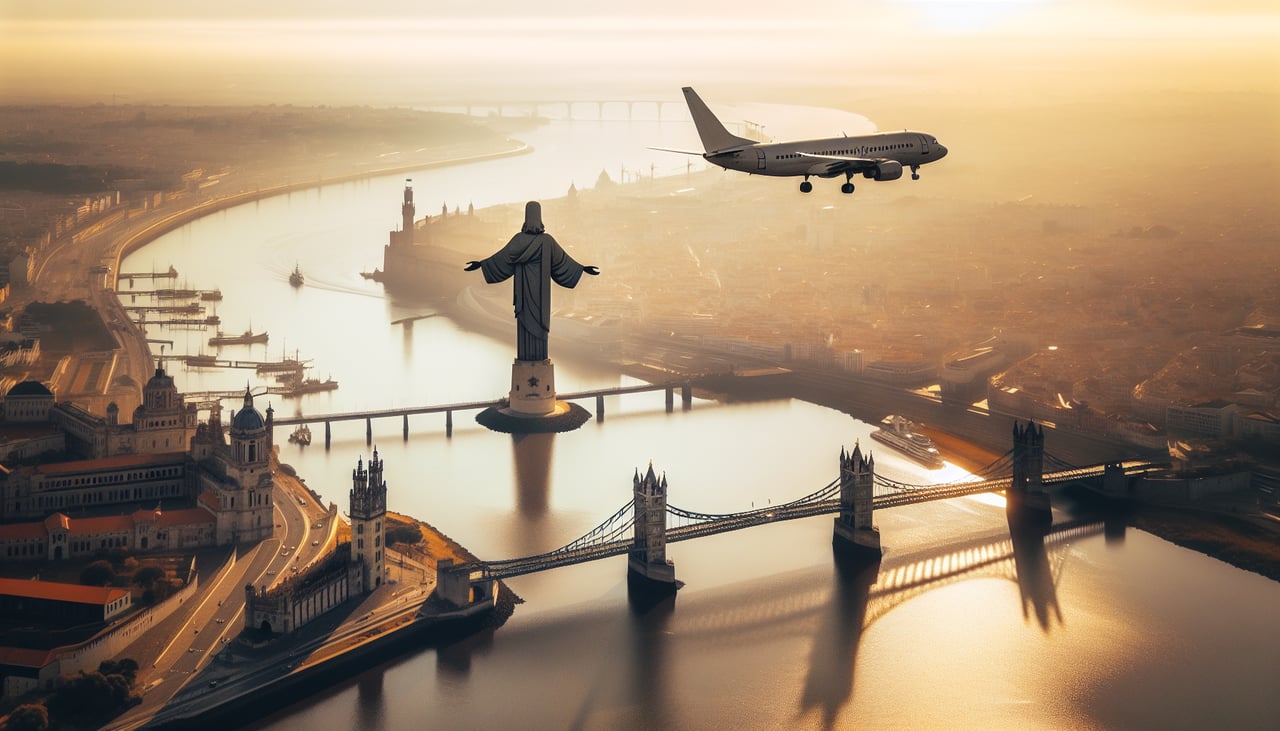
Landing at LIS
LEFTApproach to LIS typically uses runway 03 (heading north). Left-side seats during descent offer views of the Tagus River estuary, Lisbon's historic center on the north bank, and the bridge approaches. Right seats face the southern suburbs and industrial areas.
Will your flight be in sunlight?
Pick a date and time in the Sun Map to watch the sun move across your whole flight.
About This Route
Which side of the plane should I sit on flying from Galeao Antonio Carlos Jobim (GIG) to Lisboa (LIS)?
Sit on the Left side of the plane for the best views on flights from Rio De Janeiro to Lisbon. While takeoff offers excellent views of Rio's dramatic coastal geography, the landing approach to Lisbon provides more sustained visual interest—the Tagus estuary, bridge, and historic city center are all clearly visible during the critical descent phase. Left seats capture both the approach corridor and the city's defining landmarks.
What can I see during takeoff from Galeao Antonio Carlos Jobim in Rio De Janeiro?
During takeoff from Galeao Antonio Carlos Jobim (GIG), sit on the Right side for the best views. GIG typically departs runway 10L/10R (heading northeast). Right-side seats face the Atlantic immediately after takeoff, then track north along Rio's coastline with clear views of Guanabara Bay, the city's iconic geography, and the Serra da Carioca mountains inland. Notable sights include: Guanabara Bay (distinctive crescent shape directly below during initial climb), Sugarloaf Mountain and Corcovado peak (visible as prominent ridges on the western shore of the bay), Atlantic Ocean extending to the horizon.
What can I see when landing at Lisboa in Lisbon?
When landing at Lisboa (LIS), sit on the Left side for the best views. Approach to LIS typically uses runway 03 (heading north). Left-side seats during descent offer views of the Tagus River estuary, Lisbon's historic center on the north bank, and the bridge approaches. Right seats face the southern suburbs and industrial areas. Notable sights include: Tagus River estuary (wide, distinctive tidal waterway), 25 de Abril Bridge (long suspension bridge spanning the estuary, clearly visible from 5,000+ feet), Lisbon's historic districts on the north bank (Alfama, Baixa Pombalina), Cristo Rei monument on the south bank.
How long is the flight from Rio De Janeiro to Lisbon?
The flight from Galeao Antonio Carlos Jobim (GIG) to Lisboa (LIS) takes about 10 hours 10 minutes. The shortest flight path between them is 4,794 miles (7,715 km); winds and air traffic control usually add a few percent.
What does the Rio De Janeiro to Lisbon flight path pass over?
The flight crosses the Atlantic at roughly 35,000 feet. No significant land features are visible during the midpoint (roughly 12-18 hours into flight, depending on winds). The route passes south of the Azores archipelago (typically 300+ miles south, not visible). Approaching European airspace, the Iberian Peninsula becomes visible on the horizon roughly 90 minutes before landing; the Portuguese coast and Douro River estuary may be visible during descent into Lisbon.