The left side wins overall because the Rio de Janeiro departure view is genuinely world-class — Sugarloaf, Guanabara Bay, and the Tijuca ridge together form one of the most dramatic urban departure panoramas on earth. The Miami arrival on the right is excellent but more routine. For the bulk of the flight over the Caribbean and Atlantic, neither side has a significant advantage, but the opening spectacle from the left seat at GIG is the defining experience of this route.
Flown GIG to MIA? Did we get it right?
Flight Path
Rio De Janeiro to Miami is 4,174 miles (6,717 km), a flight of about 8 hours 30 minutes.
After departing Rio, the route tracks north-northwest over the Brazilian interior briefly before crossing the Amazon basin's eastern edge near the mouth region. The flight then crosses the Caribbean Sea, passing east of the Lesser Antilles island chain — on a clear day individual islands like Barbados, Martinique, and Guadeloupe may be visible as small green shapes in the blue sea. The route continues northwest over the Greater Antilles, potentially passing near or over Cuba or the Bahamas depending on the specific track filed. The Bahamas' shallow turquoise banks are distinctively visible from altitude due to their vivid color contrast with the deep Atlantic.
Great circle distance and headings ›

Phase by phase

Takeoff from GIG
LEFTGIG's primary departure runway 10 heads east over Guanabara Bay, then aircraft turn northward. The left (west) side captures the full panorama of Rio: Sugarloaf Mountain at the bay entrance, the Tijuca massif behind the city, and the sweep of Guanabara Bay itself. The right side faces open Atlantic.
Landing at MIA
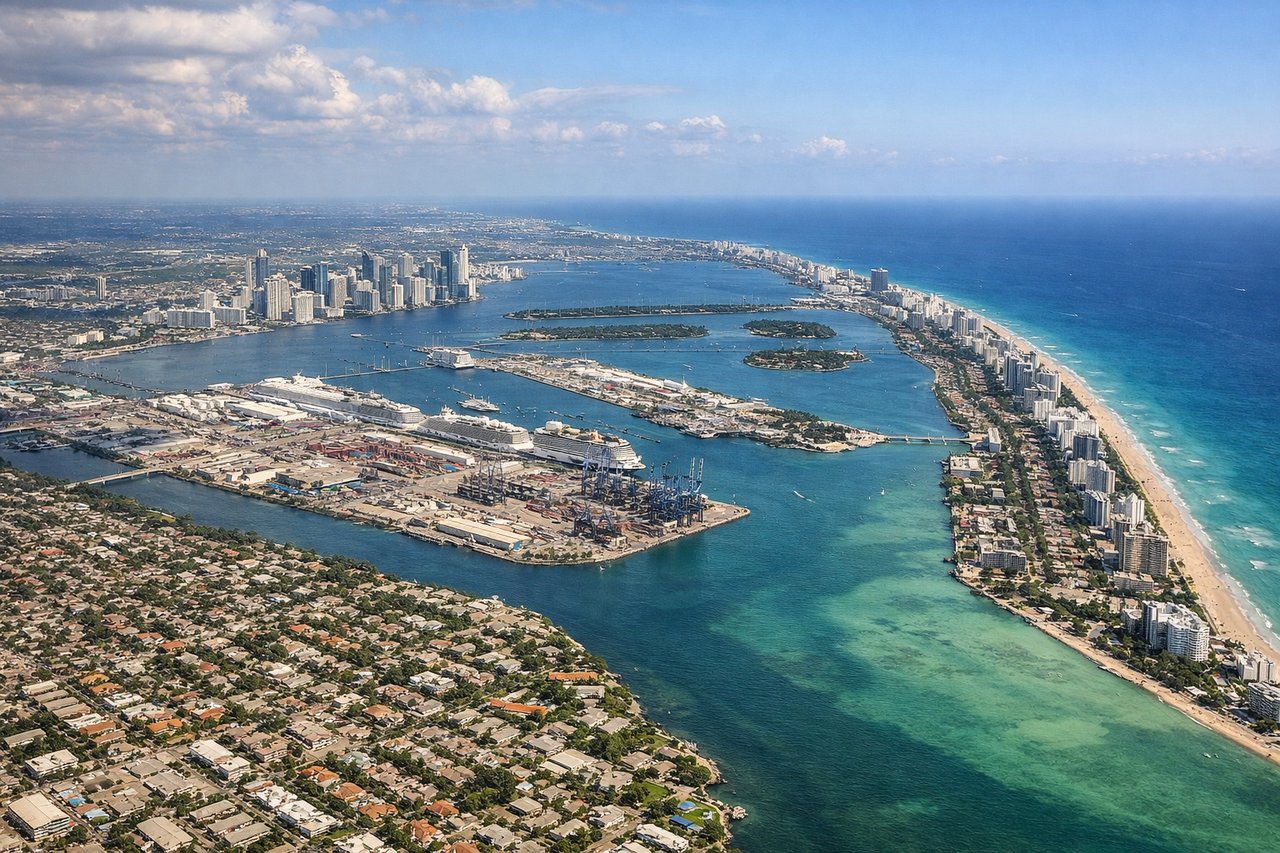
RIGHTMIA typically lands on runway 09 heading east, or runway 12 heading southeast. On approach from the north or northwest, the right side faces south and east over Miami Beach, Biscayne Bay, and the Miami skyline. The left side looks inland over the Everglades — flat and featureless by comparison.
Will your flight be in sunlight?
Pick a date and time in the Sun Map to watch the sun move across your whole flight.
About This Route
Which side of the plane should I sit on flying from Galeao Antonio Carlos Jobim (GIG) to Miami International (MIA)?
Sit on the Left side of the plane for the best views on flights from Rio De Janeiro to Miami. The left side wins overall because the Rio de Janeiro departure view is genuinely world-class — Sugarloaf, Guanabara Bay, and the Tijuca ridge together form one of the most dramatic urban departure panoramas on earth. The Miami arrival on the right is excellent but more routine. For the bulk of the flight over the Caribbean and Atlantic, neither side has a significant advantage, but the opening spectacle from the left seat at GIG is the defining experience of this route.
What can I see during takeoff from Galeao Antonio Carlos Jobim in Rio De Janeiro?
During takeoff from Galeao Antonio Carlos Jobim (GIG), sit on the Left side for the best views. GIG's primary departure runway 10 heads east over Guanabara Bay, then aircraft turn northward. The left (west) side captures the full panorama of Rio: Sugarloaf Mountain at the bay entrance, the Tijuca massif behind the city, and the sweep of Guanabara Bay itself. The right side faces open Atlantic. Notable sights include: Sugarloaf Mountain (Pão de Açúcar) at the bay mouth, Guanabara Bay and its islands, Tijuca Forest ridge behind the city, Niterói city and bridge across the bay.
What can I see when landing at Miami International in Miami?
When landing at Miami International (MIA), sit on the Right side for the best views. MIA typically lands on runway 09 heading east, or runway 12 heading southeast. On approach from the north or northwest, the right side faces south and east over Miami Beach, Biscayne Bay, and the Miami skyline. The left side looks inland over the Everglades — flat and featureless by comparison. Notable sights include: Miami Beach barrier island and Atlantic coastline, Biscayne Bay, downtown Miami skyline, Port of Miami on Dodge Island.
How long is the flight from Rio De Janeiro to Miami?
The flight from Galeao Antonio Carlos Jobim (GIG) to Miami International (MIA) takes about 8 hours 30 minutes. The shortest flight path between them is 4,174 miles (6,717 km); winds and air traffic control usually add a few percent.
What does the Rio De Janeiro to Miami flight path pass over?
After departing Rio, the route tracks north-northwest over the Brazilian interior briefly before crossing the Amazon basin's eastern edge near the mouth region. The flight then crosses the Caribbean Sea, passing east of the Lesser Antilles island chain — on a clear day individual islands like Barbados, Martinique, and Guadeloupe may be visible as small green shapes in the blue sea. The route continues northwest over the Greater Antilles, potentially passing near or over Cuba or the Bahamas depending on the specific track filed. The Bahamas' shallow turquoise banks are distinctively visible from altitude due to their vivid color contrast with the deep Atlantic.