While takeoff favors the right, the landing approach over Finland's lake district offers more visually distinctive scenery. The left side captures Lake Tuusula and the boreal forest landscape—features more dramatic and geographically characteristic than Gothenburg's harbor. For a full flight experience, left-side seats provide the stronger scenic payoff.
Flown GOT to HEL? Did we get it right?
Flight Path
Gothenborg to Helsinki is 486 miles (783 km), a flight of about 1 hour 15 minutes.
The flight crosses the Baltic Sea directly, with the Swedish coast receding westward and the Finnish coast approaching from the east. At cruise altitude (around 25,000 feet), the open water dominates the view for roughly 40 minutes. The Stockholm archipelago remains visible off the left wing during the initial climb-out phase. The transition from Swedish to Finnish airspace occurs over open water with no major landmarks visible at cruise altitude. The approach to Finland brings the first sight of the Finnish coastline and the beginning of the lake district inland from the coast.
Great circle distance and headings ›Phase by phase
Takeoff from GOT
RIGHTRight-side seats offer views of the Göta Älv river valley and the Gothenburg archipelago as the aircraft climbs northeast. The left side faces inland terrain with fewer distinctive features during the initial climb-out.
Landing at HEL
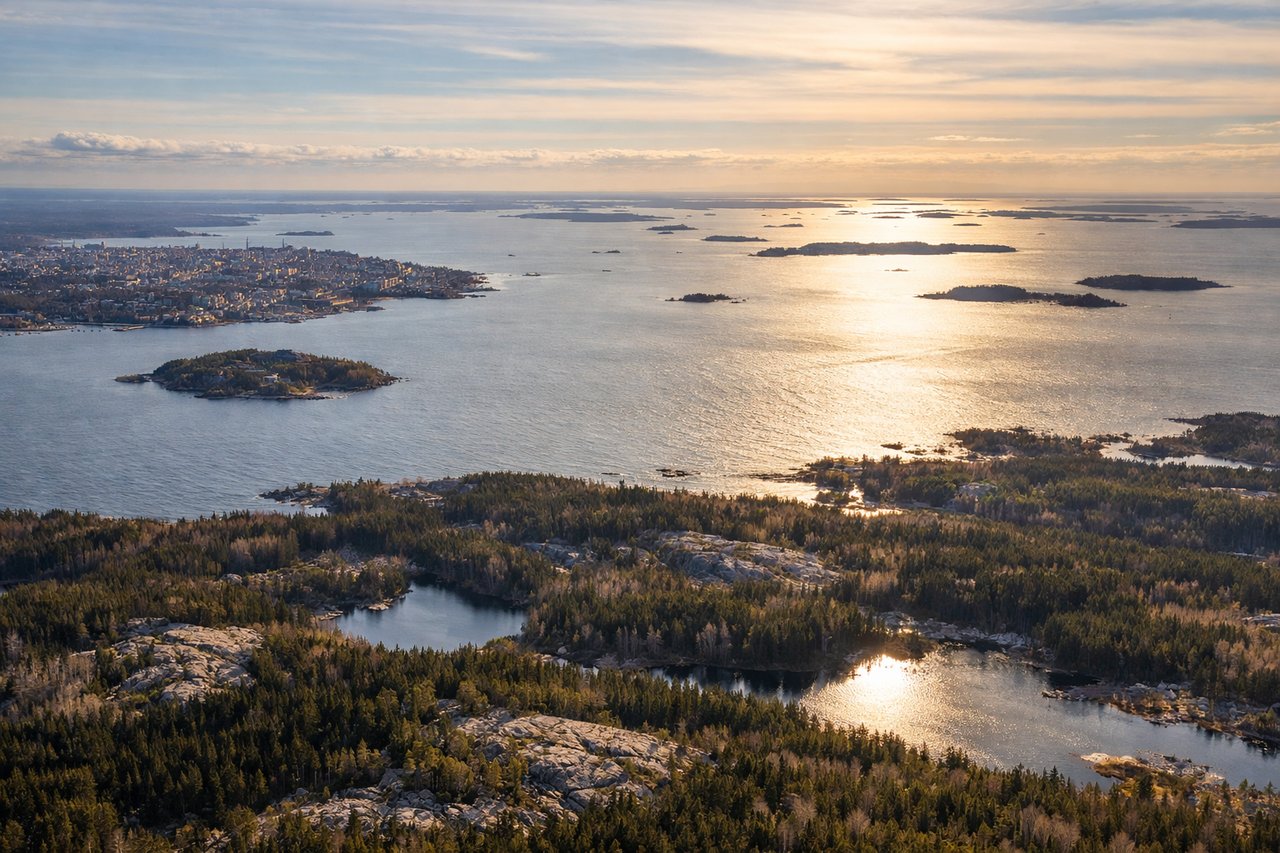
LEFTLeft-side seats provide views of Lake Tuusula and the approach corridor over Finland's lake district. As the aircraft descends toward Helsinki Vantaa from the west, left-side passengers see the distinctive Finnish landscape of interconnected lakes and forested terrain before reaching the airport.
Will your flight be in sunlight?
Pick a date and time in the Sun Map to watch the sun move across your whole flight.
About This Route
Which side of the plane should I sit on flying from Landvetter (GOT) to Helsinki Vantaa (HEL)?
Sit on the Left side of the plane for the best views on flights from Gothenborg to Helsinki. While takeoff favors the right, the landing approach over Finland's lake district offers more visually distinctive scenery. The left side captures Lake Tuusula and the boreal forest landscape—features more dramatic and geographically characteristic than Gothenburg's harbor. For a full flight experience, left-side seats provide the stronger scenic payoff.
What can I see during takeoff from Landvetter in Gothenborg?
During takeoff from Landvetter (GOT), sit on the Right side for the best views. Right-side seats offer views of the Göta Älv river valley and the Gothenburg archipelago as the aircraft climbs northeast. The left side faces inland terrain with fewer distinctive features during the initial climb-out. Notable sights include: Göta Älv river (flowing northwest through Gothenburg), Gothenburg city grid and harbor, Stockholm archipelago islands (distant, on horizon during climb).
What can I see when landing at Helsinki Vantaa in Helsinki?
When landing at Helsinki Vantaa (HEL), sit on the Left side for the best views. Left-side seats provide views of Lake Tuusula and the approach corridor over Finland's lake district. As the aircraft descends toward Helsinki Vantaa from the west, left-side passengers see the distinctive Finnish landscape of interconnected lakes and forested terrain before reaching the airport. Notable sights include: Lake Tuusula (large freshwater lake west of Helsinki), Finnish boreal forest (dense coniferous woodland), Helsinki metropolitan area sprawl, Gulf of Finland coastline (visible on final approach).
How long is the flight from Gothenborg to Helsinki?
The flight from Landvetter (GOT) to Helsinki Vantaa (HEL) takes about 1 hour 15 minutes. The shortest flight path between them is 486 miles (783 km); winds and air traffic control usually add a few percent.
What does the Gothenborg to Helsinki flight path pass over?
The flight crosses the Baltic Sea directly, with the Swedish coast receding westward and the Finnish coast approaching from the east. At cruise altitude (around 25,000 feet), the open water dominates the view for roughly 40 minutes. The Stockholm archipelago remains visible off the left wing during the initial climb-out phase. The transition from Swedish to Finnish airspace occurs over open water with no major landmarks visible at cruise altitude. The approach to Finland brings the first sight of the Finnish coastline and the beginning of the lake district inland from the coast.