While left side offers better departure scenery from São Paulo's urban landscape, right side dominates the overall flight with the Andes mountain range, Sacred Valley, and Cuzco's dramatic high-altitude approach. The cruise phase crosses the Brazilian plateau and enters increasingly mountainous terrain, with the right side capturing the Andes' full visual impact during descent and landing. The landing experience alone—approaching a high-altitude runway surrounded by dramatic peaks and agricultural terraces—outweighs the takeoff advantage, making right the superior choice for the full 4h 15m journey.
Flight Path
Brazilian plateau interior with scattered towns and agricultural areas, transition from Atlantic Plateau to Andes foothills, Mantaro River valley in Peru, approach to Cuzco basin with Sacred Valley's distinctive terraced agriculture and Urubamba River canyon
Great circle distance and headings ›

.jpg?width=600)
Phase by phase
Takeoff from GRU
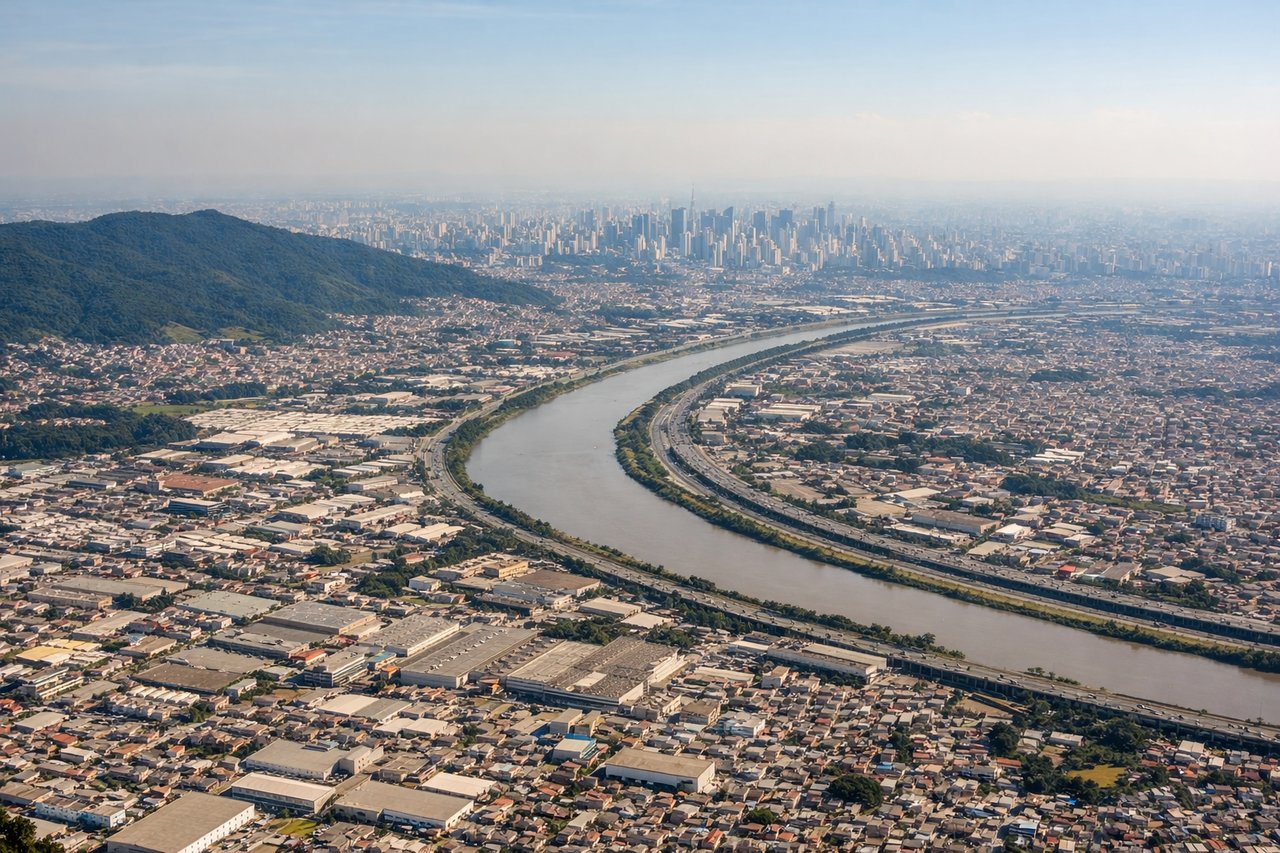
LEFTLeft side captures São Paulo's urban sprawl during initial climb, with the city's dense metropolitan area and surrounding escarpment terrain visible. Right side faces open terrain with less immediate visual interest during departure.
Landing at CUZ
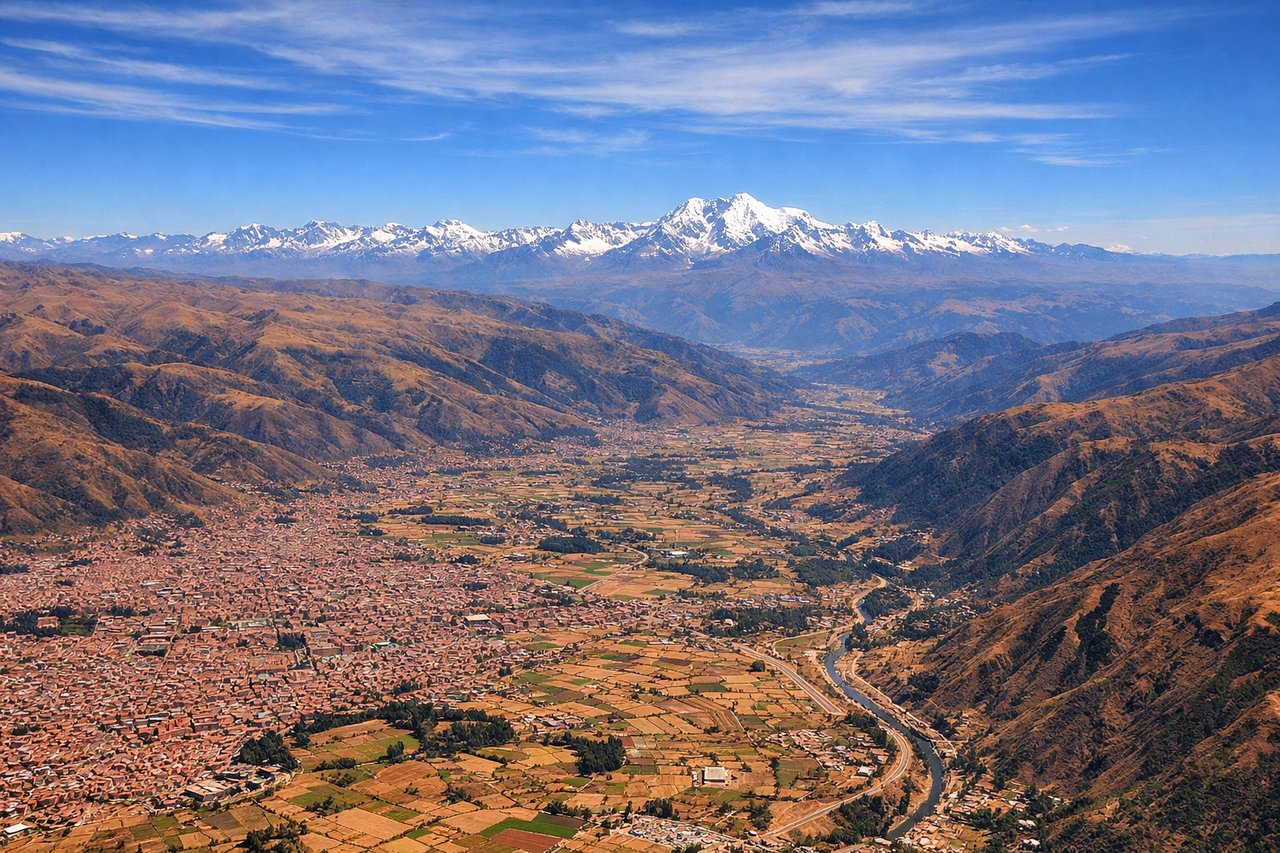
RIGHTRight side offers the most dramatic approach into Cuzco, with the Andes mountain range dominating the descent and final approach. The Sacred Valley's agricultural terraces and the Urubamba River canyon become visible during the descent, culminating in the high-altitude runway nestled in mountainous terrain.
Landmarks on this routeAll landmarks →
Will your flight be in sunlight?
See exactly which side of the plane gets sun and shade at your departure time.
About This Route
Which side of the plane should I sit on flying from Guarulhos (GRU) to Velazco Astete (CUZ)?
Sit on the Right side of the plane for the best views on flights from Sao Paulo to Cuzco. While left side offers better departure scenery from São Paulo's urban landscape, right side dominates the overall flight with the Andes mountain range, Sacred Valley, and Cuzco's dramatic high-altitude approach. The cruise phase crosses the Brazilian plateau and enters increasingly mountainous terrain, with the right side capturing the Andes' full visual impact during descent and landing. The landing experience alone—approaching a high-altitude runway surrounded by dramatic peaks and agricultural terraces—outweighs the takeoff advantage, making right the superior choice for the full 4h 15m journey.
What can I see during takeoff from Guarulhos in Sao Paulo?
During takeoff from Guarulhos (GRU), sit on the Left side for the best views. Left side captures São Paulo's urban sprawl during initial climb, with the city's dense metropolitan area and surrounding escarpment terrain visible. Right side faces open terrain with less immediate visual interest during departure. Notable sights include: São Paulo metropolitan area, Serra da Cantareira ridge to the north, Guarulhos industrial zone, Atlantic Plateau escarpment.
What can I see when landing at Velazco Astete in Cuzco?
When landing at Velazco Astete (CUZ), sit on the Right side for the best views. Right side offers the most dramatic approach into Cuzco, with the Andes mountain range dominating the descent and final approach. The Sacred Valley's agricultural terraces and the Urubamba River canyon become visible during the descent, culminating in the high-altitude runway nestled in mountainous terrain. Notable sights include: Urubamba River canyon, Sacred Valley agricultural terraces, Andes peaks surrounding Cuzco basin, Cuzco city at 11,000 feet elevation.
How long is the flight from Sao Paulo to Cuzco?
The flight from Guarulhos (GRU) to Velazco Astete (CUZ) takes 4h 15m.
What does the Sao Paulo to Cuzco flight path pass over?
Brazilian plateau interior with scattered towns and agricultural areas, transition from Atlantic Plateau to Andes foothills, Mantaro River valley in Peru, approach to Cuzco basin with Sacred Valley's distinctive terraced agriculture and Urubamba River canyon