While takeoff offers Gulf of Finland views, the landing approach provides more dramatic and visually distinctive scenery with mountainous terrain and a major metropolitan area. The Kii Peninsula and Osaka Bay combination outweighs the Finnish archipelago for overall visual interest.
Flight Path
The flight path crosses the Ural Mountains (visible as a low mountain range during the first 3-4 hours), then traverses the West Siberian Plain and Central Asian steppes. The Altai Mountains appear in the distance around the 5-6 hour mark. Crossing into Mongolia and China, the Gobi Desert dominates the mid-flight segment with its tan, sparsely vegetated terrain. The flight then passes over the North China Plain before descending toward Japan, with views of the Korean Peninsula and the Sea of Japan during the final 2-3 hours of flight.
Great circle distance and headings ›Phase by phase
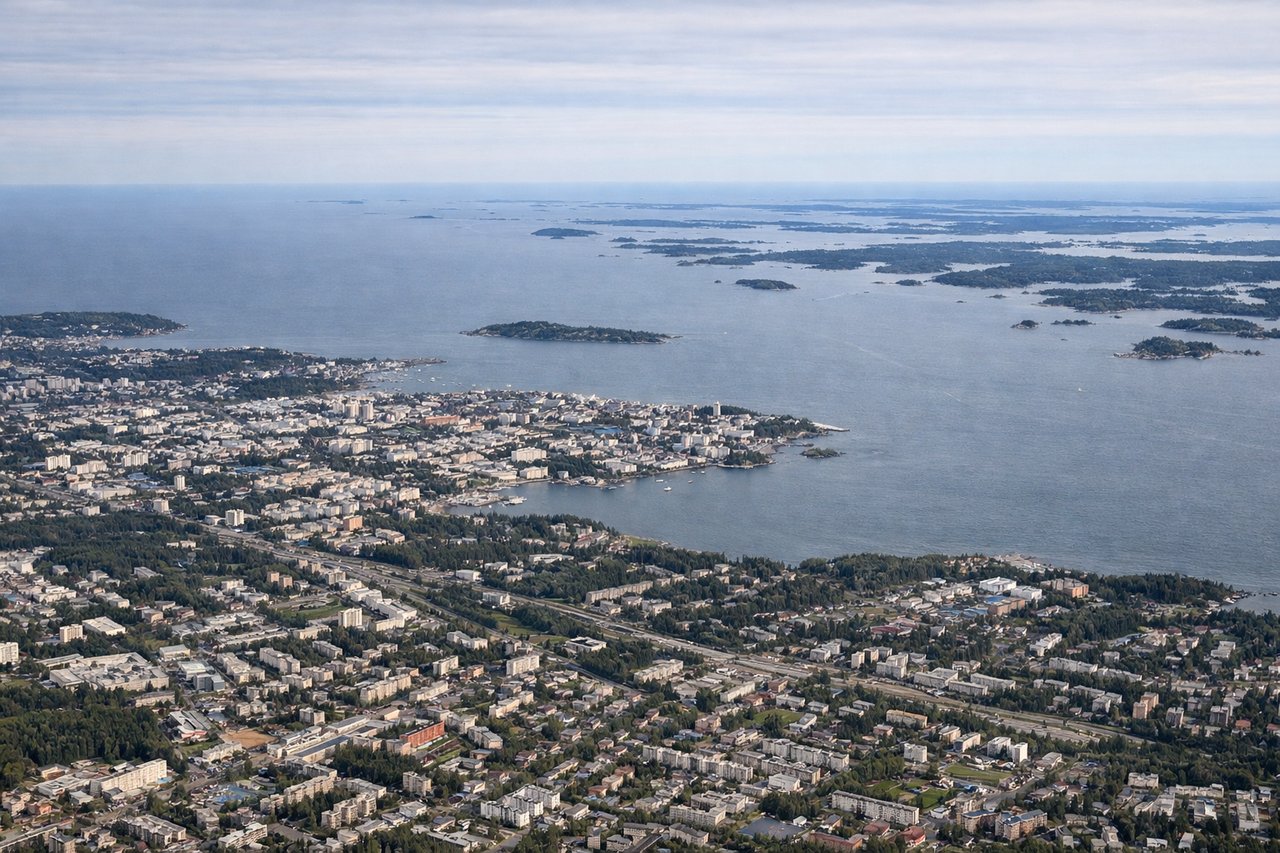
Takeoff from HEL
LEFTLeft side captures the Gulf of Finland and the archipelago extending southeast toward Estonia. The water body and scattered islands create strong visual contrast against forested terrain.
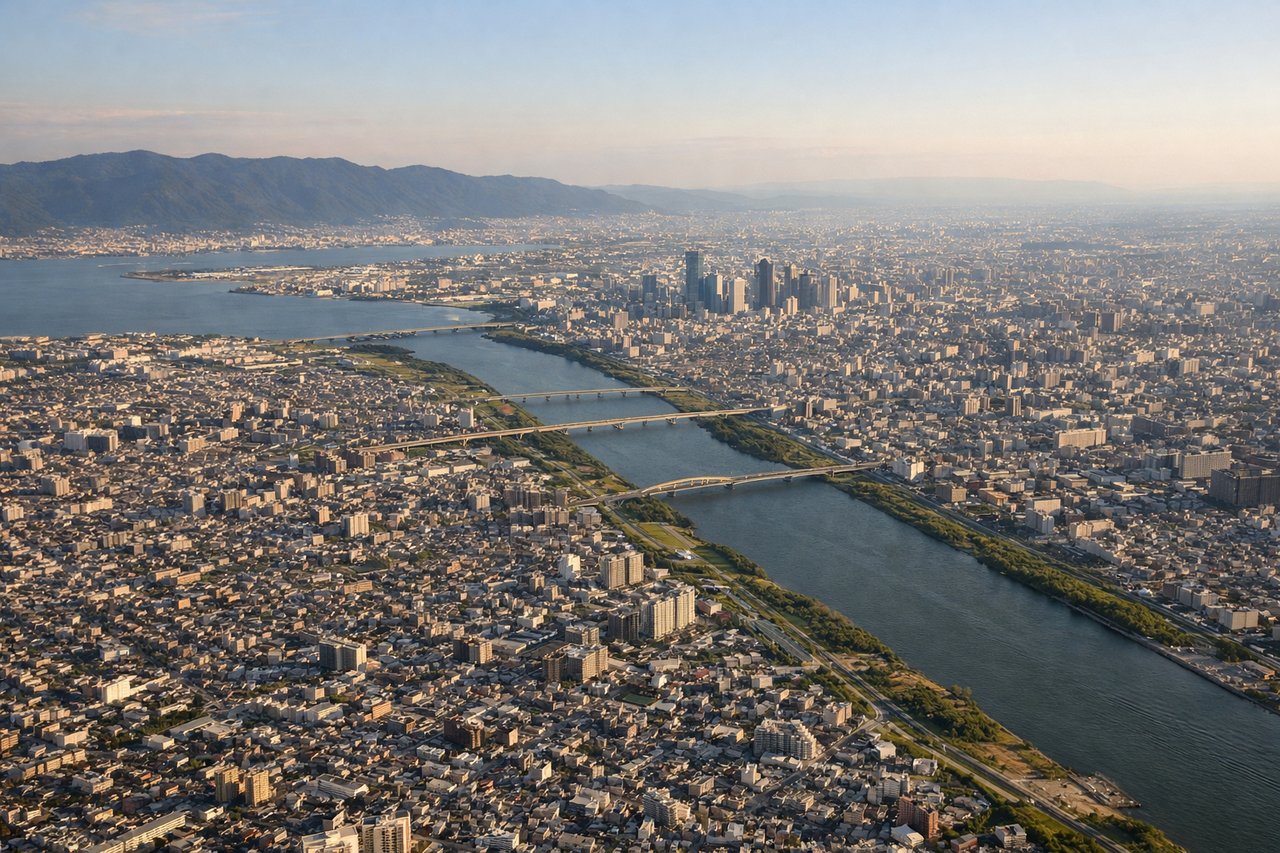
Landing at ITM
RIGHTRight side provides views of the Kii Peninsula and Osaka Bay as the aircraft descends toward Itami. The mountainous terrain of the peninsula and the urban sprawl of the Osaka metropolitan area create distinctive landmarks.
Landmarks on this routeAll landmarks →
Will your flight be in sunlight?
See exactly which side of the plane gets sun and shade at your departure time.
About This Route
Which side of the plane should I sit on flying from Helsinki Vantaa (HEL) to Osaka International (ITM)?
Sit on the Right side of the plane for the best views on flights from Helsinki to Osaka. While takeoff offers Gulf of Finland views, the landing approach provides more dramatic and visually distinctive scenery with mountainous terrain and a major metropolitan area. The Kii Peninsula and Osaka Bay combination outweighs the Finnish archipelago for overall visual interest.
What can I see during takeoff from Helsinki Vantaa in Helsinki?
During takeoff from Helsinki Vantaa (HEL), sit on the Left side for the best views. Left side captures the Gulf of Finland and the archipelago extending southeast toward Estonia. The water body and scattered islands create strong visual contrast against forested terrain. Notable sights include: Gulf of Finland, Finnish archipelago, Baltic Sea coastline, forested interior plains.
What can I see when landing at Osaka International in Osaka?
When landing at Osaka International (ITM), sit on the Right side for the best views. Right side provides views of the Kii Peninsula and Osaka Bay as the aircraft descends toward Itami. The mountainous terrain of the peninsula and the urban sprawl of the Osaka metropolitan area create distinctive landmarks. Notable sights include: Kii Peninsula mountains, Osaka Bay, Yodo River delta, Osaka urban sprawl.
How long is the flight from Helsinki to Osaka?
The flight from Helsinki Vantaa (HEL) to Osaka International (ITM) takes 10h 15m.
What does the Helsinki to Osaka flight path pass over?
The flight path crosses the Ural Mountains (visible as a low mountain range during the first 3-4 hours), then traverses the West Siberian Plain and Central Asian steppes. The Altai Mountains appear in the distance around the 5-6 hour mark. Crossing into Mongolia and China, the Gobi Desert dominates the mid-flight segment with its tan, sparsely vegetated terrain. The flight then passes over the North China Plain before descending toward Japan, with views of the Korean Peninsula and the Sea of Japan during the final 2-3 hours of flight.