Tokyo to Seoul is 734 miles (1,181 km), a flight of about 2 hours.
While the right side has the edge at Haneda departure, the left side wins overall. During the cruise portion heading northwest across the Korea Strait, the left side faces south toward the open sea and the Japanese island chain receding behind you, then picks up the Korean coastline on approach. The left side's Han River and Seoul arrival view is the most visually rewarding single moment of the flight.
Flight Path
The flight crosses the Korea Strait (Tsushima Strait), passing over or near Tsushima Island, a mountainous island clearly visible from altitude. The southern tip of the Korean Peninsula and the port city of Busan may be visible to the left on descent. The Yellow Sea coastline of Korea comes into view on the left side as the aircraft descends toward Seoul.
Great circle distance and headings ›

Phase by phase
Takeoff from HND
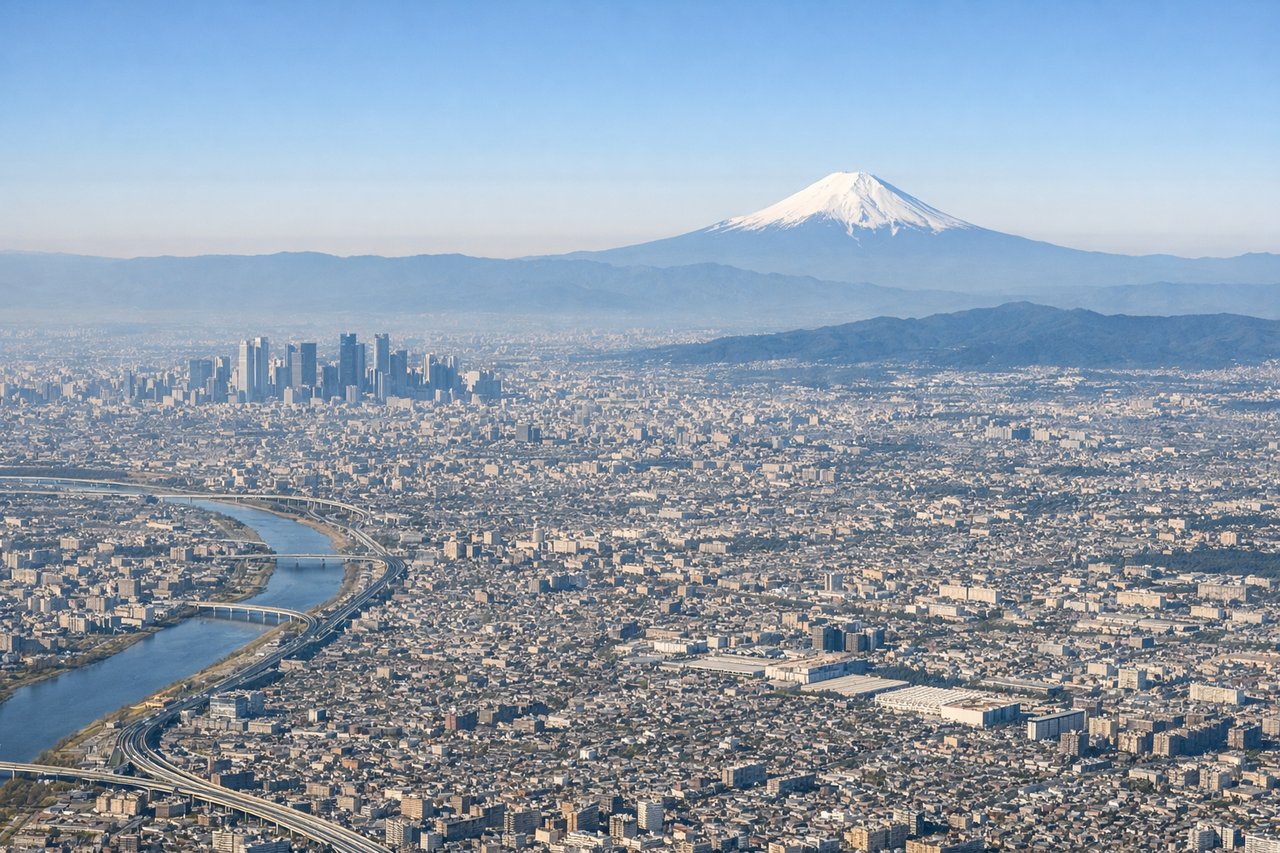
RIGHTHND typically departs on runways 34L/34R heading northwest, or 05 heading northeast. On the dominant northwesterly departure, the right side faces southwest toward Tokyo Bay and the urban sprawl of Kawasaki and Yokohama. On a northeast departure on runway 05, the right side looks out over central Tokyo and the bay. Either way, the right side captures the dense urban core and bay views during climb-out.
Landing at GMP
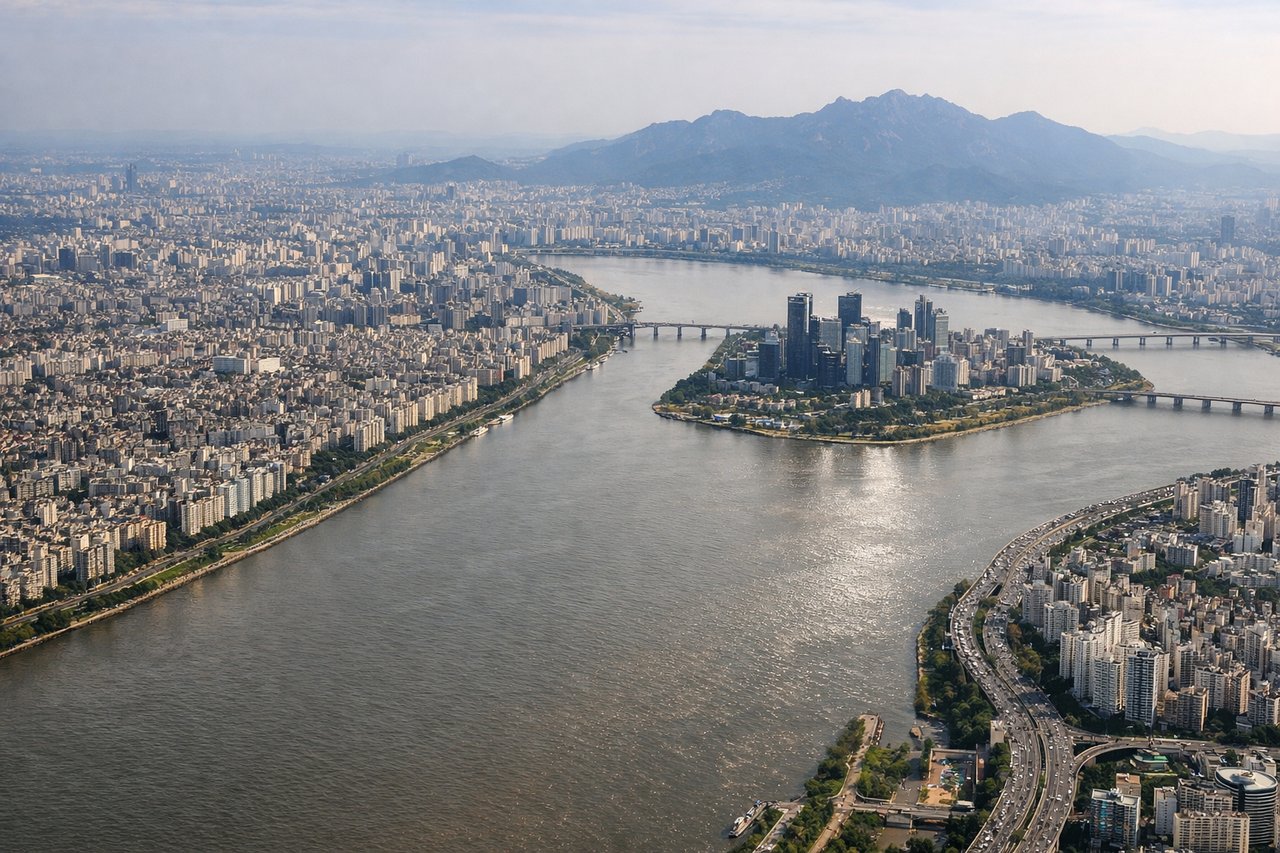
LEFTGMP typically receives arrivals from the east or southeast on runway 32L/32R, meaning the aircraft approaches from over the Han River estuary heading northwest. The left side on this approach looks south over the Han River as it winds through Seoul, with the city's major districts clearly visible. This gives a prolonged view of the Han River corridor and central Seoul during the descent.
Landmarks on this routeAll landmarks →
Will your flight be in sunlight?
Pick a date and time in the Sun Map to watch the sun move across your whole flight.
About This Route
Which side of the plane should I sit on flying from Tokyo International (HND) to Gimpo (GMP)?
Sit on the Left side of the plane for the best views on flights from Tokyo to Seoul. While the right side has the edge at Haneda departure, the left side wins overall. During the cruise portion heading northwest across the Korea Strait, the left side faces south toward the open sea and the Japanese island chain receding behind you, then picks up the Korean coastline on approach. The left side's Han River and Seoul arrival view is the most visually rewarding single moment of the flight.
What can I see during takeoff from Tokyo International in Tokyo?
During takeoff from Tokyo International (HND), sit on the Right side for the best views. HND typically departs on runways 34L/34R heading northwest, or 05 heading northeast. On the dominant northwesterly departure, the right side faces southwest toward Tokyo Bay and the urban sprawl of Kawasaki and Yokohama. On a northeast departure on runway 05, the right side looks out over central Tokyo and the bay. Either way, the right side captures the dense urban core and bay views during climb-out. Notable sights include: Tokyo Bay, Yokohama port and waterfront, the dense grid of central Tokyo districts, Rainbow Bridge and the reclaimed island of Odaiba.
What can I see when landing at Gimpo in Seoul?
When landing at Gimpo (GMP), sit on the Left side for the best views. GMP typically receives arrivals from the east or southeast on runway 32L/32R, meaning the aircraft approaches from over the Han River estuary heading northwest. The left side on this approach looks south over the Han River as it winds through Seoul, with the city's major districts clearly visible. This gives a prolonged view of the Han River corridor and central Seoul during the descent. Notable sights include: Han River winding through Seoul, Yeouido island and its financial district, Bukhansan mountain ridgeline to the north, the dense urban grid of Mapo and Yeongdeungpo districts.
How long is the flight from Tokyo to Seoul?
The flight from Tokyo International (HND) to Gimpo (GMP) takes about 2 hours. The shortest flight path between them is 734 miles (1,181 km); winds and air traffic control usually add a few percent.
What does the Tokyo to Seoul flight path pass over?
The flight crosses the Korea Strait (Tsushima Strait), passing over or near Tsushima Island, a mountainous island clearly visible from altitude. The southern tip of the Korean Peninsula and the port city of Busan may be visible to the left on descent. The Yellow Sea coastline of Korea comes into view on the left side as the aircraft descends toward Seoul.