The right side delivers the more dramatic departure with Tokyo Bay and Mount Fuji, and over the Coral Sea and northern Australia the right side also tracks closer to the Queensland coastline. The landing view from the left is excellent but the takeoff spectacle from the right edges it overall.
Flight Path
The route crosses the East China Sea south of Kyushu, passes over or near Okinawa and the Ryukyu Islands chain, then crosses the Philippine Sea and the Coral Sea north of Australia. The flight tracks over the Cape York Peninsula in far north Queensland, then south over the Queensland interior and New South Wales before crossing into Victoria. The Coral Sea and Great Barrier Reef region may be partially visible on clear days during the northern Australia approach, and the vast flat outback of inland Queensland and NSW dominates the mid-flight view below.
Great circle distance and headings ›

Phase by phase
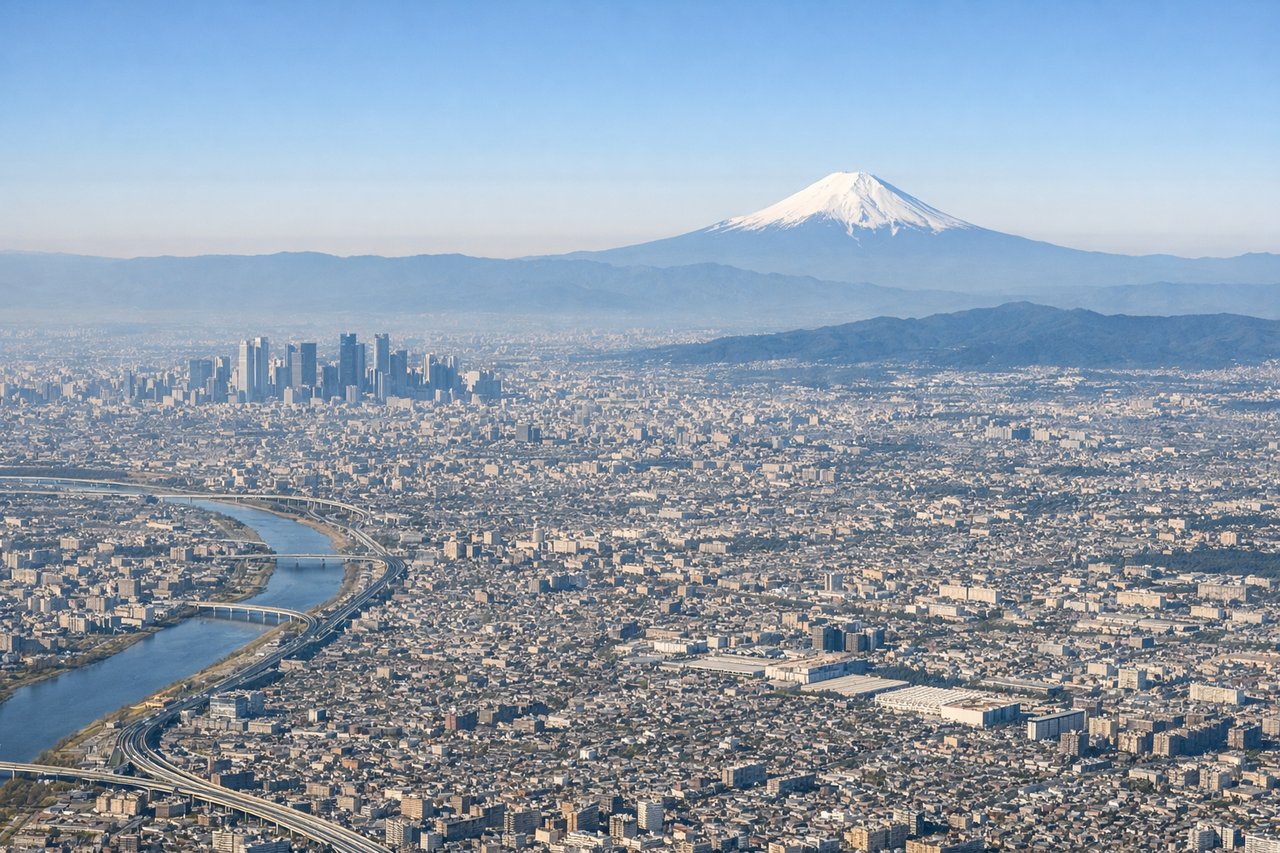
Takeoff from HND
RIGHTHND typically departs southward on Runway 34L/34R or uses runways oriented toward Tokyo Bay. A right-side seat gives you the sweep of Tokyo Bay, the dense urban grid of central Tokyo, and on clear days Mount Fuji rising to the southwest. Left side faces inland toward suburban sprawl with fewer distinctive features.
Landing at MEB
LEFTEssendon Airport sits northwest of Melbourne CBD. Aircraft typically approach from the north or east, meaning a left-side seat gives views over Port Phillip Bay, the Melbourne CBD skyline, and the Yarra River corridor as you descend. Right side faces toward the northern suburbs with less visual interest.
Landmarks on this routeAll landmarks →
Will your flight be in sunlight?
See exactly which side of the plane gets sun and shade at your departure time.
About This Route
Which side of the plane should I sit on flying from Tokyo International (HND) to Melbourne Essendon (MEB)?
Sit on the Right side of the plane for the best views on flights from Tokyo to Melbourne. The right side delivers the more dramatic departure with Tokyo Bay and Mount Fuji, and over the Coral Sea and northern Australia the right side also tracks closer to the Queensland coastline. The landing view from the left is excellent but the takeoff spectacle from the right edges it overall.
What can I see during takeoff from Tokyo International in Tokyo?
During takeoff from Tokyo International (HND), sit on the Right side for the best views. HND typically departs southward on Runway 34L/34R or uses runways oriented toward Tokyo Bay. A right-side seat gives you the sweep of Tokyo Bay, the dense urban grid of central Tokyo, and on clear days Mount Fuji rising to the southwest. Left side faces inland toward suburban sprawl with fewer distinctive features. Notable sights include: Tokyo Bay, Mount Fuji (southwest, clear days), Yokohama port and waterfront, Kawasaki industrial zone along the bay shore.
What can I see when landing at Melbourne Essendon in Melbourne?
When landing at Melbourne Essendon (MEB), sit on the Left side for the best views. Essendon Airport sits northwest of Melbourne CBD. Aircraft typically approach from the north or east, meaning a left-side seat gives views over Port Phillip Bay, the Melbourne CBD skyline, and the Yarra River corridor as you descend. Right side faces toward the northern suburbs with less visual interest. Notable sights include: Port Phillip Bay, Melbourne CBD skyline, Yarra River, Dandenong Ranges to the east.
How long is the flight from Tokyo to Melbourne?
The flight from Tokyo International (HND) to Melbourne Essendon (MEB) takes Approximately 9 to 10 hours.
What does the Tokyo to Melbourne flight path pass over?
The route crosses the East China Sea south of Kyushu, passes over or near Okinawa and the Ryukyu Islands chain, then crosses the Philippine Sea and the Coral Sea north of Australia. The flight tracks over the Cape York Peninsula in far north Queensland, then south over the Queensland interior and New South Wales before crossing into Victoria. The Coral Sea and Great Barrier Reef region may be partially visible on clear days during the northern Australia approach, and the vast flat outback of inland Queensland and NSW dominates the mid-flight view below.