While the right side gets the single dramatic Mount Fuji moment at takeoff, the left side offers more sustained variety: a glimpse of the Tokyo urban coastline on departure, a chance at Pacific Northwest coastal peaks as the flight path approaches North America, and a strong, landmark-dense arrival over San Francisco Bay with the Golden Gate Bridge and skyline.
Flown HND to SFO? Did we get it right?
Flight Path
Tokyo to San Francisco is 5,148 miles (8,285 km), a flight of about 9 hours 50 minutes.
The route crosses the North Pacific well north of Hawaii, passing south of the Aleutian Islands and the Gulf of Alaska before making landfall near the Pacific Northwest coast; for most of this stretch only open ocean is visible from either side.
Great circle distance and headings ›

Phase by phase
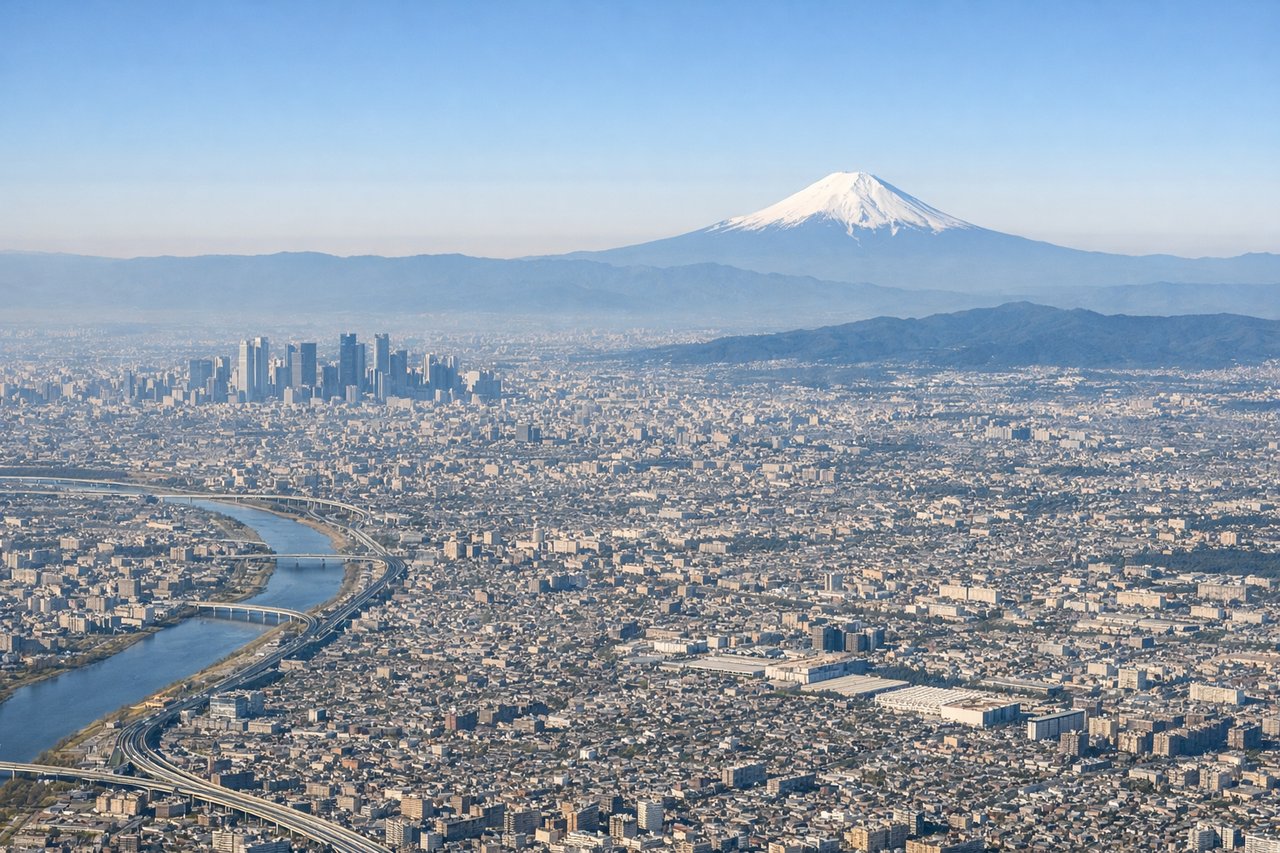
Takeoff from HND
RIGHTDeparting Haneda to the south over Tokyo Bay, the aircraft typically banks toward the open Pacific, giving right-side passengers a clear view back toward Mount Fuji rising over the Izu Peninsula and Sagami Bay. It's a brief but iconic moment that left-side passengers, looking back at the denser Tokyo/Kawasaki urban sprawl, don't get.
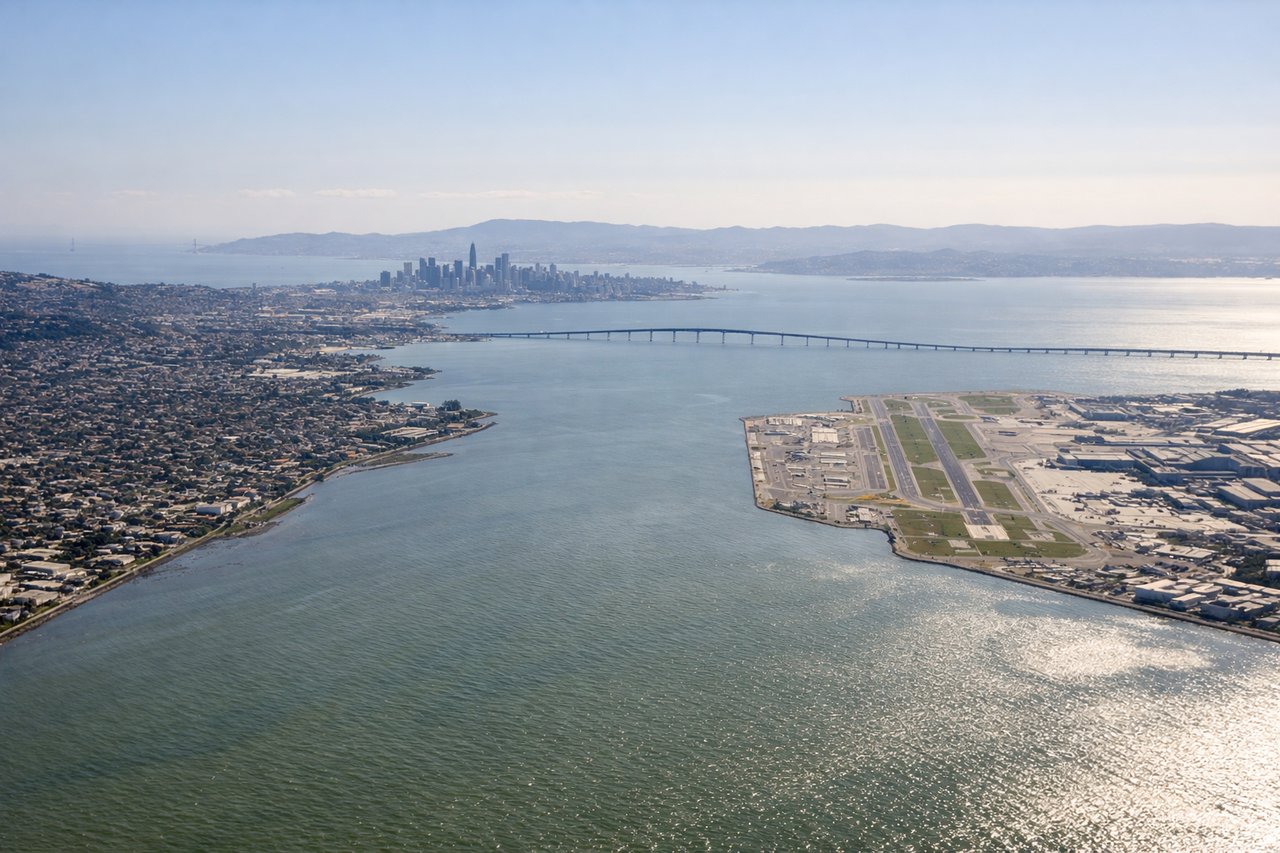
Landing at SFO
LEFTArriving from the north, flights typically track down the Marin coastline and cross into the bay, giving left-side passengers a sweeping view of the Golden Gate Bridge, San Francisco's downtown skyline, and the Bay Bridge toward Oakland as the aircraft turns onto final approach. Right-side passengers mostly see open ocean and the comparatively featureless Marin Headlands.
Will your flight be in sunlight?
Pick a date and time in the Sun Map to watch the sun move across your whole flight.
About This Route
Which side of the plane should I sit on flying from Tokyo International (HND) to San Francisco International (SFO)?
Sit on the Left side of the plane for the best views on flights from Tokyo to San Francisco. While the right side gets the single dramatic Mount Fuji moment at takeoff, the left side offers more sustained variety: a glimpse of the Tokyo urban coastline on departure, a chance at Pacific Northwest coastal peaks as the flight path approaches North America, and a strong, landmark-dense arrival over San Francisco Bay with the Golden Gate Bridge and skyline.
What can I see during takeoff from Tokyo International in Tokyo?
During takeoff from Tokyo International (HND), sit on the Right side for the best views. Departing Haneda to the south over Tokyo Bay, the aircraft typically banks toward the open Pacific, giving right-side passengers a clear view back toward Mount Fuji rising over the Izu Peninsula and Sagami Bay. It's a brief but iconic moment that left-side passengers, looking back at the denser Tokyo/Kawasaki urban sprawl, don't get. Notable sights include: Mount Fuji, Izu Peninsula, Sagami Bay, Tokyo Bay shoreline.
What can I see when landing at San Francisco International in San Francisco?
When landing at San Francisco International (SFO), sit on the Left side for the best views. Arriving from the north, flights typically track down the Marin coastline and cross into the bay, giving left-side passengers a sweeping view of the Golden Gate Bridge, San Francisco's downtown skyline, and the Bay Bridge toward Oakland as the aircraft turns onto final approach. Right-side passengers mostly see open ocean and the comparatively featureless Marin Headlands. Notable sights include: Golden Gate Bridge, San Francisco skyline, San Francisco Bay, Bay Bridge/Oakland.
How long is the flight from Tokyo to San Francisco?
The flight from Tokyo International (HND) to San Francisco International (SFO) takes about 9 hours 50 minutes. The shortest flight path between them is 5,148 miles (8,285 km); winds and air traffic control usually add a few percent.
What does the Tokyo to San Francisco flight path pass over?
The route crosses the North Pacific well north of Hawaii, passing south of the Aleutian Islands and the Gulf of Alaska before making landfall near the Pacific Northwest coast; for most of this stretch only open ocean is visible from either side.