Both sides spend over five hours above open Pacific, which caps the scores. The left side wins on the Sydney arrival with the harbour and CBD, plus the Queensland coast and Whitsunday and Great Barrier Reef waters on the southbound track. The right side's Fuji view on takeoff is excellent but it is mostly water after that.
Flown HND to SYD? Did we get it right?
Flight Path
Tokyo to Sydney is 4,858 miles (7,818 km), a flight of about 9 hours 40 minutes.
After leaving Tokyo Bay the route runs south past the Izu Islands (Oshima, Miyakejima, Hachijojima) and near the Ogasawara/Bonin and Volcano Islands, then crosses the equatorial western Pacific. Over Papua New Guinea it crosses the Huon Peninsula/Lae area and the Owen Stanley Range region. It then crosses the Coral Sea, nears the Queensland coast around the Whitsunday Islands and Great Barrier Reef, and continues over inland NSW (New England and Hunter Valley regions) toward Sydney. Exact routing varies with winds and airspace.
Great circle distance and headings ›


Phase by phase
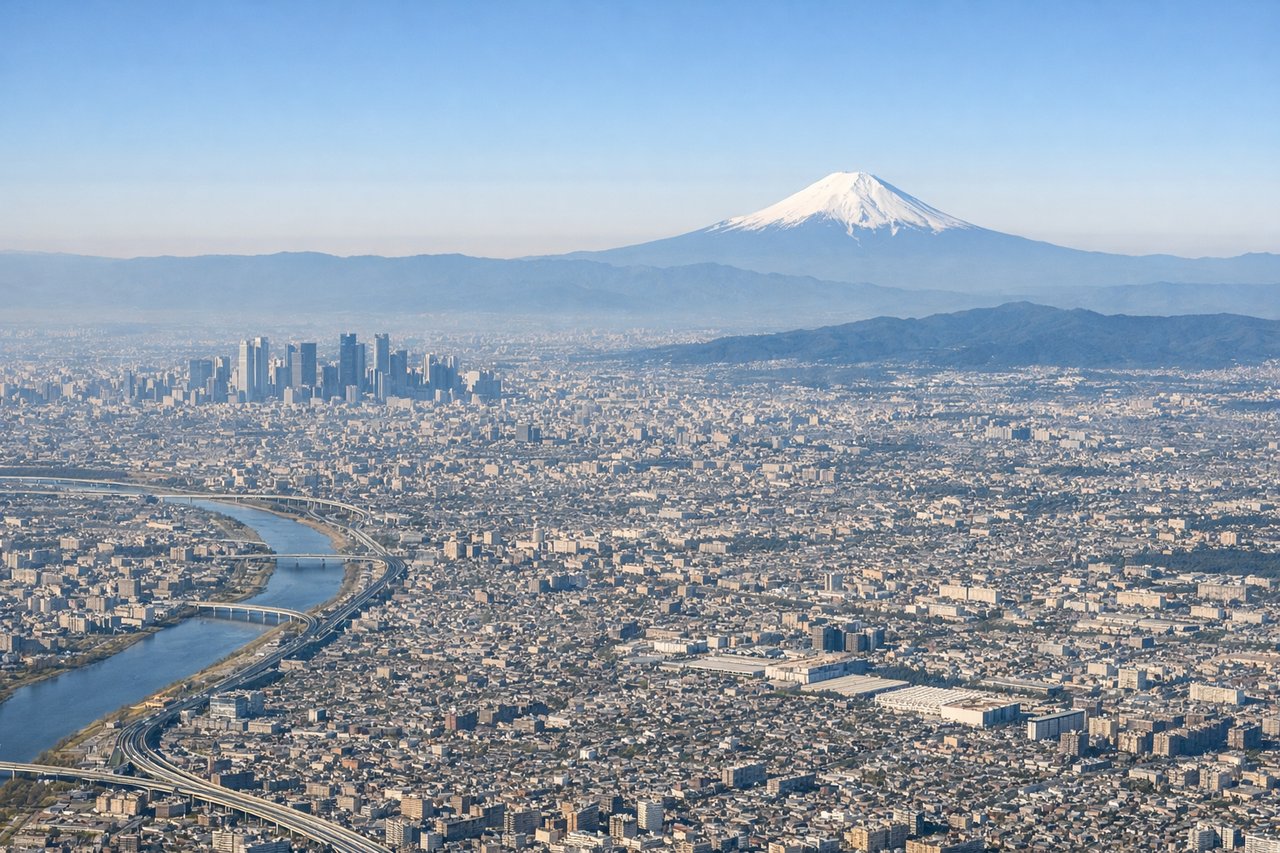
Takeoff from HND
RIGHTAssuming a south-flow departure off 16L/16R, the jet climbs SSE over Tokyo Bay, so the right side faces west toward Yokohama, the Miura Peninsula and, on a clear day, Mt. Fuji. The left side sees the flatter Chiba shoreline and the Boso Peninsula.
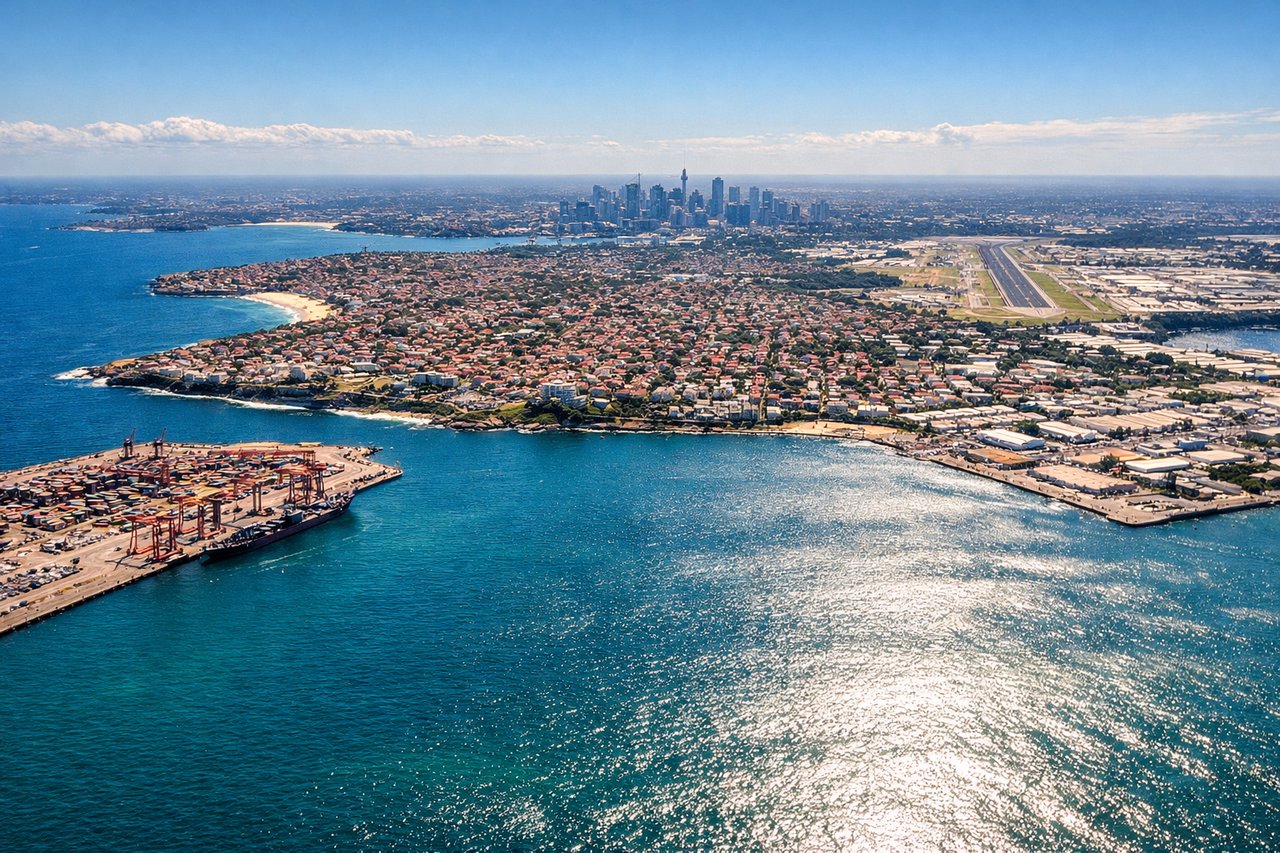
Landing at SYD
LEFTArriving from the north on 16R, the jet passes the inner west and turns onto final with the CBD, Harbour Bridge and Opera House on the left. The eastern suburbs and the Tasman Sea fill the background. This is one of the best arrival views in the Southern Hemisphere.
Will your flight be in sunlight?
Pick a date and time in the Sun Map to watch the sun move across your whole flight.
About This Route
Which side of the plane should I sit on flying from Tokyo International (HND) to Kingsford Smith International Airport (SYD)?
Sit on the Left side of the plane for the best views on flights from Tokyo to Sydney. Both sides spend over five hours above open Pacific, which caps the scores. The left side wins on the Sydney arrival with the harbour and CBD, plus the Queensland coast and Whitsunday and Great Barrier Reef waters on the southbound track. The right side's Fuji view on takeoff is excellent but it is mostly water after that.
What can I see during takeoff from Tokyo International in Tokyo?
During takeoff from Tokyo International (HND), sit on the Right side for the best views. Assuming a south-flow departure off 16L/16R, the jet climbs SSE over Tokyo Bay, so the right side faces west toward Yokohama, the Miura Peninsula and, on a clear day, Mt. Fuji. The left side sees the flatter Chiba shoreline and the Boso Peninsula. Notable sights include: Mt. Fuji on the western horizon, Yokohama's Minato Mirai skyline, Tokyo Bay Aqua-Line (Umihotaru island), Miura Peninsula and Sagami Bay.
What can I see when landing at Kingsford Smith International Airport in Sydney?
When landing at Kingsford Smith International Airport (SYD), sit on the Left side for the best views. Arriving from the north on 16R, the jet passes the inner west and turns onto final with the CBD, Harbour Bridge and Opera House on the left. The eastern suburbs and the Tasman Sea fill the background. This is one of the best arrival views in the Southern Hemisphere. Notable sights include: Sydney CBD skyline, Sydney Harbour Bridge and Opera House, Bondi and the eastern suburb coastline, Botany Bay.
How long is the flight from Tokyo to Sydney?
The flight from Tokyo International (HND) to Kingsford Smith International Airport (SYD) takes about 9 hours 40 minutes. The shortest flight path between them is 4,858 miles (7,818 km); winds and air traffic control usually add a few percent.
What does the Tokyo to Sydney flight path pass over?
After leaving Tokyo Bay the route runs south past the Izu Islands (Oshima, Miyakejima, Hachijojima) and near the Ogasawara/Bonin and Volcano Islands, then crosses the equatorial western Pacific. Over Papua New Guinea it crosses the Huon Peninsula/Lae area and the Owen Stanley Range region. It then crosses the Coral Sea, nears the Queensland coast around the Whitsunday Islands and Great Barrier Reef, and continues over inland NSW (New England and Hunter Valley regions) toward Sydney. Exact routing varies with winds and airspace.