The right side delivers the flight's two standout landmarks — Mount Fuji during departure and the volcanic Yangmingshan range during arrival — while the left side mostly overlooks open Pacific and East China Sea water during cruise and a flatter city view on landing.
Flown HND to TSA? Did we get it right?
Flight Path
Tokyo to Taipei is 1,303 miles (2,097 km), a flight of about 3 hours 10 minutes.
The route crosses southern Kyushu near Kagoshima, then heads over the open East China Sea past the northern Ryukyu Islands (Amami-Oshima and, at times, Okinawa) before making landfall on Taiwan's northeast coast near Yilan and crossing into the Taipei Basin.
Great circle distance and headings ›

Phase by phase
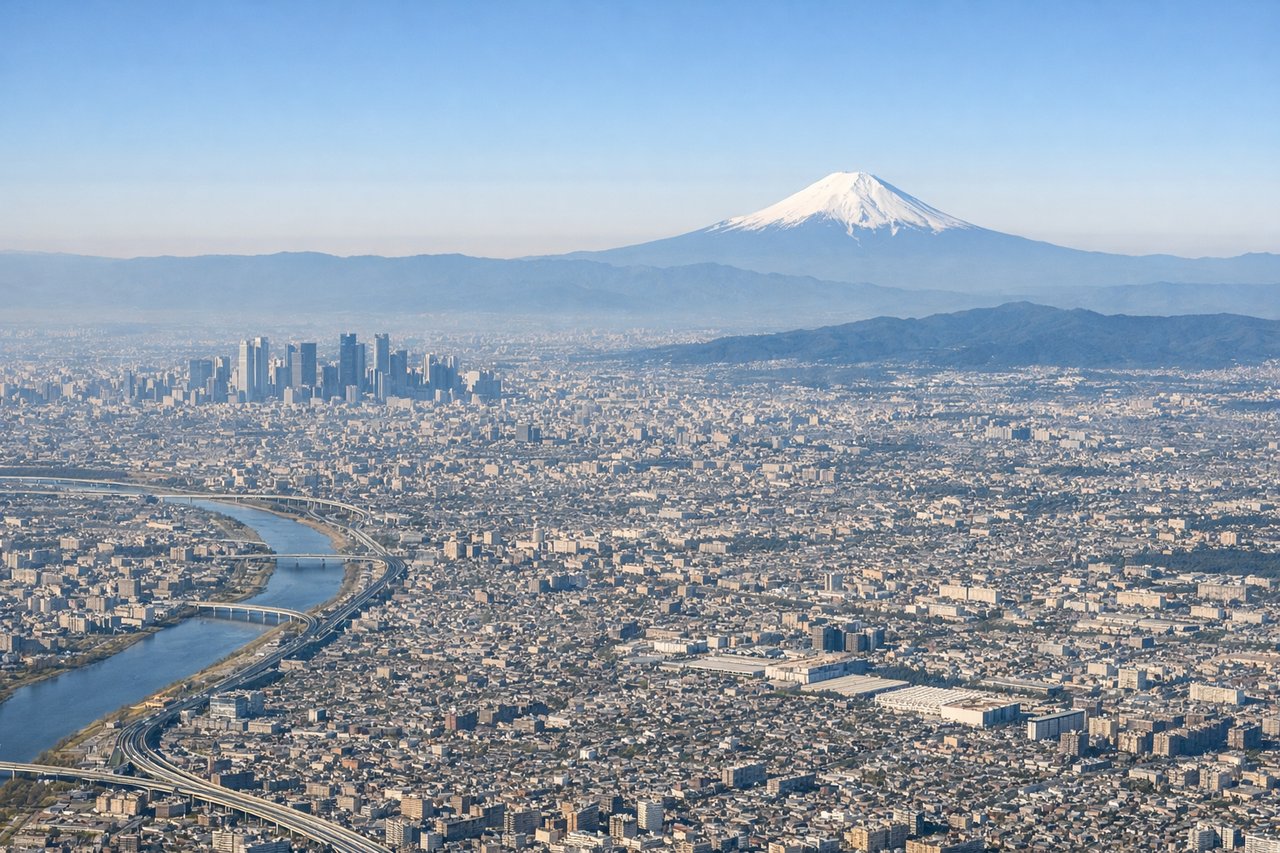
Takeoff from HND
RIGHTDeparting Haneda southbound over Tokyo Bay, the aircraft's right side faces west, giving a clear view of Mount Fuji's snow-capped cone rising above the Izu Peninsula as the plane climbs and banks onto its southwesterly track toward Taiwan.
Landing at TSA
RIGHTOn the typical northeast-monsoon approach into Sungshan's runway 28, the aircraft descends from the east with its right side facing north, revealing the volcanic peaks of Yangmingshan National Park rising over the Taipei Basin just before touchdown.
Will your flight be in sunlight?
Pick a date and time in the Sun Map to watch the sun move across your whole flight.
About This Route
Which side of the plane should I sit on flying from Tokyo International (HND) to Sungshan (TSA)?
Sit on the Right side of the plane for the best views on flights from Tokyo to Taipei. The right side delivers the flight's two standout landmarks — Mount Fuji during departure and the volcanic Yangmingshan range during arrival — while the left side mostly overlooks open Pacific and East China Sea water during cruise and a flatter city view on landing.
What can I see during takeoff from Tokyo International in Tokyo?
During takeoff from Tokyo International (HND), sit on the Right side for the best views. Departing Haneda southbound over Tokyo Bay, the aircraft's right side faces west, giving a clear view of Mount Fuji's snow-capped cone rising above the Izu Peninsula as the plane climbs and banks onto its southwesterly track toward Taiwan. Notable sights include: Mount Fuji, Izu Peninsula, Yokohama port and Tokyo Bay shipping lanes, Miura Peninsula.
What can I see when landing at Sungshan in Taipei?
When landing at Sungshan (TSA), sit on the Right side for the best views. On the typical northeast-monsoon approach into Sungshan's runway 28, the aircraft descends from the east with its right side facing north, revealing the volcanic peaks of Yangmingshan National Park rising over the Taipei Basin just before touchdown. Notable sights include: Yangmingshan National Park (Datun volcanic group), Keelung River, hills north of the Taipei Basin, Jinshan coastline in the distance.
How long is the flight from Tokyo to Taipei?
The flight from Tokyo International (HND) to Sungshan (TSA) takes about 3 hours 10 minutes. The shortest flight path between them is 1,303 miles (2,097 km); winds and air traffic control usually add a few percent.
What does the Tokyo to Taipei flight path pass over?
The route crosses southern Kyushu near Kagoshima, then heads over the open East China Sea past the northern Ryukyu Islands (Amami-Oshima and, at times, Okinawa) before making landfall on Taiwan's northeast coast near Yilan and crossing into the Taipei Basin.