The right side delivers the flight's two most dramatic moments: Oahu's Diamond Head and Waikiki coastline during the departure turn, and Haleakala's towering volcanic profile on the approach into Maui, giving it a slight edge over the left side's Pearl Harbor and West Maui Mountains views.
Flight Path
Kaiwi Channel crossing, the south coast of Molokai island, and the Pailolo Channel between Molokai and Maui
Great circle distance and headings ›
.jpg?width=600)
Phase by phase
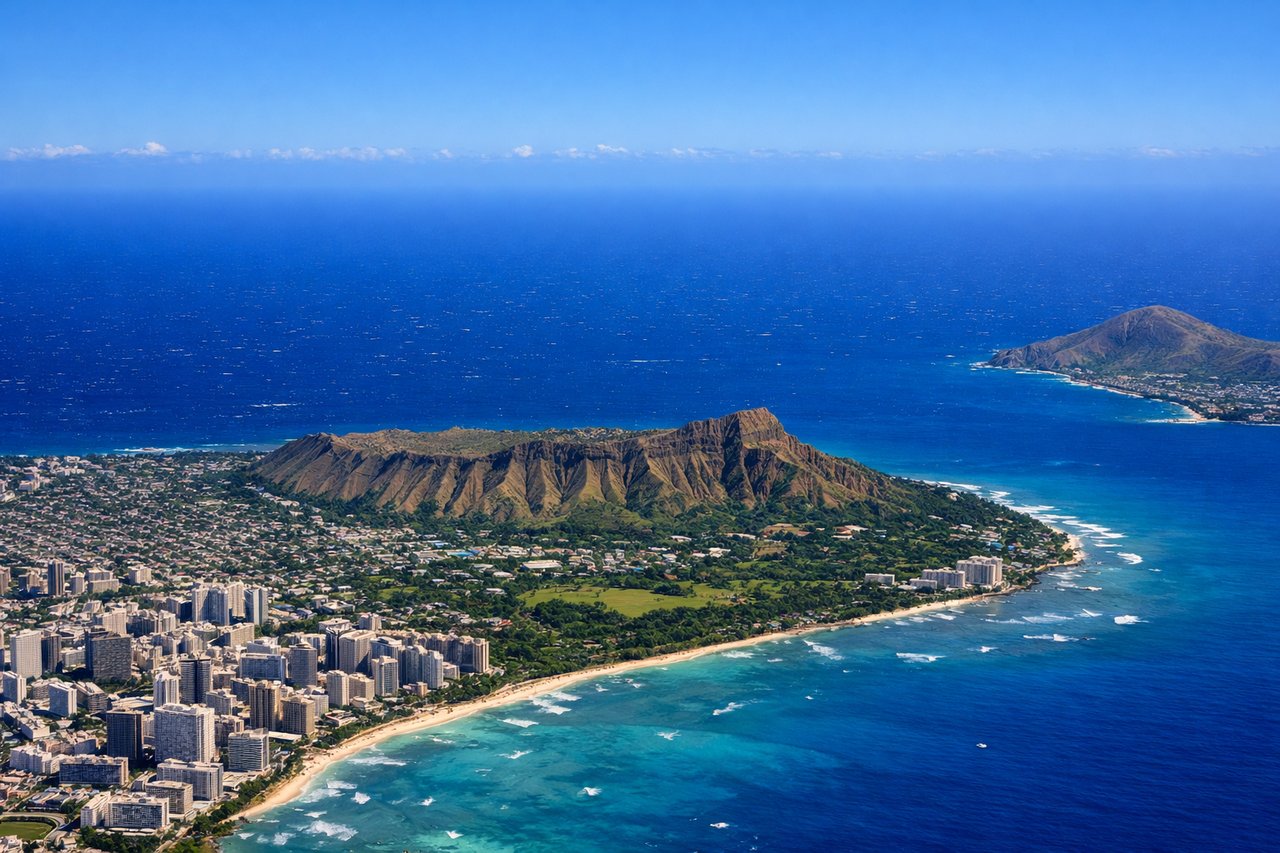
Takeoff from HNL
RIGHTDeparting HNL on the trade-wind runway, the aircraft climbs east then banks south toward Maui, putting Oahu's iconic south shore right outside the right-side windows. Diamond Head crater, Waikiki's beachfront towers, and Koko Head crater unfold in sequence as the plane turns onto its Maui heading.
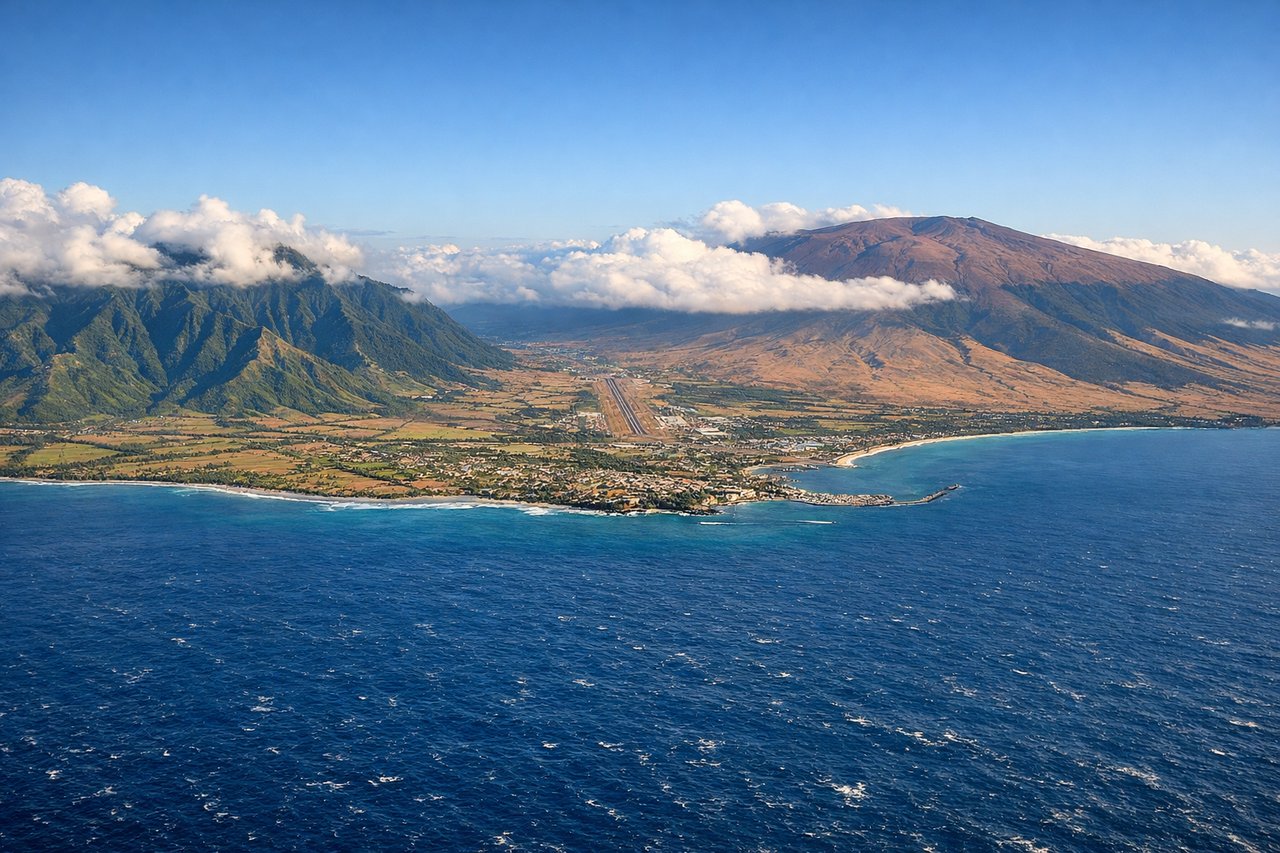
Landing at OGG
RIGHTOn approach into Kahului, the aircraft lines up over Maui's central isthmus with Haleakala's massive volcanic shield dominating the view to the east. The mountain's long green-brown flanks and cloud-draped summit are far more visually striking than the smaller West Maui range on the opposite side.
Landmarks on this routeAll landmarks →
Will your flight be in sunlight?
See exactly which side of the plane gets sun and shade at your departure time.
About This Route
Which side of the plane should I sit on flying from Honolulu International (HNL) to Kahului (OGG)?
Sit on the Right side of the plane for the best views on flights from Honolulu to Kahului. The right side delivers the flight's two most dramatic moments: Oahu's Diamond Head and Waikiki coastline during the departure turn, and Haleakala's towering volcanic profile on the approach into Maui, giving it a slight edge over the left side's Pearl Harbor and West Maui Mountains views.
What can I see during takeoff from Honolulu International in Honolulu?
During takeoff from Honolulu International (HNL), sit on the Right side for the best views. Departing HNL on the trade-wind runway, the aircraft climbs east then banks south toward Maui, putting Oahu's iconic south shore right outside the right-side windows. Diamond Head crater, Waikiki's beachfront towers, and Koko Head crater unfold in sequence as the plane turns onto its Maui heading. Notable sights include: Diamond Head crater, Waikiki Beach, Koko Head crater, south Oahu coastline.
What can I see when landing at Kahului in Kahului?
When landing at Kahului (OGG), sit on the Right side for the best views. On approach into Kahului, the aircraft lines up over Maui's central isthmus with Haleakala's massive volcanic shield dominating the view to the east. The mountain's long green-brown flanks and cloud-draped summit are far more visually striking than the smaller West Maui range on the opposite side. Notable sights include: Haleakala volcano, Maui's central isthmus farmland, Kahului Harbor, Pacific coastline.
How long is the flight from Honolulu to Kahului?
The flight from Honolulu International (HNL) to Kahului (OGG) takes 0h 40m.
What does the Honolulu to Kahului flight path pass over?
Kaiwi Channel crossing, the south coast of Molokai island, and the Pailolo Channel between Molokai and Maui