Istanbul to Dhaka is 3,706 miles (5,964 km), a flight of about 6 hours 30 minutes.
The left (north-facing) side wins because the flight path skirts south of the Caspian Sea and Alborz Mountains near Tehran, crosses near the Hindu Kush in Afghanistan, and passes south of the Himalayan foothills before descending into Bangladesh's river delta — all visible to the north. The right side spends most of the cruise over the flat, arid plains of central Iran and Pakistan with little variation.
Flight Path
Alborz Mountains and southern Caspian Sea shoreline near Tehran, the arid Iranian plateau, the Hindu Kush range over Afghanistan, and the Himalayan foothills of northern Pakistan and India before the Bangladesh river delta
Great circle distance and headings ›_in_Istanbul.jpg?width=600)

.jpg?width=600)
Phase by phase
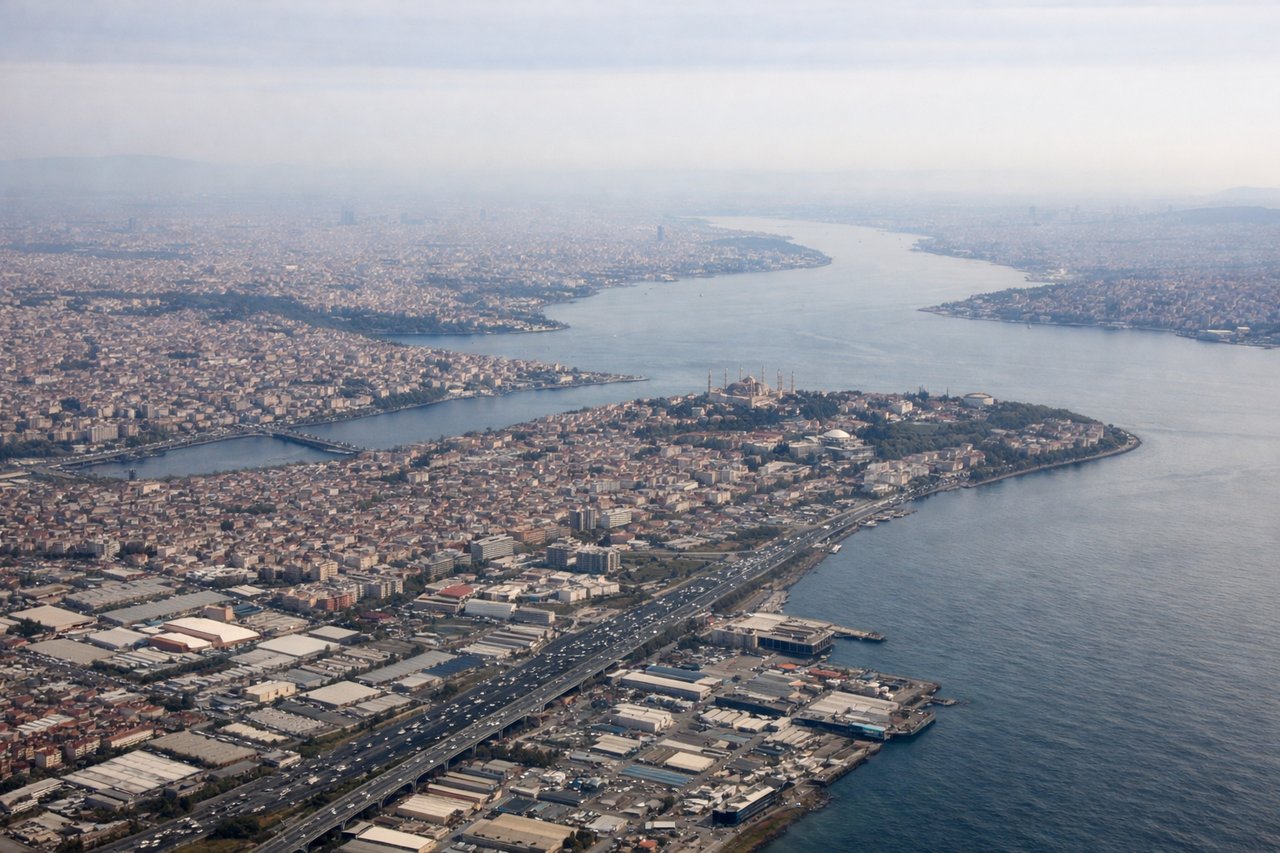
Takeoff from IST
LEFTDeparting IST to the south before turning east gives left-side passengers a sweeping view of the Bosphorus, the historic peninsula, and the Sea of Marmara coastline as the aircraft banks onto its easterly heading. The right side mostly shows the flatter Thrace countryside.
Landing at DAC
LEFTOn the descent into DAC from the northwest, the left side offers views over the intricate river delta of the Padma and Meghna, a maze of waterways and green farmland typical of Bangladesh, before the runway comes into view. The right side during this approach faces mostly featureless agricultural flatland.
Landmarks on this routeAll landmarks →
Will your flight be in sunlight?
Pick a date and time in the Sun Map to watch the sun move across your whole flight.
About This Route
Which side of the plane should I sit on flying from İstanbul Airport (IST) to Hazrat Shahjalal International Airport (DAC)?
Sit on the Left side of the plane for the best views on flights from Istanbul to Dhaka. The left (north-facing) side wins because the flight path skirts south of the Caspian Sea and Alborz Mountains near Tehran, crosses near the Hindu Kush in Afghanistan, and passes south of the Himalayan foothills before descending into Bangladesh's river delta — all visible to the north. The right side spends most of the cruise over the flat, arid plains of central Iran and Pakistan with little variation.
What can I see during takeoff from İstanbul Airport in Istanbul?
During takeoff from İstanbul Airport (IST), sit on the Left side for the best views. Departing IST to the south before turning east gives left-side passengers a sweeping view of the Bosphorus, the historic peninsula, and the Sea of Marmara coastline as the aircraft banks onto its easterly heading. The right side mostly shows the flatter Thrace countryside. Notable sights include: Bosphorus Strait, Istanbul's historic peninsula, Sea of Marmara, Princes' Islands.
What can I see when landing at Hazrat Shahjalal International Airport in Dhaka?
When landing at Hazrat Shahjalal International Airport (DAC), sit on the Left side for the best views. On the descent into DAC from the northwest, the left side offers views over the intricate river delta of the Padma and Meghna, a maze of waterways and green farmland typical of Bangladesh, before the runway comes into view. The right side during this approach faces mostly featureless agricultural flatland. Notable sights include: Padma River, Meghna River confluence, Bangladeshi delta farmland, Dhaka's outer suburbs.
How long is the flight from Istanbul to Dhaka?
The flight from İstanbul Airport (IST) to Hazrat Shahjalal International Airport (DAC) takes about 6 hours 30 minutes. The shortest flight path between them is 3,706 miles (5,964 km); winds and air traffic control usually add a few percent.
What does the Istanbul to Dhaka flight path pass over?
Alborz Mountains and southern Caspian Sea shoreline near Tehran, the arid Iranian plateau, the Hindu Kush range over Afghanistan, and the Himalayan foothills of northern Pakistan and India before the Bangladesh river delta