Right side scores higher (3.5 vs 2.5) due to superior scenic variety across the full flight. Takeoff offers Osaka's urban-maritime interface and the Inland Sea; cruise provides extended views of the Philippine Sea and approaching tropical coastline; landing delivers the dramatic Great Barrier Reef and rainforest approach. Left side is dominated by open ocean for most of the cruise phase, limiting visual interest despite decent takeoff and landing sequences.
Flown ITM to CNS? Did we get it right?
Flight Path
Osaka to Cairns is 3,633 miles (5,847 km), a flight of about 7 hours 15 minutes.
Philippine Sea (open ocean, minimal landmarks for 4-5 hours), Luzon Strait region (if routed north of direct track), approaching Coral Sea with reef formations becoming visible 100+ miles northeast of Cairns, Far North Queensland rainforest ranges visible during descent
Great circle distance and headings ›Phase by phase
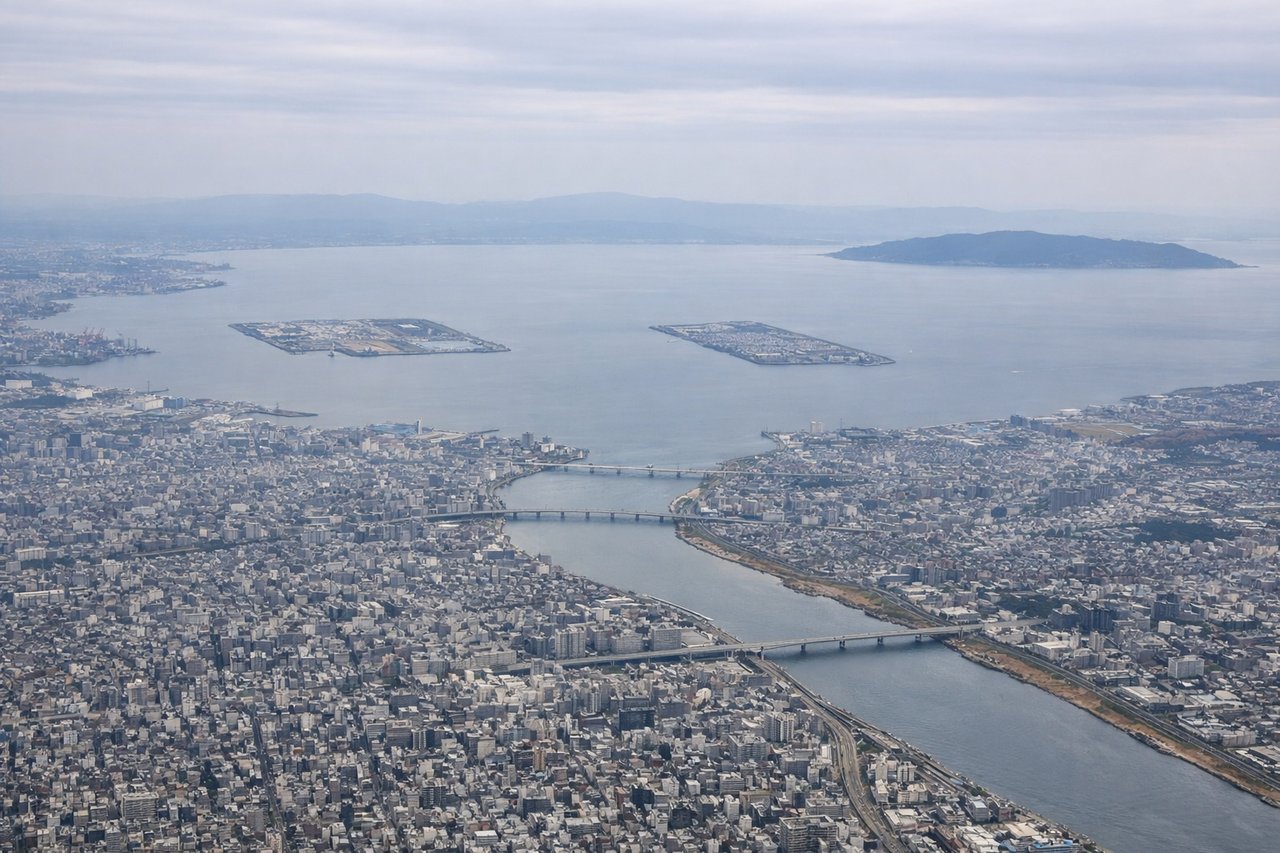
Takeoff from ITM
RIGHTRight side captures Osaka Bay and the Kobe-Osaka urban corridor during the initial climb-out. Departures toward runway 32 (northwest) offer views of Osaka's harbor, industrial waterfront, and the surrounding Kansai region's urban density before turning south over the Inland Sea.
Landing at CNS
RIGHTRight side (east) provides the most dramatic approach into Cairns. The descent over the Coral Sea reveals the Great Barrier Reef's turquoise lagoons and reef structures, followed by the rainforested coastal ranges of Far North Queensland. The final approach over Trinity Bay and the Cairns waterfront offers urban and natural scenery combined.
Will your flight be in sunlight?
Pick a date and time in the Sun Map to watch the sun move across your whole flight.
About This Route
Which side of the plane should I sit on flying from Osaka International (ITM) to Cairns International (CNS)?
Sit on the Right side of the plane for the best views on flights from Osaka to Cairns. Right side scores higher (3.5 vs 2.5) due to superior scenic variety across the full flight. Takeoff offers Osaka's urban-maritime interface and the Inland Sea; cruise provides extended views of the Philippine Sea and approaching tropical coastline; landing delivers the dramatic Great Barrier Reef and rainforest approach. Left side is dominated by open ocean for most of the cruise phase, limiting visual interest despite decent takeoff and landing sequences.
What can I see during takeoff from Osaka International in Osaka?
During takeoff from Osaka International (ITM), sit on the Right side for the best views. Right side captures Osaka Bay and the Kobe-Osaka urban corridor during the initial climb-out. Departures toward runway 32 (northwest) offer views of Osaka's harbor, industrial waterfront, and the surrounding Kansai region's urban density before turning south over the Inland Sea. Notable sights include: Osaka Bay, Kobe skyline to the west, Inland Sea (Seto Naikai), Awaji Island.
What can I see when landing at Cairns International in Cairns?
When landing at Cairns International (CNS), sit on the Right side for the best views. Right side (east) provides the most dramatic approach into Cairns. The descent over the Coral Sea reveals the Great Barrier Reef's turquoise lagoons and reef structures, followed by the rainforested coastal ranges of Far North Queensland. The final approach over Trinity Bay and the Cairns waterfront offers urban and natural scenery combined. Notable sights include: Great Barrier Reef (turquoise lagoons and reef patterns), Coral Sea, Barron River valley, Trinity Bay.
How long is the flight from Osaka to Cairns?
The flight from Osaka International (ITM) to Cairns International (CNS) takes about 7 hours 15 minutes. The shortest flight path between them is 3,633 miles (5,847 km); winds and air traffic control usually add a few percent.
What does the Osaka to Cairns flight path pass over?
Philippine Sea (open ocean, minimal landmarks for 4-5 hours), Luzon Strait region (if routed north of direct track), approaching Coral Sea with reef formations becoming visible 100+ miles northeast of Cairns, Far North Queensland rainforest ranges visible during descent