The right side wins narrowly thanks to the dramatic Osaka Bay and Kobe departure sequence, which offers more sustained landmark density than the brief Helsinki archipelago glimpse on landing; the long cruise over Siberia and the Urals is fairly symmetric and doesn't favor either side strongly.
Flight Path
West Siberian Plain, Ob River basin, Ural Mountains, boreal taiga forests of central Russia
Great circle distance and headings ›Phase by phase
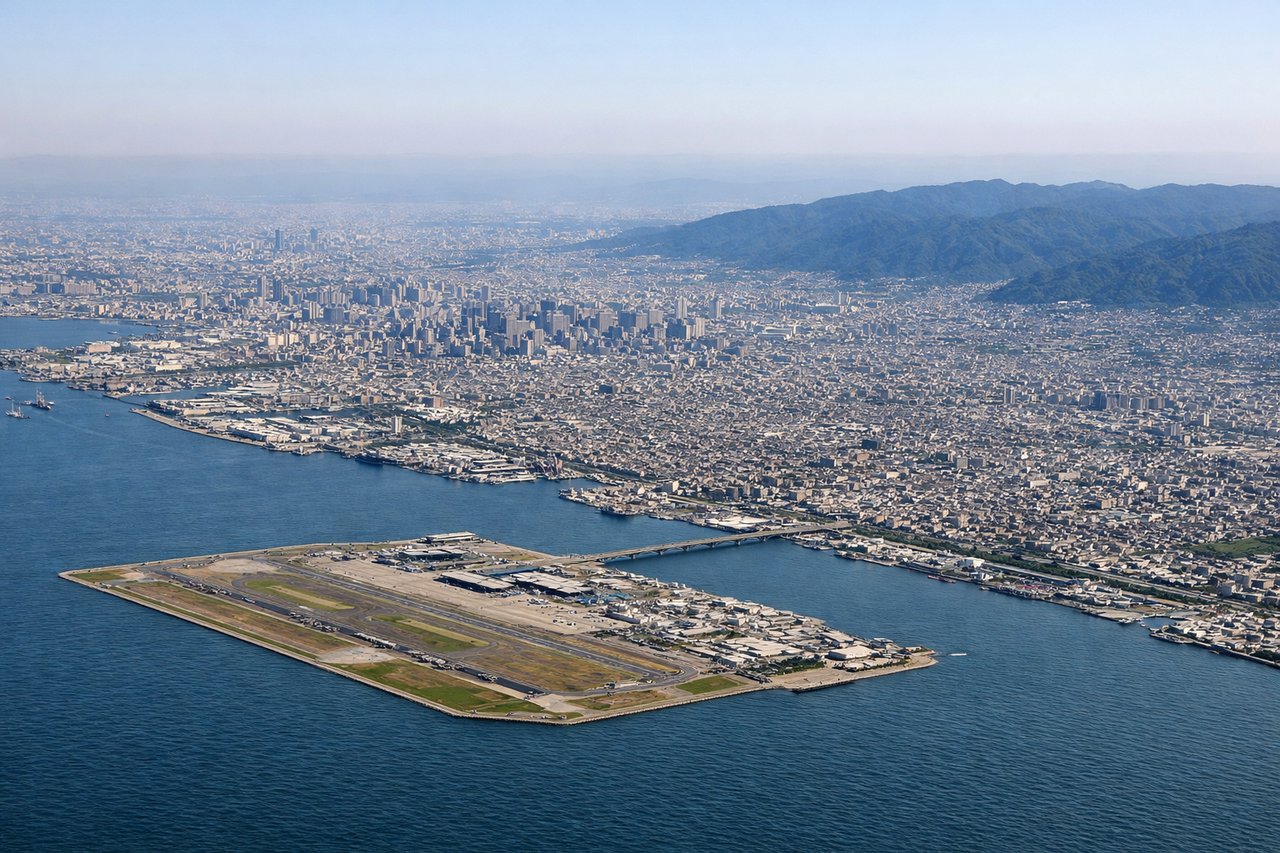
Takeoff from KIX
RIGHTDeparting KIX on runway 24, the aircraft banks right to turn north toward the Sea of Japan, putting Osaka Bay, Kobe's waterfront, and Awaji Island directly below the right side during the turn. The left side mostly shows open sky and the more featureless Izumi mountain flank.
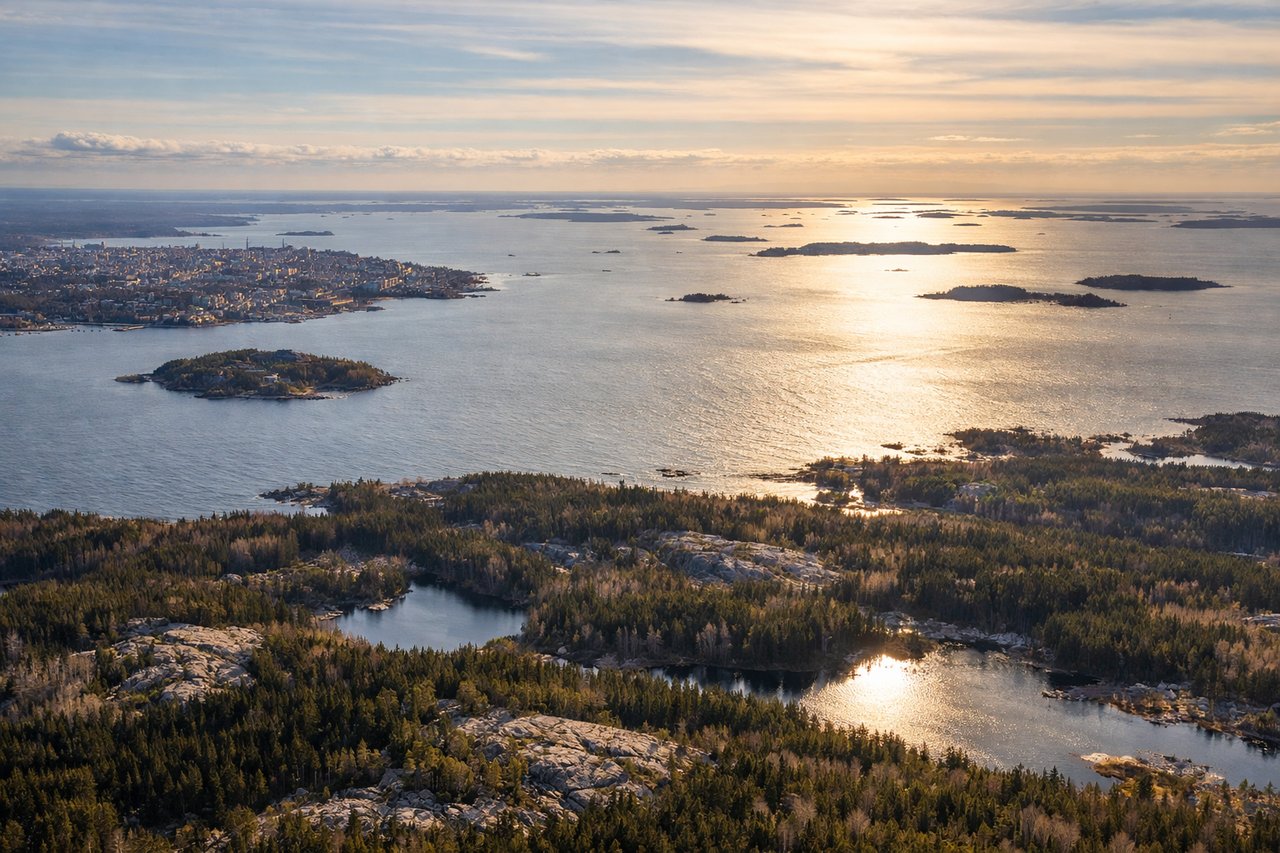
Landing at HEL
LEFTArriving at HEL under typical southwesterly flow, aircraft approach from the northeast and land on runway 22, meaning the final descent path curves over the Gulf of Finland archipelago before touchdown. Left-side passengers get a clear view of Helsinki's coastal islands and the city skyline before the runway.
Landmarks on this routeAll landmarks →
Will your flight be in sunlight?
See exactly which side of the plane gets sun and shade at your departure time.
About This Route
Which side of the plane should I sit on flying from Kansai International (KIX) to Helsinki Vantaa (HEL)?
Sit on the Right side of the plane for the best views on flights from Osaka to Helsinki. The right side wins narrowly thanks to the dramatic Osaka Bay and Kobe departure sequence, which offers more sustained landmark density than the brief Helsinki archipelago glimpse on landing; the long cruise over Siberia and the Urals is fairly symmetric and doesn't favor either side strongly.
What can I see during takeoff from Kansai International in Osaka?
During takeoff from Kansai International (KIX), sit on the Right side for the best views. Departing KIX on runway 24, the aircraft banks right to turn north toward the Sea of Japan, putting Osaka Bay, Kobe's waterfront, and Awaji Island directly below the right side during the turn. The left side mostly shows open sky and the more featureless Izumi mountain flank. Notable sights include: Osaka Bay, Kobe waterfront, Awaji Island, Kansai coastline.
What can I see when landing at Helsinki Vantaa in Helsinki?
When landing at Helsinki Vantaa (HEL), sit on the Left side for the best views. Arriving at HEL under typical southwesterly flow, aircraft approach from the northeast and land on runway 22, meaning the final descent path curves over the Gulf of Finland archipelago before touchdown. Left-side passengers get a clear view of Helsinki's coastal islands and the city skyline before the runway. Notable sights include: Gulf of Finland, Helsinki archipelago islands, Helsinki city skyline, Vantaa river valley.
How long is the flight from Osaka to Helsinki?
The flight from Kansai International (KIX) to Helsinki Vantaa (HEL) takes 10h 50m.
What does the Osaka to Helsinki flight path pass over?
West Siberian Plain, Ob River basin, Ural Mountains, boreal taiga forests of central Russia