Right-side seats capture the most visually distinctive moments: Osaka Bay and the Kii Peninsula during departure, and the Pacific crossing offers consistent ocean views. Left side has the advantage during landing approach, but the departure scenery from the right is more memorable.
Flight Path
The flight path crosses the Pacific Ocean at high altitude (typically 35,000-37,000 feet). Notable features include: the Aleutian Islands chain visible during the northern Pacific crossing (if flying the great circle route), the California coast approaching from the west with the Sierra Nevada mountains visible inland, and the transition from open ocean to coastal waters near the North American continent. At cruise altitude, the curvature of the Pacific and cloud formations dominate the view rather than specific landmarks.
Great circle distance and headings ›Phase by phase
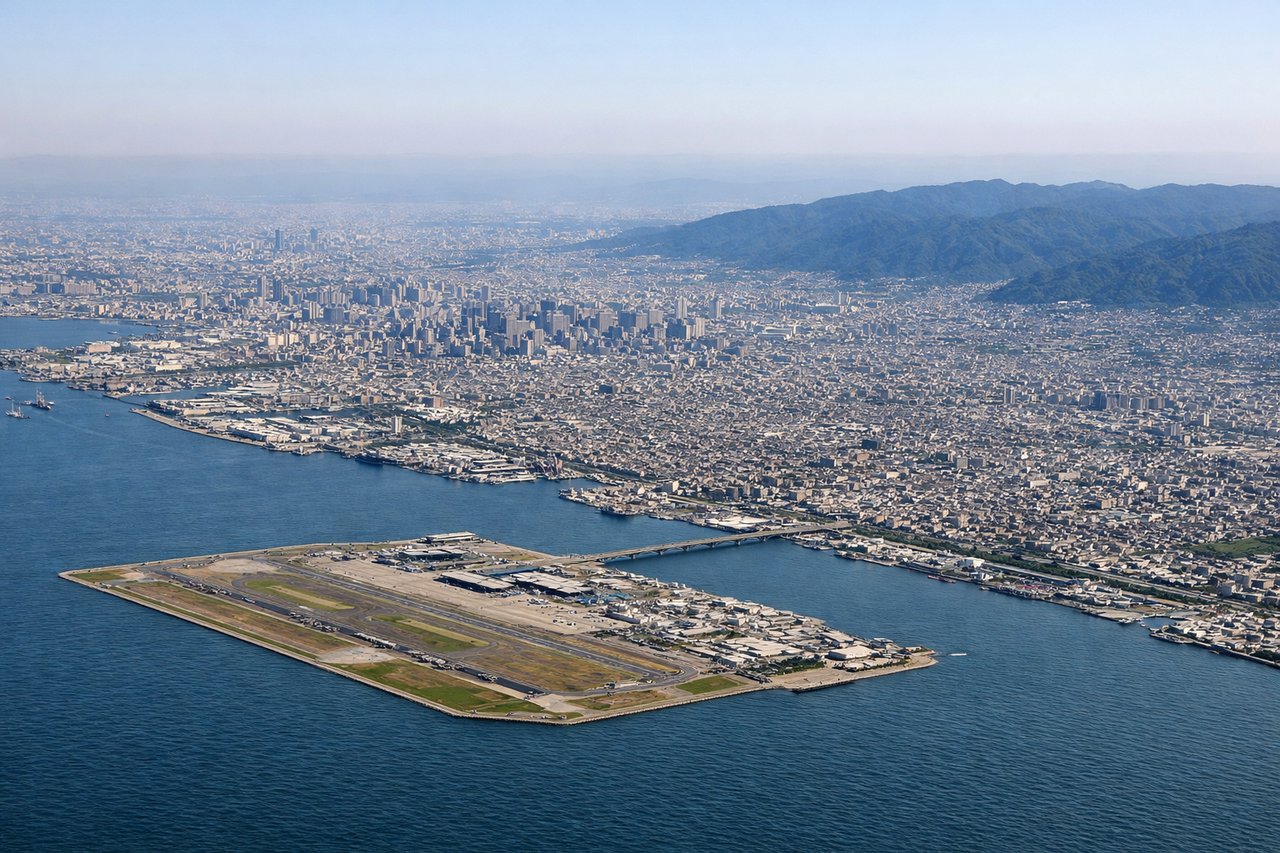
Takeoff from KIX
RIGHTRight-side seats offer views of Osaka Bay and the Kii Peninsula as the aircraft climbs out over water. Left side faces inland terrain with less distinctive visual interest during the initial climb.
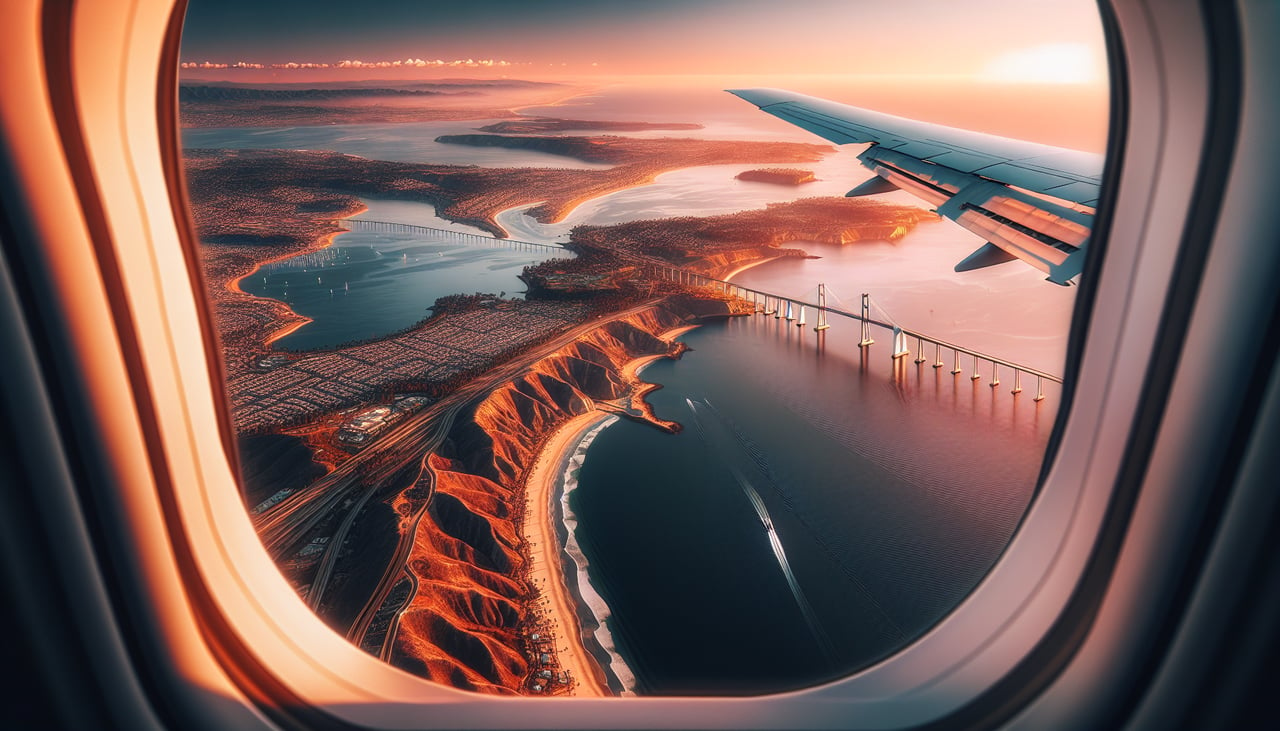
Landing at SAN
LEFTLeft-side seats provide views of the San Diego coastline, Mission Bay, and Point Loma during descent into Lindbergh Field. The aircraft approaches from the west over the Pacific, making left-side views of the bay and urban waterfront more dramatic.
Landmarks on this routeAll landmarks →
Will your flight be in sunlight?
See exactly which side of the plane gets sun and shade at your departure time.
About This Route
Which side of the plane should I sit on flying from Kansai International (KIX) to San Diego International Lindbergh Fld (SAN)?
Sit on the Right side of the plane for the best views on flights from Osaka to San Diego. Right-side seats capture the most visually distinctive moments: Osaka Bay and the Kii Peninsula during departure, and the Pacific crossing offers consistent ocean views. Left side has the advantage during landing approach, but the departure scenery from the right is more memorable.
What can I see during takeoff from Kansai International in Osaka?
During takeoff from Kansai International (KIX), sit on the Right side for the best views. Right-side seats offer views of Osaka Bay and the Kii Peninsula as the aircraft climbs out over water. Left side faces inland terrain with less distinctive visual interest during the initial climb. Notable sights include: Osaka Bay, Kii Peninsula coastline, Awaji Island, Inland Sea (Seto Naikai) in distance.
What can I see when landing at San Diego International Lindbergh Fld in San Diego?
When landing at San Diego International Lindbergh Fld (SAN), sit on the Left side for the best views. Left-side seats provide views of the San Diego coastline, Mission Bay, and Point Loma during descent into Lindbergh Field. The aircraft approaches from the west over the Pacific, making left-side views of the bay and urban waterfront more dramatic. Notable sights include: Pacific Ocean, Mission Bay, Point Loma peninsula, San Diego downtown skyline.
How long is the flight from Osaka to San Diego?
The flight from Kansai International (KIX) to San Diego International Lindbergh Fld (SAN) takes Approximately 11-12 hours.
What does the Osaka to San Diego flight path pass over?
The flight path crosses the Pacific Ocean at high altitude (typically 35,000-37,000 feet). Notable features include: the Aleutian Islands chain visible during the northern Pacific crossing (if flying the great circle route), the California coast approaching from the west with the Sierra Nevada mountains visible inland, and the transition from open ocean to coastal waters near the North American continent. At cruise altitude, the curvature of the Pacific and cloud formations dominate the view rather than specific landmarks.