The right side wins on the strength of its bookends: Osaka Bay's harbor and bridge scenery at takeoff, and the Coast Mountains framing Vancouver on arrival, both genuinely scenic sequences. The left side faces flatter, less distinctive terrain during both the Japan departure and the Canada arrival, and the many hours of open North Pacific in between are similarly featureless on either side.
Flight Path
Open North Pacific Ocean, with the flight path passing south of the Kamchatka Peninsula and the Aleutian Island chain before descending toward the Gulf of Alaska and British Columbia coast.
Great circle distance and headings ›Phase by phase
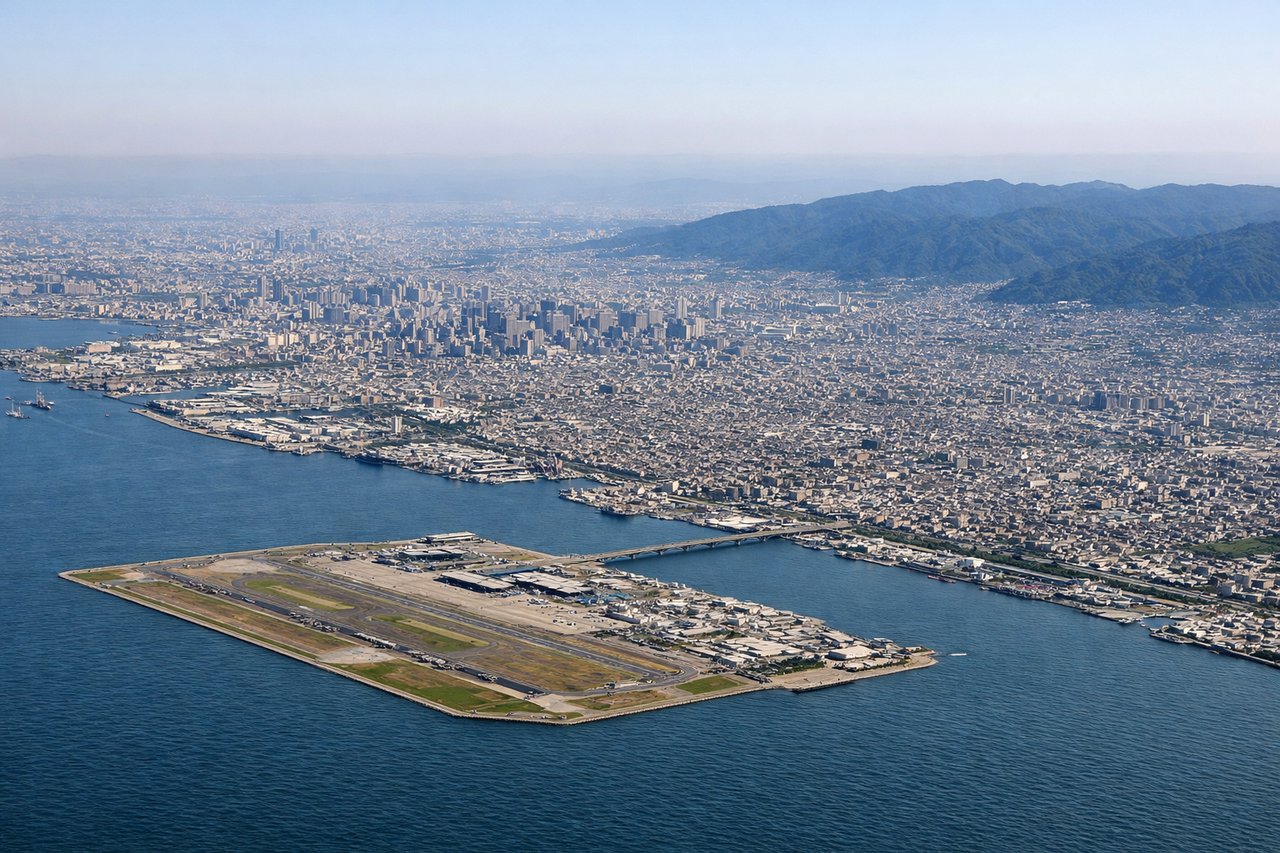
Takeoff from KIX
RIGHTDeparting KIX's man-made island, the right side captures Osaka Bay's harbor traffic, Kobe's port cranes and the Akashi Kaikyo Bridge to Awaji Island, with the forested Kii Peninsula mountains rising beyond. The left side mostly shows the flatter Osaka/Nara plain with less definition.
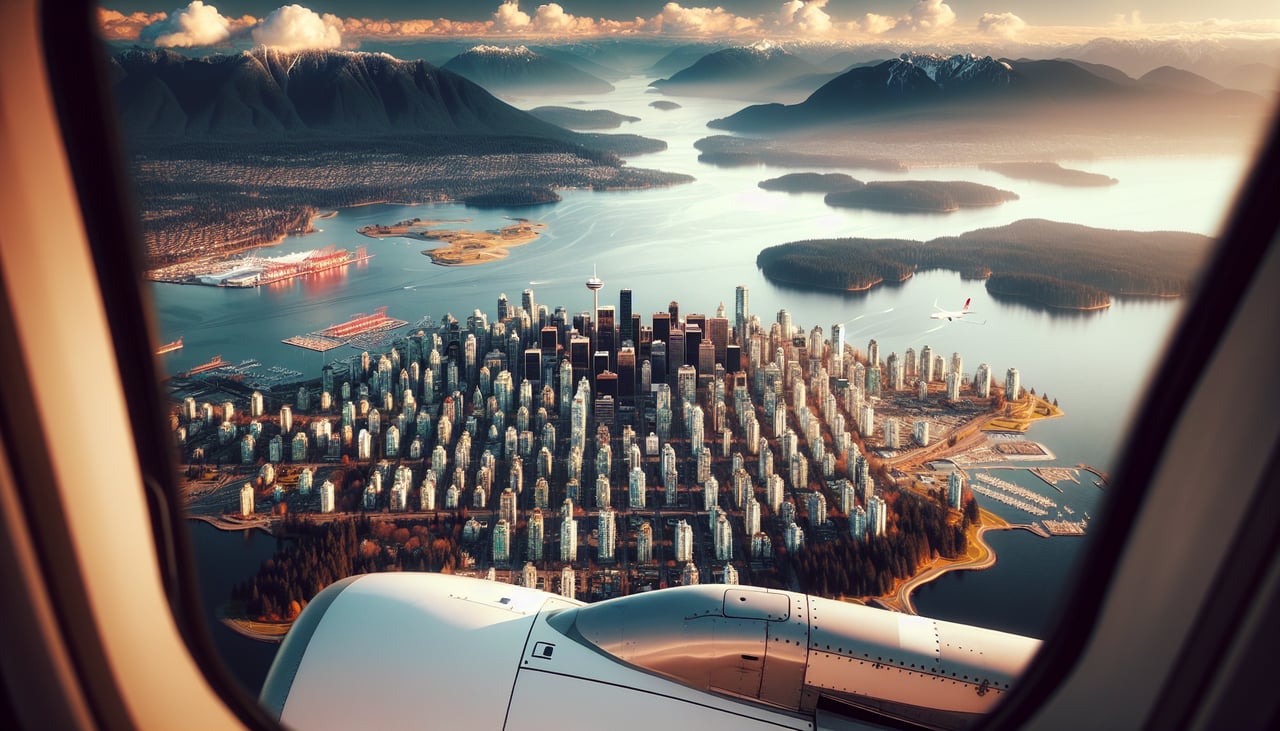
Landing at YVR
RIGHTOn approach to YVR, sequencing for runway 26 typically brings the aircraft in from the east, giving the right side a view north across the Strait of Georgia toward the snow-dusted Coast Mountains and Vancouver's North Shore peaks. The left side mainly faces south toward flatter Fraser Delta farmland and the Washington border, which is far less dramatic.
Landmarks on this routeAll landmarks →
Will your flight be in sunlight?
See exactly which side of the plane gets sun and shade at your departure time.
About This Route
Which side of the plane should I sit on flying from Kansai International (KIX) to Vancouver International (YVR)?
Sit on the Right side of the plane for the best views on flights from Osaka to Vancouver. The right side wins on the strength of its bookends: Osaka Bay's harbor and bridge scenery at takeoff, and the Coast Mountains framing Vancouver on arrival, both genuinely scenic sequences. The left side faces flatter, less distinctive terrain during both the Japan departure and the Canada arrival, and the many hours of open North Pacific in between are similarly featureless on either side.
What can I see during takeoff from Kansai International in Osaka?
During takeoff from Kansai International (KIX), sit on the Right side for the best views. Departing KIX's man-made island, the right side captures Osaka Bay's harbor traffic, Kobe's port cranes and the Akashi Kaikyo Bridge to Awaji Island, with the forested Kii Peninsula mountains rising beyond. The left side mostly shows the flatter Osaka/Nara plain with less definition. Notable sights include: Osaka Bay, Kobe port and Akashi Kaikyo Bridge, Awaji Island, Kii Peninsula mountains.
What can I see when landing at Vancouver International in Vancouver?
When landing at Vancouver International (YVR), sit on the Right side for the best views. On approach to YVR, sequencing for runway 26 typically brings the aircraft in from the east, giving the right side a view north across the Strait of Georgia toward the snow-dusted Coast Mountains and Vancouver's North Shore peaks. The left side mainly faces south toward flatter Fraser Delta farmland and the Washington border, which is far less dramatic. Notable sights include: Coast Mountains and North Shore peaks (Grouse, Seymour, Cypress), Strait of Georgia, downtown Vancouver skyline, Fraser River delta.
How long is the flight from Osaka to Vancouver?
The flight from Kansai International (KIX) to Vancouver International (YVR) takes 10h 10m.
What does the Osaka to Vancouver flight path pass over?
Open North Pacific Ocean, with the flight path passing south of the Kamchatka Peninsula and the Aleutian Island chain before descending toward the Gulf of Alaska and British Columbia coast.