Kona to Seattle is 2,692 miles (4,332 km), a flight of about 5 hours 15 minutes.
While takeoff favors the right side for Big Island views, the landing approach on left seats offers more compelling geography: Puget Sound, the Olympic Mountains, and Seattle's iconic waterfront. The landing view is more visually rewarding and geographically significant.
Flight Path
The flight path crosses the open North Pacific for roughly 2,000 nautical miles. No significant land features are visible during the middle 3+ hours of cruise. The route passes well north of the Hawaiian Islands and south of Alaska. On approach to Seattle, the Cascade Range becomes visible on the eastern horizon before Puget Sound dominates the view.
Great circle distance and headings ›

Phase by phase
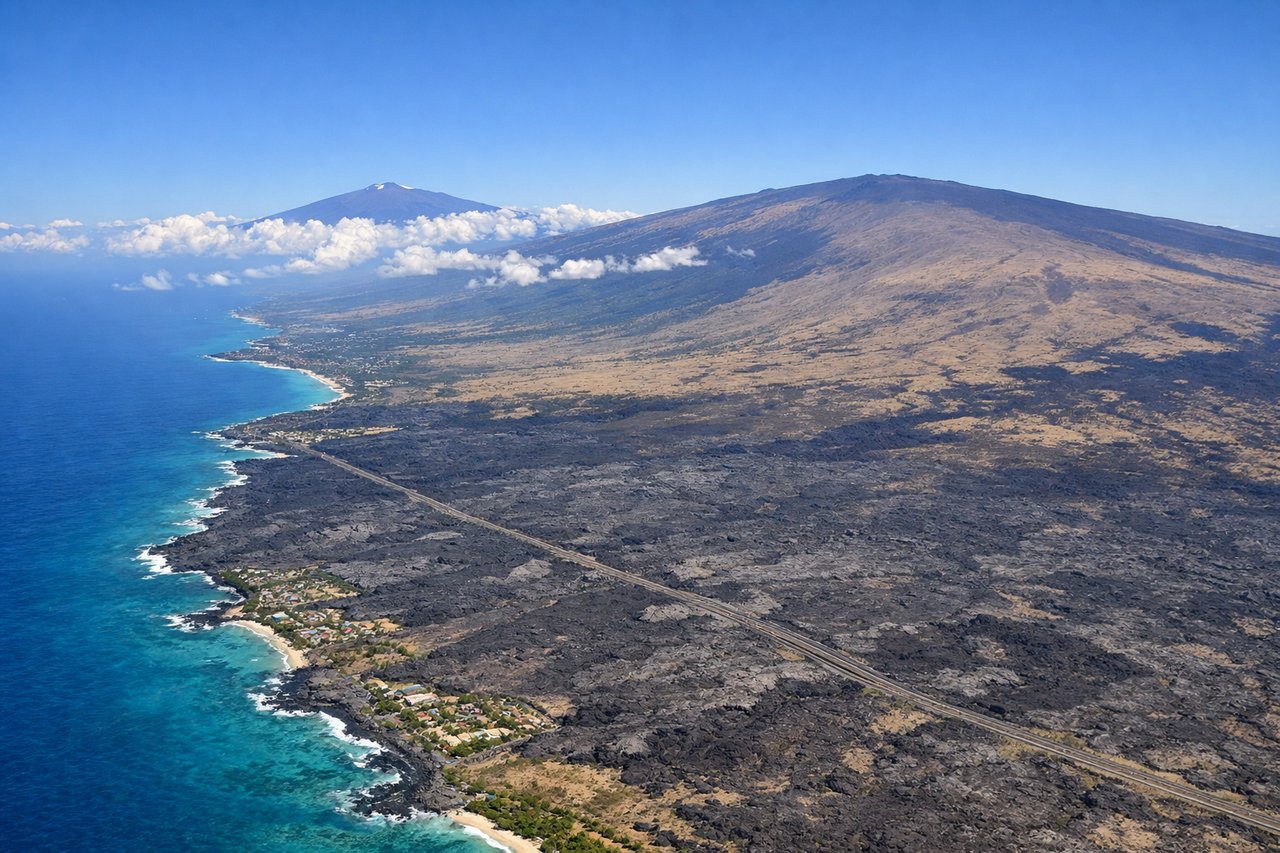
Takeoff from KOA
RIGHTKOA typically departs runway 17 (southbound), so right-side seats face west toward the open Pacific and the Big Island's western coastline. Left seats look inland at the volcanic plateau. The western view is more dramatic and less obstructed.
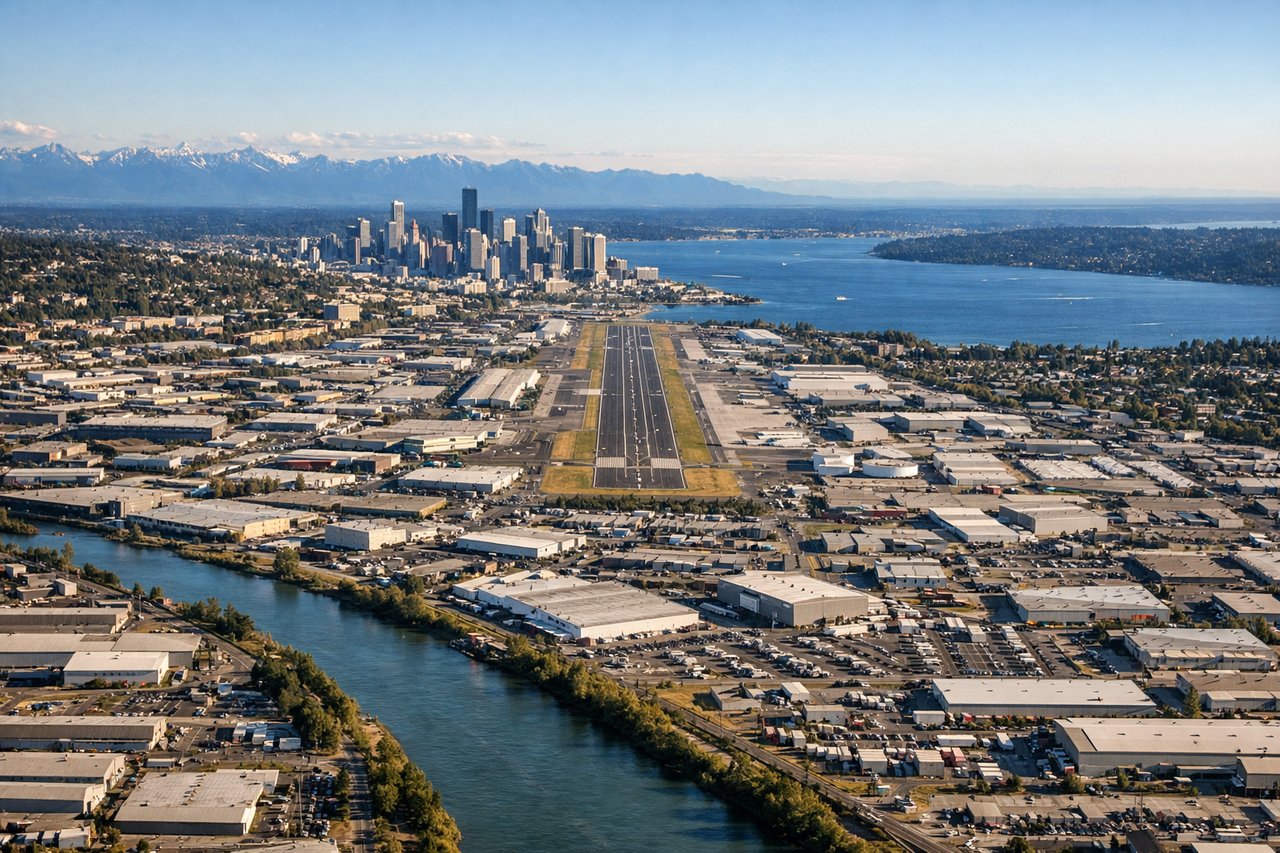
Landing at BFI
LEFTApproach to BFI typically uses runway 16L or 16R (northbound), so left-side seats face west during descent. This provides views of Puget Sound, the Olympic Mountains across the water, and Seattle's waterfront. Right seats see only the industrial south end of the airport and suburban sprawl.
Landmarks on this routeAll landmarks →
Will your flight be in sunlight?
Pick a date and time in the Sun Map to watch the sun move across your whole flight.
About This Route
Which side of the plane should I sit on flying from Kona International At Keahole (KOA) to Boeing Fld King Co International (BFI)?
Sit on the Left side of the plane for the best views on flights from Kona to Seattle. While takeoff favors the right side for Big Island views, the landing approach on left seats offers more compelling geography: Puget Sound, the Olympic Mountains, and Seattle's iconic waterfront. The landing view is more visually rewarding and geographically significant.
What can I see during takeoff from Kona International At Keahole in Kona?
During takeoff from Kona International At Keahole (KOA), sit on the Right side for the best views. KOA typically departs runway 17 (southbound), so right-side seats face west toward the open Pacific and the Big Island's western coastline. Left seats look inland at the volcanic plateau. The western view is more dramatic and less obstructed. Notable sights include: Kona coast (black lava fields meeting turquoise water), Hualalai volcano's western slopes, Kailua Bay, Pacific Ocean extending to horizon.
What can I see when landing at Boeing Fld King Co International in Seattle?
When landing at Boeing Fld King Co International (BFI), sit on the Left side for the best views. Approach to BFI typically uses runway 16L or 16R (northbound), so left-side seats face west during descent. This provides views of Puget Sound, the Olympic Mountains across the water, and Seattle's waterfront. Right seats see only the industrial south end of the airport and suburban sprawl. Notable sights include: Puget Sound (water body), Olympic Mountains (snow-capped peaks across the sound), Seattle waterfront and downtown skyline, Lake Washington to the east.
How long is the flight from Kona to Seattle?
The flight from Kona International At Keahole (KOA) to Boeing Fld King Co International (BFI) takes about 5 hours 15 minutes. The shortest flight path between them is 2,692 miles (4,332 km); winds and air traffic control usually add a few percent.
What does the Kona to Seattle flight path pass over?
The flight path crosses the open North Pacific for roughly 2,000 nautical miles. No significant land features are visible during the middle 3+ hours of cruise. The route passes well north of the Hawaiian Islands and south of Alaska. On approach to Seattle, the Cascade Range becomes visible on the eastern horizon before Puget Sound dominates the view.