The outbound climb from Kathmandu offers superior scenic value with immediate Himalayan views. While Brisbane's landing provides urban and river scenery, the Himalayan peaks visible from takeoff are more dramatic and geographically distinctive. Left side captures the most memorable portion of this route.
Flight Path
The flight path crosses the Bay of Bengal (visible as open water around 4-5 hours into flight), then passes over or near the Andaman Sea. The aircraft transits across Myanmar airspace and the Andaman Islands region. Around 7-8 hours, the flight enters Indonesian airspace, passing over Sumatra and potentially visible portions of the Strait of Malacca. The final 2-3 hours cross the Indian Ocean toward Australia, with the Australian continent becoming visible as the aircraft approaches Queensland. The Coral Sea and Great Barrier Reef region may be visible on the final descent approach to Brisbane, though this depends on exact routing and weather.
Great circle distance and headings ›.jpg?width=600)


Phase by phase

Takeoff from KTM
LEFTLeft side offers immediate views of the Kathmandu Valley rim and the snow-capped Himalayan peaks to the north and northeast. The aircraft climbs northeastward initially, positioning left-side passengers for direct sightlines of the high peaks.
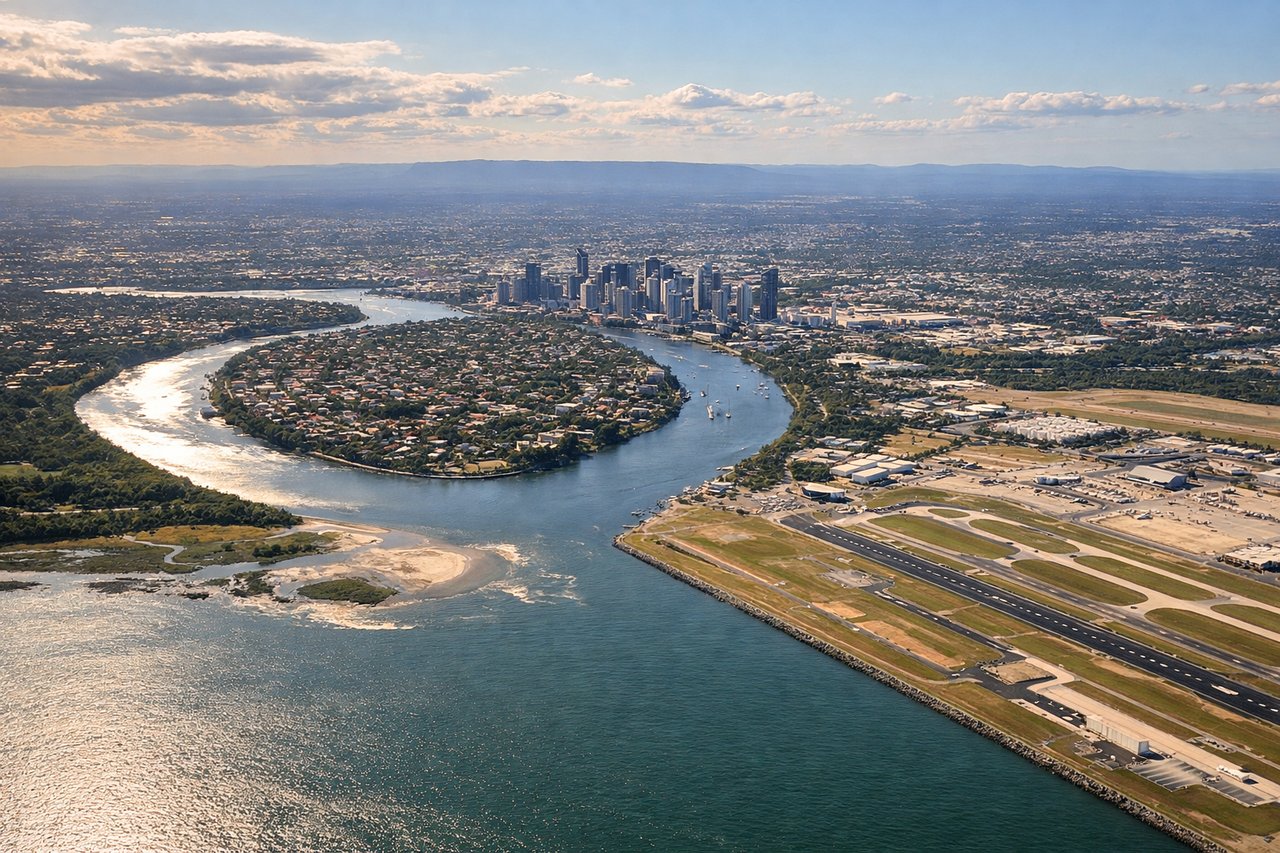
Landing at BNE
RIGHTRight side provides views of the Brisbane River's distinctive loops and meanders as the aircraft descends into Brisbane. The approach typically comes from the west or northwest, and right-side seats face the river system and central Brisbane's urban layout.
Landmarks on this routeAll landmarks →
Will your flight be in sunlight?
See exactly which side of the plane gets sun and shade at your departure time.
About This Route
Which side of the plane should I sit on flying from Tribhuvan International (KTM) to Brisbane International (BNE)?
Sit on the Left side of the plane for the best views on flights from Kathmandu to Brisbane. The outbound climb from Kathmandu offers superior scenic value with immediate Himalayan views. While Brisbane's landing provides urban and river scenery, the Himalayan peaks visible from takeoff are more dramatic and geographically distinctive. Left side captures the most memorable portion of this route.
What can I see during takeoff from Tribhuvan International in Kathmandu?
During takeoff from Tribhuvan International (KTM), sit on the Left side for the best views. Left side offers immediate views of the Kathmandu Valley rim and the snow-capped Himalayan peaks to the north and northeast. The aircraft climbs northeastward initially, positioning left-side passengers for direct sightlines of the high peaks. Notable sights include: Kathmandu Valley floor with city sprawl, Shivapuri Lekh ridge to the north, Langtang Himal peaks (northeast), Bhaktapur and Nagarkot ridge (east).
What can I see when landing at Brisbane International in Brisbane?
When landing at Brisbane International (BNE), sit on the Right side for the best views. Right side provides views of the Brisbane River's distinctive loops and meanders as the aircraft descends into Brisbane. The approach typically comes from the west or northwest, and right-side seats face the river system and central Brisbane's urban layout. Notable sights include: Brisbane River with its characteristic horseshoe bends, Brisbane CBD skyline, Moreton Bay with islands visible to the east, Mount Coot-tha to the west.
How long is the flight from Kathmandu to Brisbane?
The flight from Tribhuvan International (KTM) to Brisbane International (BNE) takes Approximately 10.5 to 11.5 hours.
What does the Kathmandu to Brisbane flight path pass over?
The flight path crosses the Bay of Bengal (visible as open water around 4-5 hours into flight), then passes over or near the Andaman Sea. The aircraft transits across Myanmar airspace and the Andaman Islands region. Around 7-8 hours, the flight enters Indonesian airspace, passing over Sumatra and potentially visible portions of the Strait of Malacca. The final 2-3 hours cross the Indian Ocean toward Australia, with the Australian continent becoming visible as the aircraft approaches Queensland. The Coral Sea and Great Barrier Reef region may be visible on the final descent approach to Brisbane, though this depends on exact routing and weather.