The right side delivers the dramatic Las Vegas Strip and Red Rock Canyon on departure, which is the most visually spectacular moment of this flight. The Sahara crossing and Atlantic are largely featureless from either side at cruise altitude, and the Accra arrival advantage on the left is real but modest. Right side wins on the strength of the Las Vegas departure alone.
Flown LAS to ACC? Did we get it right?
Flight Path
Las Vegas to Accra is 7,351 miles (11,830 km), a flight of about 13 hours.
The flight path typically tracks east across the American Southwest, then northeast over the US East Coast before crossing the North Atlantic. Over the Atlantic the Canary Islands (Tenerife, Gran Canaria) may be visible to the south if routing takes the southern transatlantic corridor. The flight then crosses the Sahara Desert — vast orange and tan sand seas of the Western Sahara and Mauritanian erg visible from altitude — before descending over the Sahel scrubland of Ghana toward the coast.
Great circle distance and headings ›


Phase by phase
Takeoff from LAS
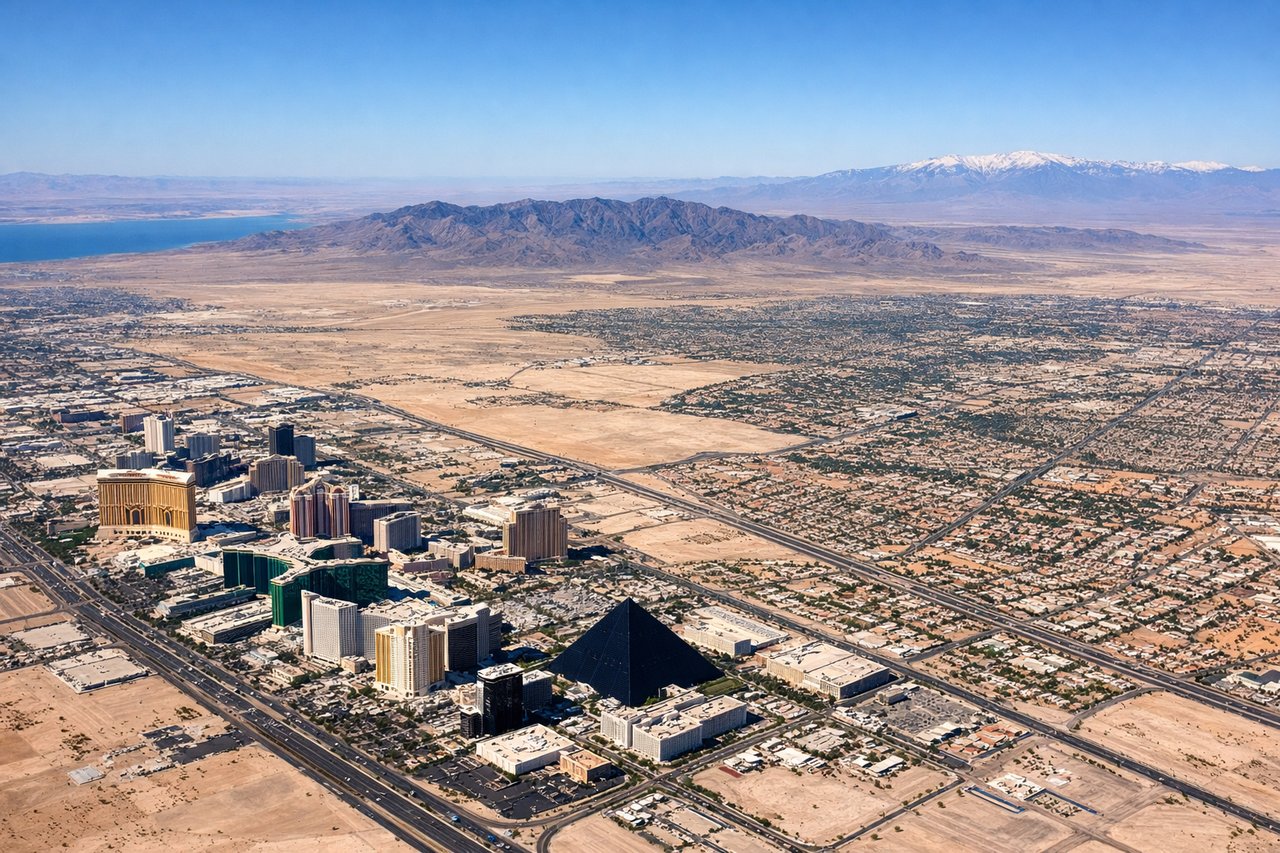
RIGHTMcCarran's primary departure runway 26L/R sends aircraft westward before turning south or east. A right-side seat captures the Las Vegas Strip in its full north-south layout as the aircraft banks, plus the Spring Mountains and Red Rock Canyon escarpment to the west. Left side gets suburban sprawl and the less dramatic eastern valley.
Landing at ACC
LEFTKotoka International's primary runway 21 means aircraft approach from the north-northeast and land heading southwest. A left-side seat on approach faces east-southeast, looking over central Accra, the Korle Lagoon, and the Gulf of Guinea coastline stretching east. The right side faces inland scrubland with little of interest.
Will your flight be in sunlight?
Pick a date and time in the Sun Map to watch the sun move across your whole flight.
About This Route
Which side of the plane should I sit on flying from Mc Carran International (LAS) to Kotoka International (ACC)?
Sit on the Right side of the plane for the best views on flights from Las Vegas to Accra. The right side delivers the dramatic Las Vegas Strip and Red Rock Canyon on departure, which is the most visually spectacular moment of this flight. The Sahara crossing and Atlantic are largely featureless from either side at cruise altitude, and the Accra arrival advantage on the left is real but modest. Right side wins on the strength of the Las Vegas departure alone.
What can I see during takeoff from Mc Carran International in Las Vegas?
During takeoff from Mc Carran International (LAS), sit on the Right side for the best views. McCarran's primary departure runway 26L/R sends aircraft westward before turning south or east. A right-side seat captures the Las Vegas Strip in its full north-south layout as the aircraft banks, plus the Spring Mountains and Red Rock Canyon escarpment to the west. Left side gets suburban sprawl and the less dramatic eastern valley. Notable sights include: Las Vegas Strip (hotels visible by shape and scale), Red Rock Canyon escarpment, Spring Mountains (Charleston Peak at 11,918 ft), Lake Mead to the northeast on climb-out.
What can I see when landing at Kotoka International in Accra?
When landing at Kotoka International (ACC), sit on the Left side for the best views. Kotoka International's primary runway 21 means aircraft approach from the north-northeast and land heading southwest. A left-side seat on approach faces east-southeast, looking over central Accra, the Korle Lagoon, and the Gulf of Guinea coastline stretching east. The right side faces inland scrubland with little of interest. Notable sights include: Gulf of Guinea coastline, Korle Lagoon, central Accra urban grid, Tema industrial port visible to the east along the coast.
How long is the flight from Las Vegas to Accra?
The flight from Mc Carran International (LAS) to Kotoka International (ACC) takes about 13 hours. The shortest flight path between them is 7,351 miles (11,830 km); winds and air traffic control usually add a few percent.
What does the Las Vegas to Accra flight path pass over?
The flight path typically tracks east across the American Southwest, then northeast over the US East Coast before crossing the North Atlantic. Over the Atlantic the Canary Islands (Tenerife, Gran Canaria) may be visible to the south if routing takes the southern transatlantic corridor. The flight then crosses the Sahara Desert — vast orange and tan sand seas of the Western Sahara and Mauritanian erg visible from altitude — before descending over the Sahel scrubland of Ghana toward the coast.