The right side wins both the Las Vegas departure, with its clear view of the Strip and Red Rock Canyon, and the Bangkok arrival, with the Chao Phraya River and city skyline unfolding on final approach. The left side offers comparatively flat, unremarkable terrain at both ends and the long transpacific cruise is mostly featureless ocean regardless of side.
Flown LAS to BKK? Did we get it right?
Flight Path
Las Vegas to Bangkok is 8,276 miles (13,320 km), a flight of about 17 hours 45 minutes.
The great-circle path runs northwest over California and the Pacific Northwest, then across the North Pacific past the Aleutian chain and Kamchatka Peninsula before curving south over Japan, the East China Sea, and the Philippines toward the Gulf of Thailand — almost entirely open ocean with only distant coastal glimpses of Japan and the Philippine islands.
Great circle distance and headings ›


Phase by phase
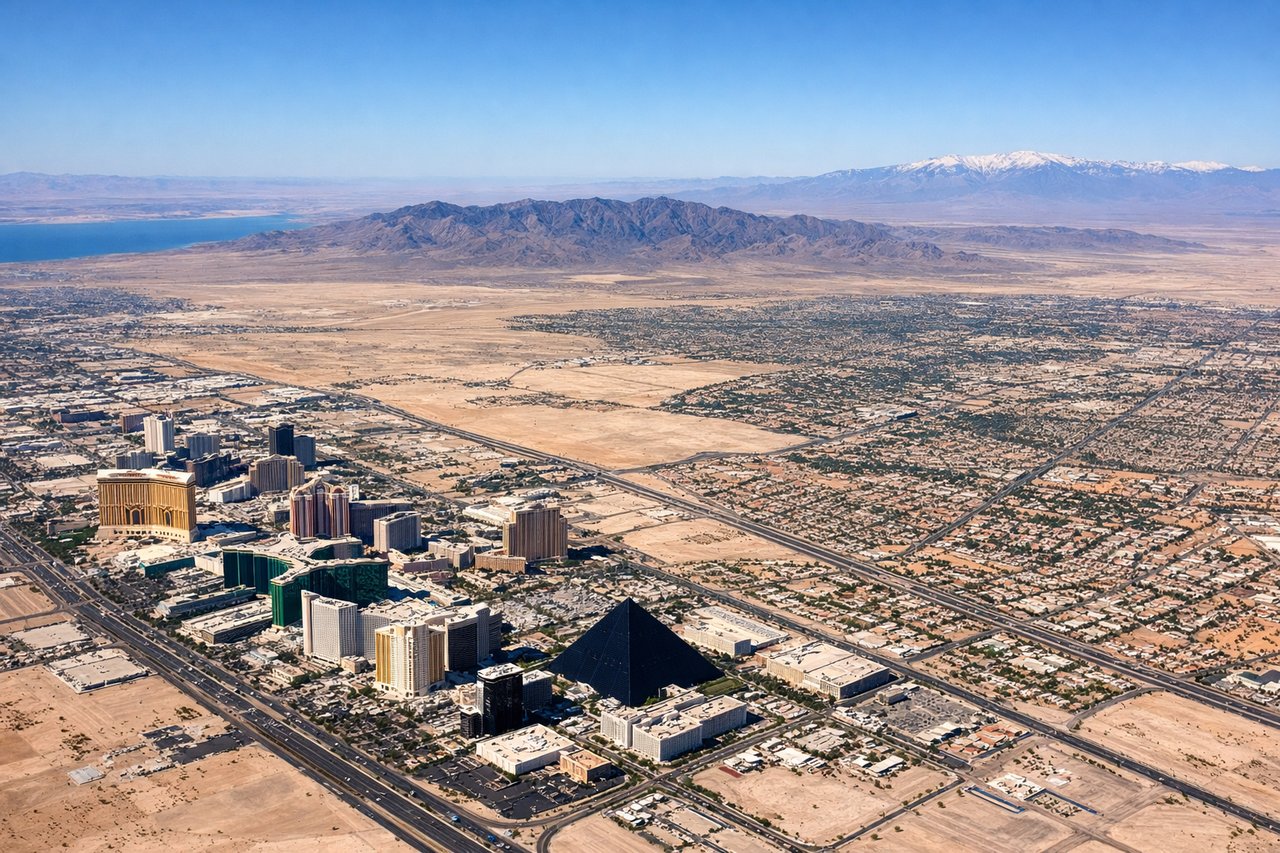
Takeoff from LAS
RIGHTNoise-abatement departures from McCarran climb south before turning toward the Pacific routing, and during that turn the right-side windows sweep across the Las Vegas Strip, downtown towers, and the Spring Mountains rising beyond Red Rock Canyon. The left side mostly shows flat Henderson suburbs and open desert.
Landing at BKK
RIGHTOn a typical dry-season arrival into Suvarnabhumi, aircraft descend from the north on the 19 runways, tracking down the axis of the Chao Phraya River. Right-side passengers get a long look at Bangkok's skyline, the river's winding bends, and the dense urban sprawl before touchdown, while the left side faces mostly flat paddy fields and canals.
Will your flight be in sunlight?
Pick a date and time in the Sun Map to watch the sun move across your whole flight.
About This Route
Which side of the plane should I sit on flying from Mc Carran International (LAS) to Suvarnabhumi Airport (BKK)?
Sit on the Right side of the plane for the best views on flights from Las Vegas to Bangkok. The right side wins both the Las Vegas departure, with its clear view of the Strip and Red Rock Canyon, and the Bangkok arrival, with the Chao Phraya River and city skyline unfolding on final approach. The left side offers comparatively flat, unremarkable terrain at both ends and the long transpacific cruise is mostly featureless ocean regardless of side.
What can I see during takeoff from Mc Carran International in Las Vegas?
During takeoff from Mc Carran International (LAS), sit on the Right side for the best views. Noise-abatement departures from McCarran climb south before turning toward the Pacific routing, and during that turn the right-side windows sweep across the Las Vegas Strip, downtown towers, and the Spring Mountains rising beyond Red Rock Canyon. The left side mostly shows flat Henderson suburbs and open desert. Notable sights include: Las Vegas Strip, downtown Las Vegas skyline, Spring Mountains, Red Rock Canyon escarpment.
What can I see when landing at Suvarnabhumi Airport in Bangkok?
When landing at Suvarnabhumi Airport (BKK), sit on the Right side for the best views. On a typical dry-season arrival into Suvarnabhumi, aircraft descend from the north on the 19 runways, tracking down the axis of the Chao Phraya River. Right-side passengers get a long look at Bangkok's skyline, the river's winding bends, and the dense urban sprawl before touchdown, while the left side faces mostly flat paddy fields and canals. Notable sights include: Chao Phraya River, Bangkok skyline (including the Chao Phraya bends near Rama IX Bridge), Suvarnabhumi's surrounding canals and rice paddies.
How long is the flight from Las Vegas to Bangkok?
The flight from Mc Carran International (LAS) to Suvarnabhumi Airport (BKK) takes about 17 hours 45 minutes. The shortest flight path between them is 8,276 miles (13,320 km); winds and air traffic control usually add a few percent.
What does the Las Vegas to Bangkok flight path pass over?
The great-circle path runs northwest over California and the Pacific Northwest, then across the North Pacific past the Aleutian chain and Kamchatka Peninsula before curving south over Japan, the East China Sea, and the Philippines toward the Gulf of Thailand — almost entirely open ocean with only distant coastal glimpses of Japan and the Philippine islands.