Las Vegas to Tucson is 364 miles (586 km), a flight of about 1 hour 5 minutes.
While the right side wins at takeoff for the Strip view, the left side provides the better overall experience across the full flight. Once airborne and heading southeast, the left side tracks the Colorado River corridor, views into the Hualapai Valley, and delivers the best arrival views of the Santa Catalinas and Tucson basin.
Flight Path
The flight crosses the Mojave Desert transitioning into the Sonoran Desert, passing over the Hualapai Valley and Aquarius Mountains in western Arizona, the Bill Williams River corridor, the Hassayampa Plain, and the White Tank Mountains west of Phoenix before descending toward the Santa Cruz Valley and Tucson basin.
Great circle distance and headings ›


Phase by phase
Takeoff from LAS
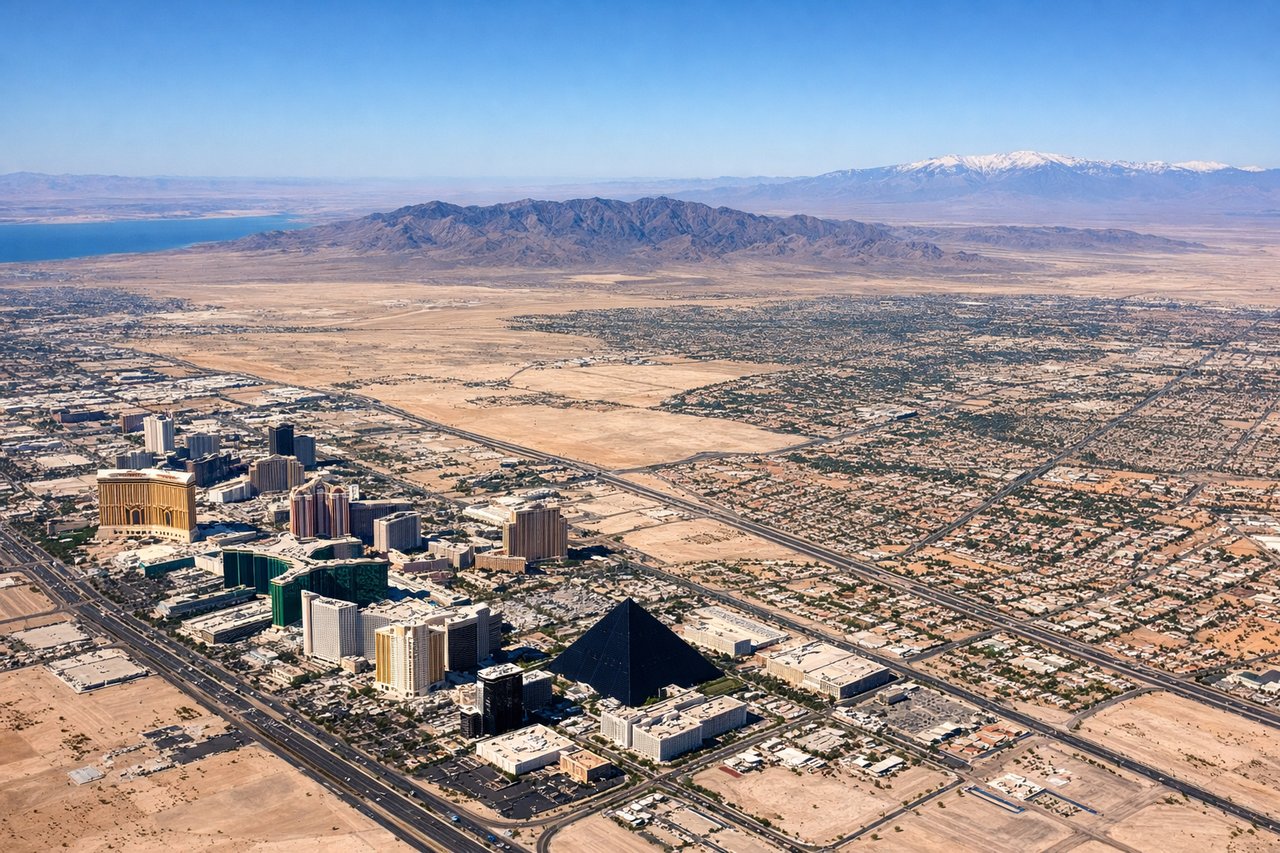
RIGHTLas Vegas typically departs southbound on runway 26L/R or 25L/R, meaning a right-side seat gives you a view over the Las Vegas Strip and downtown as you climb out over the valley. The Spring Mountains and Red Rock Canyon escarpment are clearly visible to the west from the right side during the initial climb.
Landing at DMA
LEFTArriving into Davis-Monthan from the northwest, aircraft typically fly a southeasterly approach over Tucson. The left side gives a clear view of the Santa Catalina Mountains north of Tucson, including Mount Lemmon, and the urban grid of Tucson itself. The Rincon Mountains to the east of the city are also visible on the left during final approach.
Landmarks on this routeAll landmarks →
Will your flight be in sunlight?
Pick a date and time in the Sun Map to watch the sun move across your whole flight.
About This Route
Which side of the plane should I sit on flying from Mc Carran International (LAS) to Davis Monthan Afb (DMA)?
Sit on the Left side of the plane for the best views on flights from Las Vegas to Tucson. While the right side wins at takeoff for the Strip view, the left side provides the better overall experience across the full flight. Once airborne and heading southeast, the left side tracks the Colorado River corridor, views into the Hualapai Valley, and delivers the best arrival views of the Santa Catalinas and Tucson basin.
What can I see during takeoff from Mc Carran International in Las Vegas?
During takeoff from Mc Carran International (LAS), sit on the Right side for the best views. Las Vegas typically departs southbound on runway 26L/R or 25L/R, meaning a right-side seat gives you a view over the Las Vegas Strip and downtown as you climb out over the valley. The Spring Mountains and Red Rock Canyon escarpment are clearly visible to the west from the right side during the initial climb. Notable sights include: Las Vegas Strip hotels and casinos, Red Rock Canyon escarpment, Frenchman Mountain to the east, Lake Mead visible in the distance to the northeast.
What can I see when landing at Davis Monthan Afb in Tucson?
When landing at Davis Monthan Afb (DMA), sit on the Left side for the best views. Arriving into Davis-Monthan from the northwest, aircraft typically fly a southeasterly approach over Tucson. The left side gives a clear view of the Santa Catalina Mountains north of Tucson, including Mount Lemmon, and the urban grid of Tucson itself. The Rincon Mountains to the east of the city are also visible on the left during final approach. Notable sights include: Santa Catalina Mountains and Mount Lemmon, Tucson urban grid, Rincon Mountains, Saguaro National Park desert terrain.
How long is the flight from Las Vegas to Tucson?
The flight from Mc Carran International (LAS) to Davis Monthan Afb (DMA) takes about 1 hour 5 minutes. The shortest flight path between them is 364 miles (586 km); winds and air traffic control usually add a few percent.
What does the Las Vegas to Tucson flight path pass over?
The flight crosses the Mojave Desert transitioning into the Sonoran Desert, passing over the Hualapai Valley and Aquarius Mountains in western Arizona, the Bill Williams River corridor, the Hassayampa Plain, and the White Tank Mountains west of Phoenix before descending toward the Santa Cruz Valley and Tucson basin.