Right-side seats score marginally higher due to superior departure scenery (Spring Mountains and Red Rock Canyon visible during LAS climb-out) and slightly more distinctive landing views (Grand River valley and Grand Rapids skyline). Both sides are limited by the route's predominantly flat Midwestern terrain during cruise; this is a short regional flight over relatively featureless landscape, capping both sides at modest scores.
Flown LAS to GRR? Did we get it right?
Flight Path
Las Vegas to Grand Rapids is 1,639 miles (2,637 km), a flight of about 3 hours 15 minutes.
The flight path crosses the Great Plains and lower Midwest: the Colorado Plateau's eastern edge near the Utah-Colorado border (visible as subtle elevation changes and canyon systems), the Rocky Mountain foothills thinning eastward, the Great Plains of Kansas and Oklahoma (flat, agricultural), and the transition into the glaciated terrain of Michigan with scattered lakes and forest. No major mountain ranges or dramatic landmarks dominate the cruise phase; the route is characterized by gradual terrain descent from high desert to agricultural plains to the Great Lakes region.
Great circle distance and headings ›Phase by phase
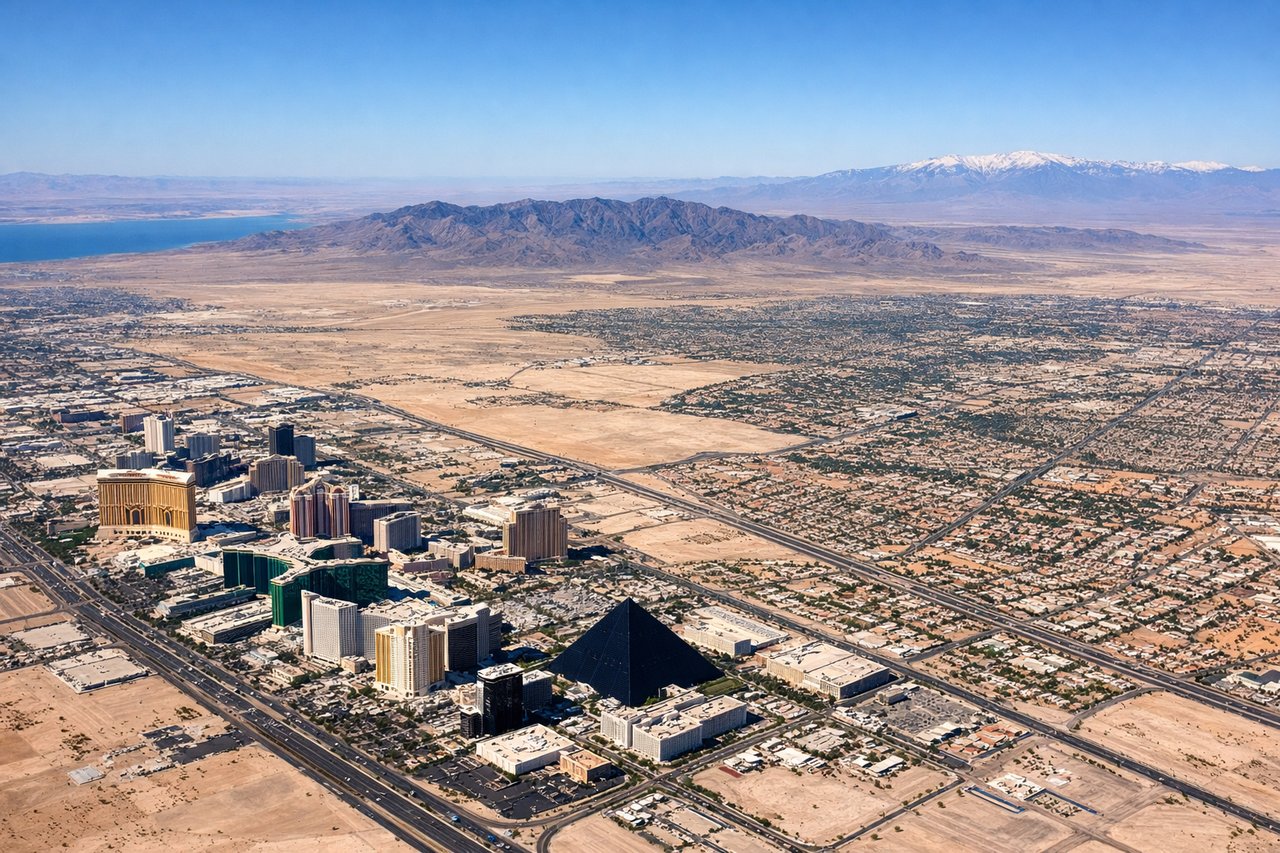
Takeoff from LAS
RIGHTRight-side departures from LAS typically use south-heading runways (01L/01R) with initial turns eastward, positioning passengers to see the Spring Mountains and Red Rock Canyon escarpment rising to the west. Left-side passengers see mostly flat desert and Henderson sprawl.
Landing at GRR
RIGHTRight-side arrivals into GRR typically descend on eastbound approaches (landing on runway 26), offering views of the Grand River valley, surrounding farmland, and the city of Grand Rapids itself. Left-side passengers see mostly flat agricultural terrain with fewer distinctive landmarks.
Will your flight be in sunlight?
Pick a date and time in the Sun Map to watch the sun move across your whole flight.
About This Route
Which side of the plane should I sit on flying from Mc Carran International (LAS) to Gerald R Ford International (GRR)?
Sit on the Right side of the plane for the best views on flights from Las Vegas to Grand Rapids. Right-side seats score marginally higher due to superior departure scenery (Spring Mountains and Red Rock Canyon visible during LAS climb-out) and slightly more distinctive landing views (Grand River valley and Grand Rapids skyline). Both sides are limited by the route's predominantly flat Midwestern terrain during cruise; this is a short regional flight over relatively featureless landscape, capping both sides at modest scores.
What can I see during takeoff from Mc Carran International in Las Vegas?
During takeoff from Mc Carran International (LAS), sit on the Right side for the best views. Right-side departures from LAS typically use south-heading runways (01L/01R) with initial turns eastward, positioning passengers to see the Spring Mountains and Red Rock Canyon escarpment rising to the west. Left-side passengers see mostly flat desert and Henderson sprawl. Notable sights include: Spring Mountains (western ridge), Red Rock Canyon (visible as rust-colored cliffs), Las Vegas Valley floor, Henderson residential grid.
What can I see when landing at Gerald R Ford International in Grand Rapids?
When landing at Gerald R Ford International (GRR), sit on the Right side for the best views. Right-side arrivals into GRR typically descend on eastbound approaches (landing on runway 26), offering views of the Grand River valley, surrounding farmland, and the city of Grand Rapids itself. Left-side passengers see mostly flat agricultural terrain with fewer distinctive landmarks. Notable sights include: Grand River (meandering through the valley), Grand Rapids city center and downtown skyline, surrounding agricultural fields and forest patches, Gerald R. Ford International Airport runways.
How long is the flight from Las Vegas to Grand Rapids?
The flight from Mc Carran International (LAS) to Gerald R Ford International (GRR) takes about 3 hours 15 minutes. The shortest flight path between them is 1,639 miles (2,637 km); winds and air traffic control usually add a few percent.
What does the Las Vegas to Grand Rapids flight path pass over?
The flight path crosses the Great Plains and lower Midwest: the Colorado Plateau's eastern edge near the Utah-Colorado border (visible as subtle elevation changes and canyon systems), the Rocky Mountain foothills thinning eastward, the Great Plains of Kansas and Oklahoma (flat, agricultural), and the transition into the glaciated terrain of Michigan with scattered lakes and forest. No major mountain ranges or dramatic landmarks dominate the cruise phase; the route is characterized by gradual terrain descent from high desert to agricultural plains to the Great Lakes region.