The right side wins overall because the Las Vegas departure view is exceptionally dramatic — the Strip, Red Rock Canyon, and Lake Mead are world-class visuals. The landing view on the left is pleasant but relatively modest by comparison. For the long transatlantic cruise, both sides are similar over the Atlantic and Europe.
Flown LAS to KSC? Did we get it right?
Flight Path
Las Vegas to Kosice is 5,998 miles (9,652 km), a flight of about 13 hours.
Departing northeast, the route crosses the Colorado Plateau and Rocky Mountains over Colorado, then the Great Plains. Over the North Atlantic the flight tracks the North Atlantic Organized Track System, passing south of Greenland or Iceland depending on winds. Over Europe the route crosses the UK or Ireland, then Germany or Austria before descending into Slovakia. Notable en-route geography includes the Rocky Mountains, Newfoundland coastline, the Irish coast, the Rhine Valley, and the Danube basin approaching Slovakia.
Great circle distance and headings ›


Phase by phase
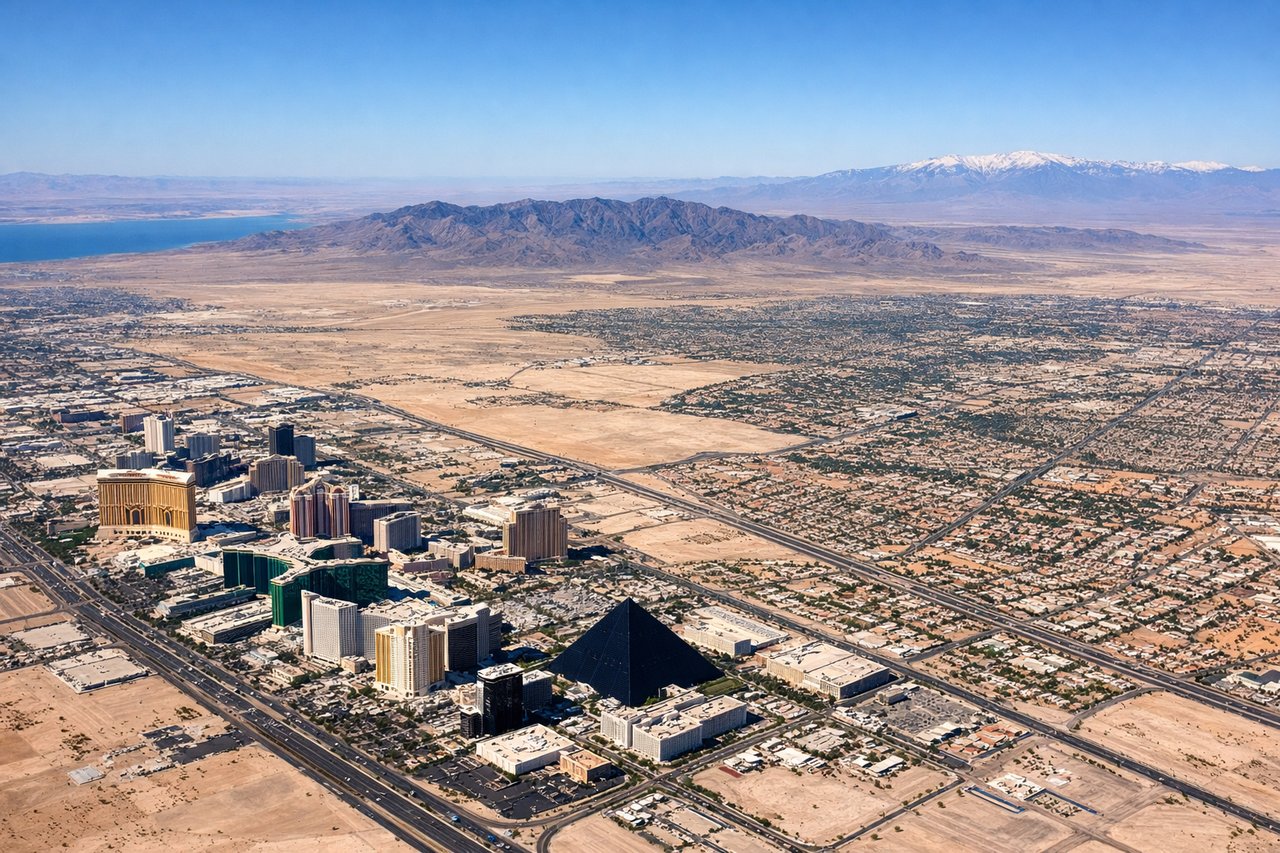
Takeoff from LAS
RIGHTDeparting Las Vegas on the typical southward runways (01L/01R or 25L/25R), a right-side seat gives you a clear view over the Las Vegas Strip and downtown as the aircraft banks northeast. You also get the Spring Mountains and Red Rock Canyon escarpment to the west as a dramatic backdrop.
Landing at KSC
LEFTKosice Airport typically uses runway 01/19, with landings often from the south on runway 01 heading north. A left-side seat gives views over the Hornád River valley and the historic Kosice city center with its Gothic cathedral visible, plus the Western Carpathian foothills to the west.
Will your flight be in sunlight?
Pick a date and time in the Sun Map to watch the sun move across your whole flight.
About This Route
Which side of the plane should I sit on flying from Mc Carran International (LAS) to Kosice (KSC)?
Sit on the Right side of the plane for the best views on flights from Las Vegas to Kosice. The right side wins overall because the Las Vegas departure view is exceptionally dramatic — the Strip, Red Rock Canyon, and Lake Mead are world-class visuals. The landing view on the left is pleasant but relatively modest by comparison. For the long transatlantic cruise, both sides are similar over the Atlantic and Europe.
What can I see during takeoff from Mc Carran International in Las Vegas?
During takeoff from Mc Carran International (LAS), sit on the Right side for the best views. Departing Las Vegas on the typical southward runways (01L/01R or 25L/25R), a right-side seat gives you a clear view over the Las Vegas Strip and downtown as the aircraft banks northeast. You also get the Spring Mountains and Red Rock Canyon escarpment to the west as a dramatic backdrop. Notable sights include: Las Vegas Strip (hotels visible), Red Rock Canyon escarpment, Lake Mead to the northeast, Frenchman Mountain.
What can I see when landing at Kosice in Kosice?
When landing at Kosice (KSC), sit on the Left side for the best views. Kosice Airport typically uses runway 01/19, with landings often from the south on runway 01 heading north. A left-side seat gives views over the Hornád River valley and the historic Kosice city center with its Gothic cathedral visible, plus the Western Carpathian foothills to the west. Notable sights include: Kosice old town and St. Elisabeth Cathedral, Hornád River valley, Western Carpathian foothills, Slovenské Rudohorie uplands to the west.
How long is the flight from Las Vegas to Kosice?
The flight from Mc Carran International (LAS) to Kosice (KSC) takes about 13 hours. The shortest flight path between them is 5,998 miles (9,652 km); winds and air traffic control usually add a few percent.
What does the Las Vegas to Kosice flight path pass over?
Departing northeast, the route crosses the Colorado Plateau and Rocky Mountains over Colorado, then the Great Plains. Over the North Atlantic the flight tracks the North Atlantic Organized Track System, passing south of Greenland or Iceland depending on winds. Over Europe the route crosses the UK or Ireland, then Germany or Austria before descending into Slovakia. Notable en-route geography includes the Rocky Mountains, Newfoundland coastline, the Irish coast, the Rhine Valley, and the Danube basin approaching Slovakia.