Las Vegas to Midland is 794 miles (1,278 km), a flight of about 2 hours 15 minutes.
Right-side seats capture the most dramatic scenery at takeoff with the Spring Mountains and Red Rock Canyon. While left-side landing views are notable, the takeoff experience is more visually compelling and memorable.
Flight Path
The flight path crosses the Mojave Desert heading southeast. Notable features include the transition from the Spring Mountains and Las Vegas Valley into open desert, with distant views of the San Bernardino Mountains (north) and the Mojave National Preserve terrain. As the aircraft continues southeast into Arizona and New Mexico, the landscape becomes increasingly sparse with scattered mesas, buttes, and the vast high desert plateau. The Chisos Mountains and Davis Mountains appear as distant peaks on the southern horizon during the latter portion of the flight before descent into the Permian Basin.
Great circle distance and headings ›


.jpeg?width=600)


.jpg?width=600)
Phase by phase
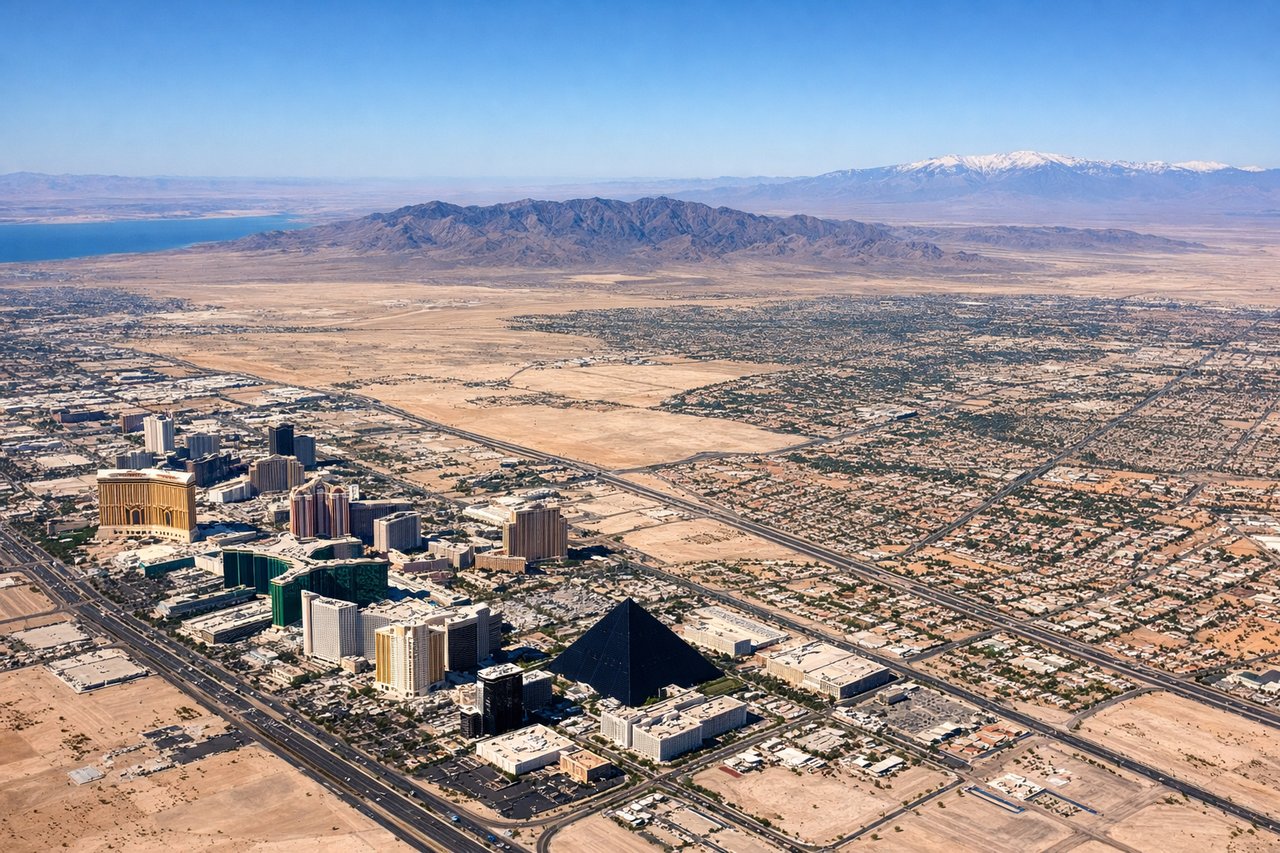
Takeoff from LAS
RIGHTRight-side seats offer views of the Spring Mountains and Red Rock Canyon immediately west of Las Vegas during climb-out. The left side shows developed urban sprawl with less dramatic scenery.
Landing at MAF
LEFTLeft-side seats provide views of the Permian Basin terrain, including the distinctive flat-topped mesas and sparse desert landscape characteristic of the Midland approach corridor. Right side faces less visually distinctive terrain.
Landmarks on this routeAll landmarks →
Will your flight be in sunlight?
Pick a date and time in the Sun Map to watch the sun move across your whole flight.
About This Route
Which side of the plane should I sit on flying from Mc Carran International (LAS) to Midland International (MAF)?
Sit on the Right side of the plane for the best views on flights from Las Vegas to Midland. Right-side seats capture the most dramatic scenery at takeoff with the Spring Mountains and Red Rock Canyon. While left-side landing views are notable, the takeoff experience is more visually compelling and memorable.
What can I see during takeoff from Mc Carran International in Las Vegas?
During takeoff from Mc Carran International (LAS), sit on the Right side for the best views. Right-side seats offer views of the Spring Mountains and Red Rock Canyon immediately west of Las Vegas during climb-out. The left side shows developed urban sprawl with less dramatic scenery. Notable sights include: Spring Mountains (northwest), Red Rock Canyon (west), Las Vegas Valley floor, Lake Mead (northeast in distance).
What can I see when landing at Midland International in Midland?
When landing at Midland International (MAF), sit on the Left side for the best views. Left-side seats provide views of the Permian Basin terrain, including the distinctive flat-topped mesas and sparse desert landscape characteristic of the Midland approach corridor. Right side faces less visually distinctive terrain. Notable sights include: Permian Basin desert floor, sparse scrubland and grassland, distant mesa formations (south), Midland city lights and development.
How long is the flight from Las Vegas to Midland?
The flight from Mc Carran International (LAS) to Midland International (MAF) takes about 2 hours 15 minutes. The shortest flight path between them is 794 miles (1,278 km); winds and air traffic control usually add a few percent.
What does the Las Vegas to Midland flight path pass over?
The flight path crosses the Mojave Desert heading southeast. Notable features include the transition from the Spring Mountains and Las Vegas Valley into open desert, with distant views of the San Bernardino Mountains (north) and the Mojave National Preserve terrain. As the aircraft continues southeast into Arizona and New Mexico, the landscape becomes increasingly sparse with scattered mesas, buttes, and the vast high desert plateau. The Chisos Mountains and Davis Mountains appear as distant peaks on the southern horizon during the latter portion of the flight before descent into the Permian Basin.