Las Vegas to Mobile is 1,591 miles (2,560 km), a flight of about 4 hours 15 minutes.
Right-side seats dominate both departure and arrival with superior scenic value—Red Rock Canyon and Spring Mountains at takeoff, then Mobile Bay and the Gulf Coast at landing. The flight path crosses the southern United States with limited dramatic terrain on the left side throughout.
Flight Path
The flight crosses the Mississippi River near the Louisiana-Mississippi border (visible as a wide brown ribbon with distinctive meanders), the Atchafalaya Basin swamplands, and the flat pine forest terrain of central Louisiana and Mississippi. The Gulf of Mexico becomes visible on the right side during the final descent phase. No major mountain ranges are encountered after leaving Nevada; the terrain transitions from high desert to rolling hills to coastal plains.
Great circle distance and headings ›


.jpeg?width=600)

.jpg?width=600)

Phase by phase
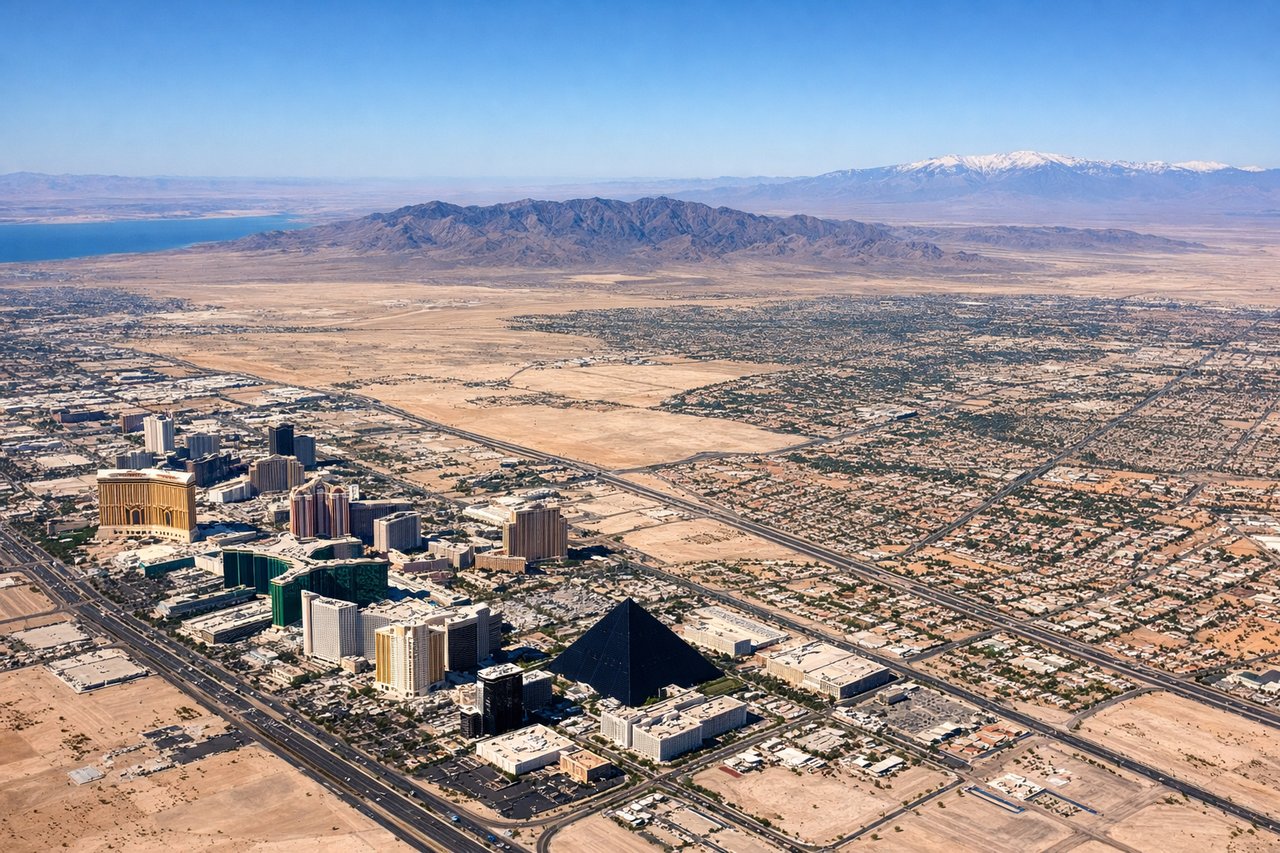
Takeoff from LAS
RIGHTRight-side seats offer views of the Spring Mountains and Red Rock Canyon immediately west of Las Vegas during climb-out. The left side faces the flat desert valley and urban sprawl with less dramatic terrain.
Landing at MOB
RIGHTRight-side seats provide views of Mobile Bay and the Mississippi Sound during descent into Mobile Regional. The left side faces inland pine forests and swamps with minimal visual interest.
Landmarks on this routeAll landmarks →
Will your flight be in sunlight?
Pick a date and time in the Sun Map to watch the sun move across your whole flight.
About This Route
Which side of the plane should I sit on flying from Mc Carran International (LAS) to Mobile Rgnl (MOB)?
Sit on the Right side of the plane for the best views on flights from Las Vegas to Mobile. Right-side seats dominate both departure and arrival with superior scenic value—Red Rock Canyon and Spring Mountains at takeoff, then Mobile Bay and the Gulf Coast at landing. The flight path crosses the southern United States with limited dramatic terrain on the left side throughout.
What can I see during takeoff from Mc Carran International in Las Vegas?
During takeoff from Mc Carran International (LAS), sit on the Right side for the best views. Right-side seats offer views of the Spring Mountains and Red Rock Canyon immediately west of Las Vegas during climb-out. The left side faces the flat desert valley and urban sprawl with less dramatic terrain. Notable sights include: Spring Mountains (northwest), Red Rock Canyon escarpment, Las Vegas Valley floor, Mojave Desert extending south.
What can I see when landing at Mobile Rgnl in Mobile?
When landing at Mobile Rgnl (MOB), sit on the Right side for the best views. Right-side seats provide views of Mobile Bay and the Mississippi Sound during descent into Mobile Regional. The left side faces inland pine forests and swamps with minimal visual interest. Notable sights include: Mobile Bay (large natural harbor), Mississippi Sound, Dauphin Island barrier island, Mobile River delta.
How long is the flight from Las Vegas to Mobile?
The flight from Mc Carran International (LAS) to Mobile Rgnl (MOB) takes about 4 hours 15 minutes. The shortest flight path between them is 1,591 miles (2,560 km); winds and air traffic control usually add a few percent.
What does the Las Vegas to Mobile flight path pass over?
The flight crosses the Mississippi River near the Louisiana-Mississippi border (visible as a wide brown ribbon with distinctive meanders), the Atchafalaya Basin swamplands, and the flat pine forest terrain of central Louisiana and Mississippi. The Gulf of Mexico becomes visible on the right side during the final descent phase. No major mountain ranges are encountered after leaving Nevada; the terrain transitions from high desert to rolling hills to coastal plains.