While the right side wins at Heathrow departure, the left side dominates the majority of the transatlantic and overland flight. Over Greenland and Canada the left side faces south toward more dramatic ice sheet and coastal terrain, and the Wasatch Range arrival view on the left is one of the most spectacular mountain approaches in North America.
Flight Path
The flight tracks northwest over Ireland, then across the North Atlantic on a polar great circle route passing near the southern tip of Greenland and its ice sheet, then over Baffin Island or Labrador depending on routing, across Hudson Bay or Quebec, over the Great Lakes region, then across the northern Great Plains of the US — Nebraska or Wyoming — before descending over the high desert plateau into Salt Lake City with the Rocky Mountains visible ahead.
Great circle distance and headings ›.jpeg?width=600)
.jpg?width=600)

Phase by phase
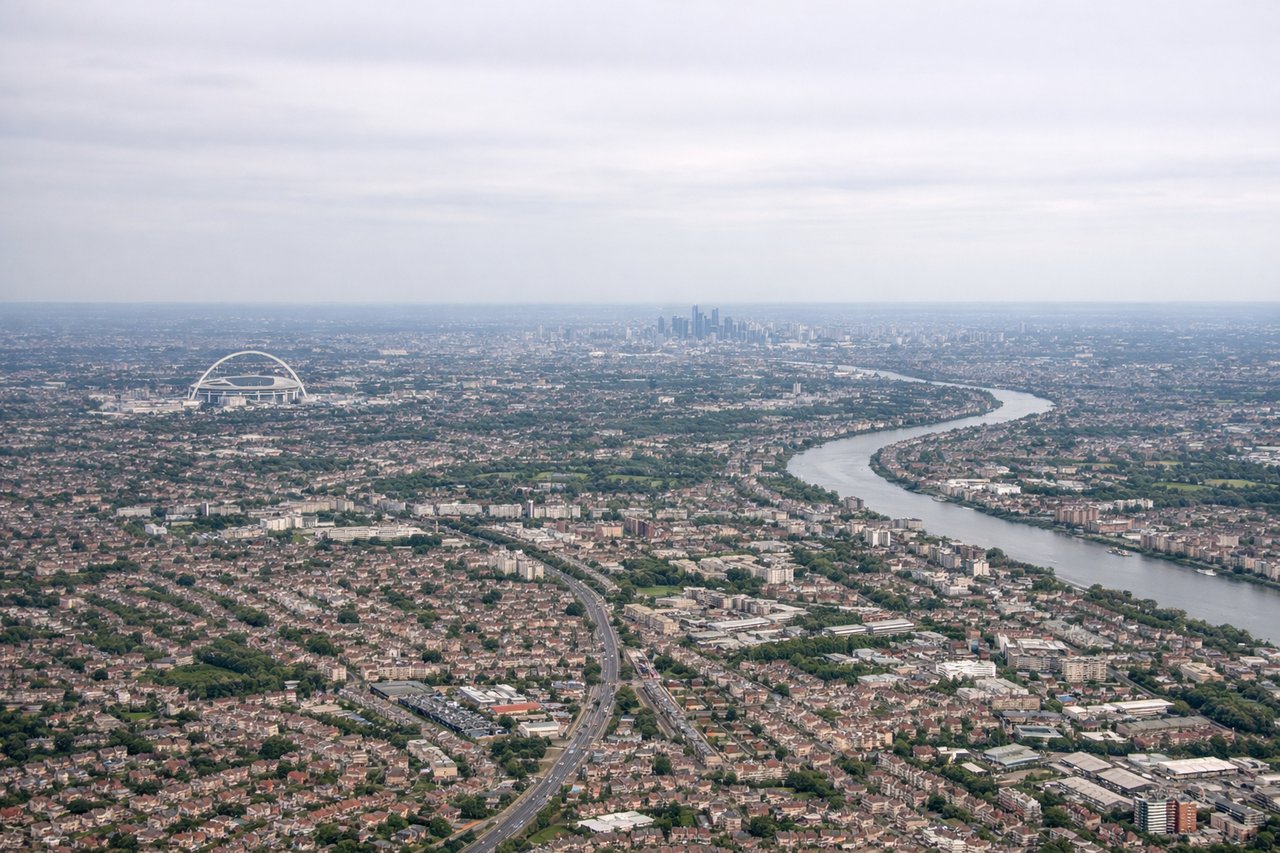
Takeoff from LHR
RIGHTHeathrow departures heading west on runway 27L/27R give the right side a clear view over central London as the aircraft banks north. You'll see the Thames snaking eastward through the city, with the dense urban grid of west London spread out below.

Landing at SLC
LEFTSLC typically lands on runways 16L/16R heading south, which puts the left side facing east toward the Wasatch Range. The dramatic wall of the Wasatch Mountains rises immediately east of the city and is one of the most striking airport approaches in the US.
Landmarks on this routeAll landmarks →
Will your flight be in sunlight?
See exactly which side of the plane gets sun and shade at your departure time.
About This Route
Which side of the plane should I sit on flying from Heathrow (LHR) to Salt Lake City International (SLC)?
Sit on the Left side of the plane for the best views on flights from London to Salt Lake City. While the right side wins at Heathrow departure, the left side dominates the majority of the transatlantic and overland flight. Over Greenland and Canada the left side faces south toward more dramatic ice sheet and coastal terrain, and the Wasatch Range arrival view on the left is one of the most spectacular mountain approaches in North America.
What can I see during takeoff from Heathrow in London?
During takeoff from Heathrow (LHR), sit on the Right side for the best views. Heathrow departures heading west on runway 27L/27R give the right side a clear view over central London as the aircraft banks north. You'll see the Thames snaking eastward through the city, with the dense urban grid of west London spread out below. Notable sights include: River Thames through central London, Windsor Castle and Windsor Great Park to the southwest, Wembley Stadium arch visible to the north, Slough and the M25 motorway interchange below.
What can I see when landing at Salt Lake City International in Salt Lake City?
When landing at Salt Lake City International (SLC), sit on the Left side for the best views. SLC typically lands on runways 16L/16R heading south, which puts the left side facing east toward the Wasatch Range. The dramatic wall of the Wasatch Mountains rises immediately east of the city and is one of the most striking airport approaches in the US. Notable sights include: Wasatch Front mountain range directly to the east, Great Salt Lake stretching north and west, Salt Lake City downtown grid and the Utah State Capitol, Oquirrh Mountains to the west.
How long is the flight from London to Salt Lake City?
The flight from Heathrow (LHR) to Salt Lake City International (SLC) takes Approximately 10 to 11 hours.
What does the London to Salt Lake City flight path pass over?
The flight tracks northwest over Ireland, then across the North Atlantic on a polar great circle route passing near the southern tip of Greenland and its ice sheet, then over Baffin Island or Labrador depending on routing, across Hudson Bay or Quebec, over the Great Lakes region, then across the northern Great Plains of the US — Nebraska or Wyoming — before descending over the high desert plateau into Salt Lake City with the Rocky Mountains visible ahead.