While the left offers excellent views during takeoff from La Paz, the right side provides superior scenery during the longer descent phase into Cuzco, including the visually striking Vilcanota River valley and Sacred Valley terrain. The approach views outweigh the departure advantage.
Flight Path
High Andean plateau between La Paz and Cuzco, including the transition from the Altiplano into the Peruvian highlands, scattered lakes and ponds on the plateau surface, and the gradual descent into the Vilcanota River drainage system
Great circle distance and headings ›


.jpg?width=600)
Phase by phase
Takeoff from LPB
LEFTDeparting La Paz heading southeast toward Cuzco, the left side offers immediate views of the Cordillera Real and the high Andean plateau. You'll see the dramatic escarpment dropping away from El Alto and the snow-capped peaks that define the eastern edge of the Altiplano.
Landing at CUZ
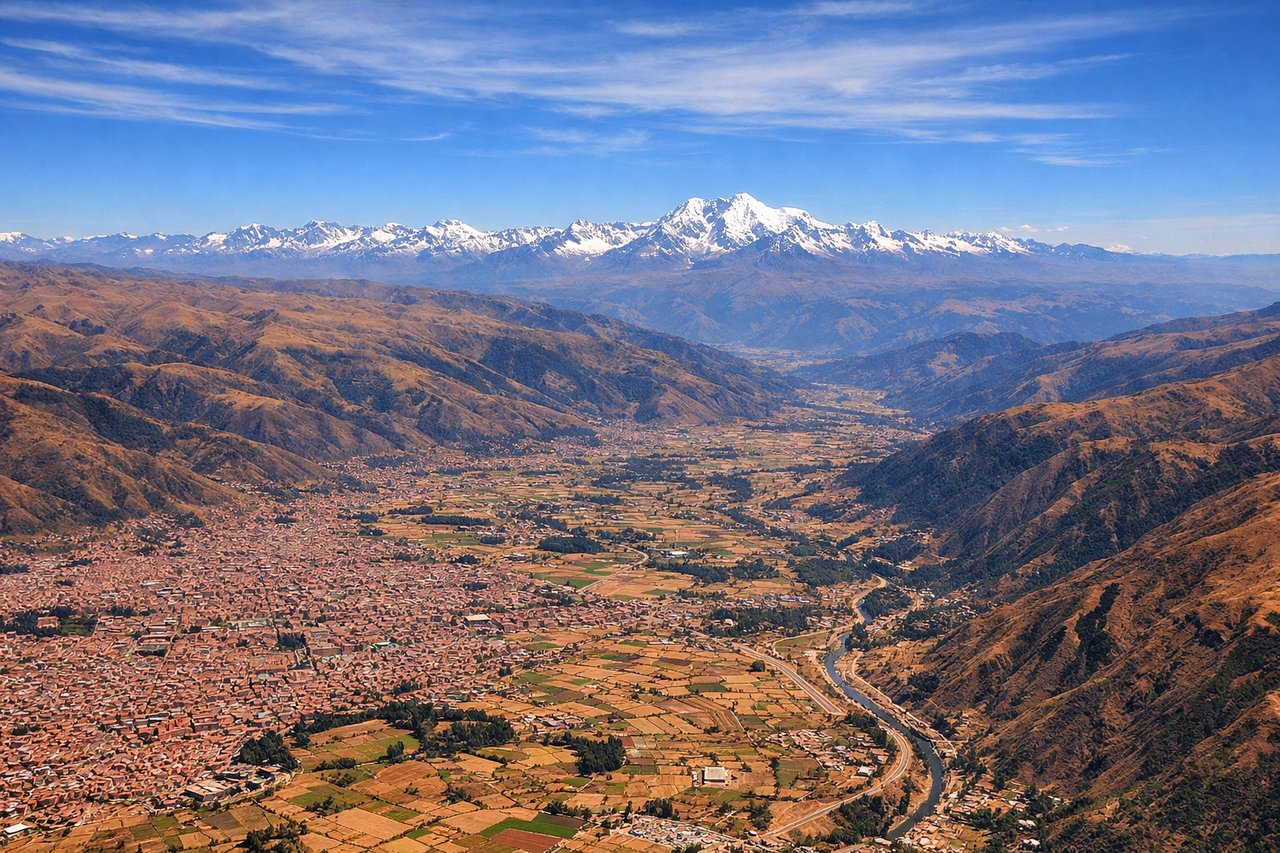
RIGHTApproaching Cuzco from the northwest, the right side captures the Sacred Valley and the Vilcanota River valley system as you descend. You'll see the dramatic terrain of the Peruvian highlands with the river cutting through steep-sided valleys—a distinctive feature of the approach corridor.
Landmarks on this routeAll landmarks →
Will your flight be in sunlight?
See exactly which side of the plane gets sun and shade at your departure time.
About This Route
Which side of the plane should I sit on flying from El Alto International (LPB) to Velazco Astete (CUZ)?
Sit on the Right side of the plane for the best views on flights from La Paz to Cuzco. While the left offers excellent views during takeoff from La Paz, the right side provides superior scenery during the longer descent phase into Cuzco, including the visually striking Vilcanota River valley and Sacred Valley terrain. The approach views outweigh the departure advantage.
What can I see during takeoff from El Alto International in La Paz?
During takeoff from El Alto International (LPB), sit on the Left side for the best views. Departing La Paz heading southeast toward Cuzco, the left side offers immediate views of the Cordillera Real and the high Andean plateau. You'll see the dramatic escarpment dropping away from El Alto and the snow-capped peaks that define the eastern edge of the Altiplano. Notable sights include: Cordillera Real (snow-capped peaks), Lake Titicaca (visible to the northwest as you climb), Altiplano plateau surface, La Paz city basin below.
What can I see when landing at Velazco Astete in Cuzco?
When landing at Velazco Astete (CUZ), sit on the Right side for the best views. Approaching Cuzco from the northwest, the right side captures the Sacred Valley and the Vilcanota River valley system as you descend. You'll see the dramatic terrain of the Peruvian highlands with the river cutting through steep-sided valleys—a distinctive feature of the approach corridor. Notable sights include: Vilcanota River valley, Sacred Valley agricultural terraces, Andean peaks surrounding Cuzco basin, Cuzco city in the valley floor.
How long is the flight from La Paz to Cuzco?
The flight from El Alto International (LPB) to Velazco Astete (CUZ) takes 1h 15m.
What does the La Paz to Cuzco flight path pass over?
High Andean plateau between La Paz and Cuzco, including the transition from the Altiplano into the Peruvian highlands, scattered lakes and ponds on the plateau surface, and the gradual descent into the Vilcanota River drainage system