Male to Frankfurt is 4,899 miles (7,885 km), a flight of about 7 hours 25 minutes.
While both directions offer distinct scenery, the right side captures the dramatic atoll geography at departure—the most visually distinctive feature of this route. The landing approach over Frankfurt is comparable from either side, but the takeoff advantage tips the overall recommendation rightward.
Flight Path
The flight path crosses the Arabian Sea, then over the Arabian Peninsula (Oman and Saudi Arabia), the Persian Gulf region, Iraq, Turkey's Anatolian plateau, and the Balkans. Notable visible features include the Zagros Mountains along the Iraq-Iran border, the Taurus Mountains in southern Turkey, and the Danube River valley approaching central Europe. Most of this route occurs over land with significant mountain ranges, but visibility of specific features depends heavily on weather and exact flight altitude.
Great circle distance and headings ›_8.JPG?width=600)
_and_the_Dubai_skyline_(25781049892).jpg?width=600)
.jpg?width=600)

.jpg?width=600)

Phase by phase
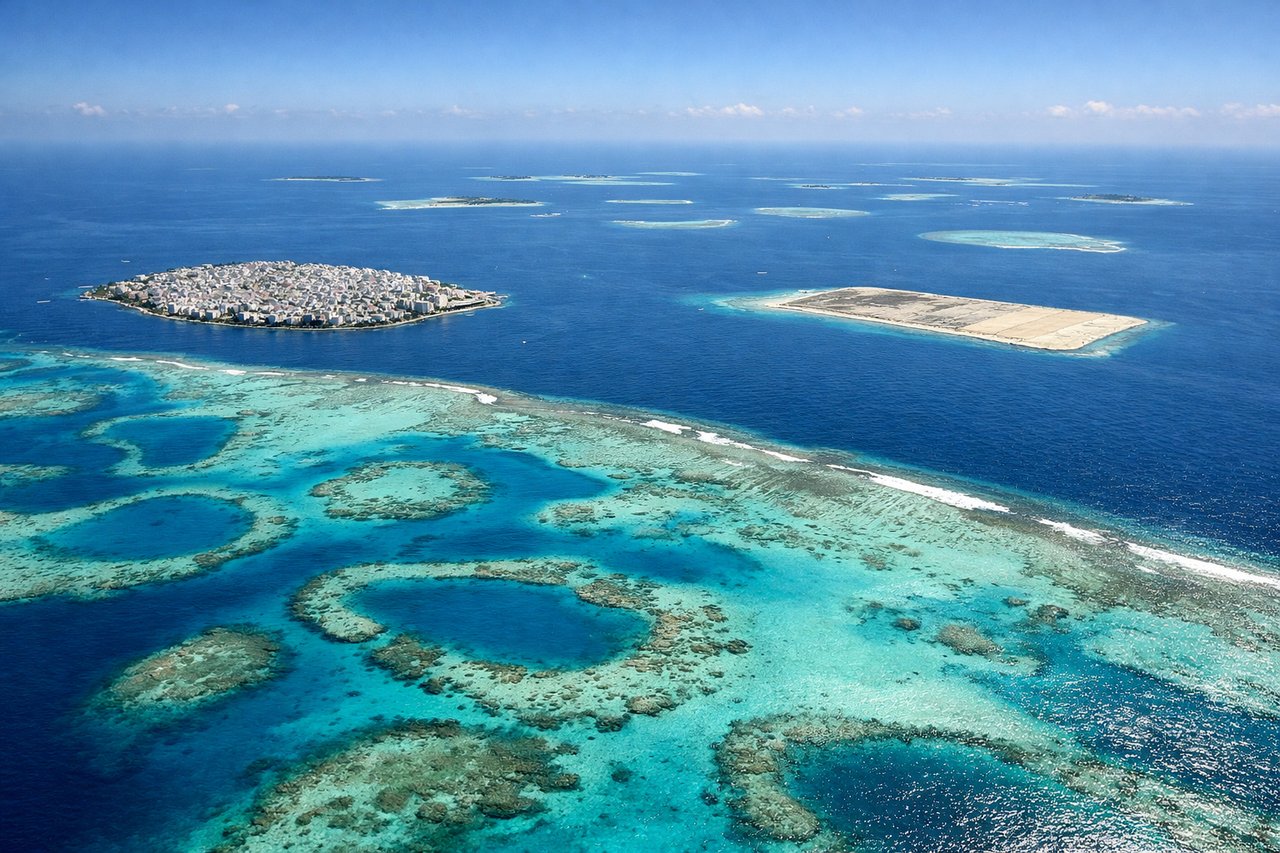
Takeoff from MLE
RIGHTRight-side seats offer views of the Indian Ocean and the atoll chain extending northeast from Male. The aircraft departs northeastward, making the right wing the scenic side during initial climb.

Landing at FRA
LEFTLeft-side seats provide views of the Rhine-Main region and Frankfurt's urban landscape during descent. The aircraft approaches from the west-southwest, making the left wing ideal for viewing the city and surrounding terrain.
Landmarks on this routeAll landmarks →
Will your flight be in sunlight?
Pick a date and time in the Sun Map to watch the sun move across your whole flight.
About This Route
Which side of the plane should I sit on flying from Male International (MLE) to Frankfurt Main (FRA)?
Sit on the Right side of the plane for the best views on flights from Male to Frankfurt. While both directions offer distinct scenery, the right side captures the dramatic atoll geography at departure—the most visually distinctive feature of this route. The landing approach over Frankfurt is comparable from either side, but the takeoff advantage tips the overall recommendation rightward.
What can I see during takeoff from Male International in Male?
During takeoff from Male International (MLE), sit on the Right side for the best views. Right-side seats offer views of the Indian Ocean and the atoll chain extending northeast from Male. The aircraft departs northeastward, making the right wing the scenic side during initial climb. Notable sights include: Male atoll and surrounding coral atolls, Indian Ocean, North Male Atoll reef structures.
What can I see when landing at Frankfurt Main in Frankfurt?
When landing at Frankfurt Main (FRA), sit on the Left side for the best views. Left-side seats provide views of the Rhine-Main region and Frankfurt's urban landscape during descent. The aircraft approaches from the west-southwest, making the left wing ideal for viewing the city and surrounding terrain. Notable sights include: Frankfurt city center and Main River, Rhine River valley to the north, Taunus Mountains in the distance.
How long is the flight from Male to Frankfurt?
The flight from Male International (MLE) to Frankfurt Main (FRA) takes about 7 hours 25 minutes. The shortest flight path between them is 4,899 miles (7,885 km); winds and air traffic control usually add a few percent.
What does the Male to Frankfurt flight path pass over?
The flight path crosses the Arabian Sea, then over the Arabian Peninsula (Oman and Saudi Arabia), the Persian Gulf region, Iraq, Turkey's Anatolian plateau, and the Balkans. Notable visible features include the Zagros Mountains along the Iraq-Iran border, the Taurus Mountains in southern Turkey, and the Danube River valley approaching central Europe. Most of this route occurs over land with significant mountain ranges, but visibility of specific features depends heavily on weather and exact flight altitude.