While left offers better Perth departure views, right seats provide superior scenery during the longer final approach phase to Phuket, with the iconic Phang Nga Bay karsts and Andaman Sea being the flight's most visually distinctive feature. The landing experience outweighs the takeoff advantage.
Flight Path
The flight path crosses the Indian Ocean northwestward, passing over the Strait of Malacca region. Notable features include the Nicobar Islands (visible as small dark landmasses if flying slightly east of direct route), the Andaman Islands (larger, more prominent if visible on the eastern side of the route), and the transition from open ocean to the shallow, island-dotted waters approaching Thailand's west coast. The Strait of Malacca itself—the narrow waterway between Malaysia and Sumatra—may be visible on the approach to Thailand, showing significant maritime traffic as one of the world's busiest shipping lanes.
Great circle distance and headings ›

Phase by phase

Takeoff from PER
LEFTLeft seats face north-northwest on departure from Perth, offering views of the Indian Ocean coastline and the Darling Range escarpment as the aircraft climbs. Right seats face inland toward the flat Perth basin with minimal scenic interest.
Landing at HKT
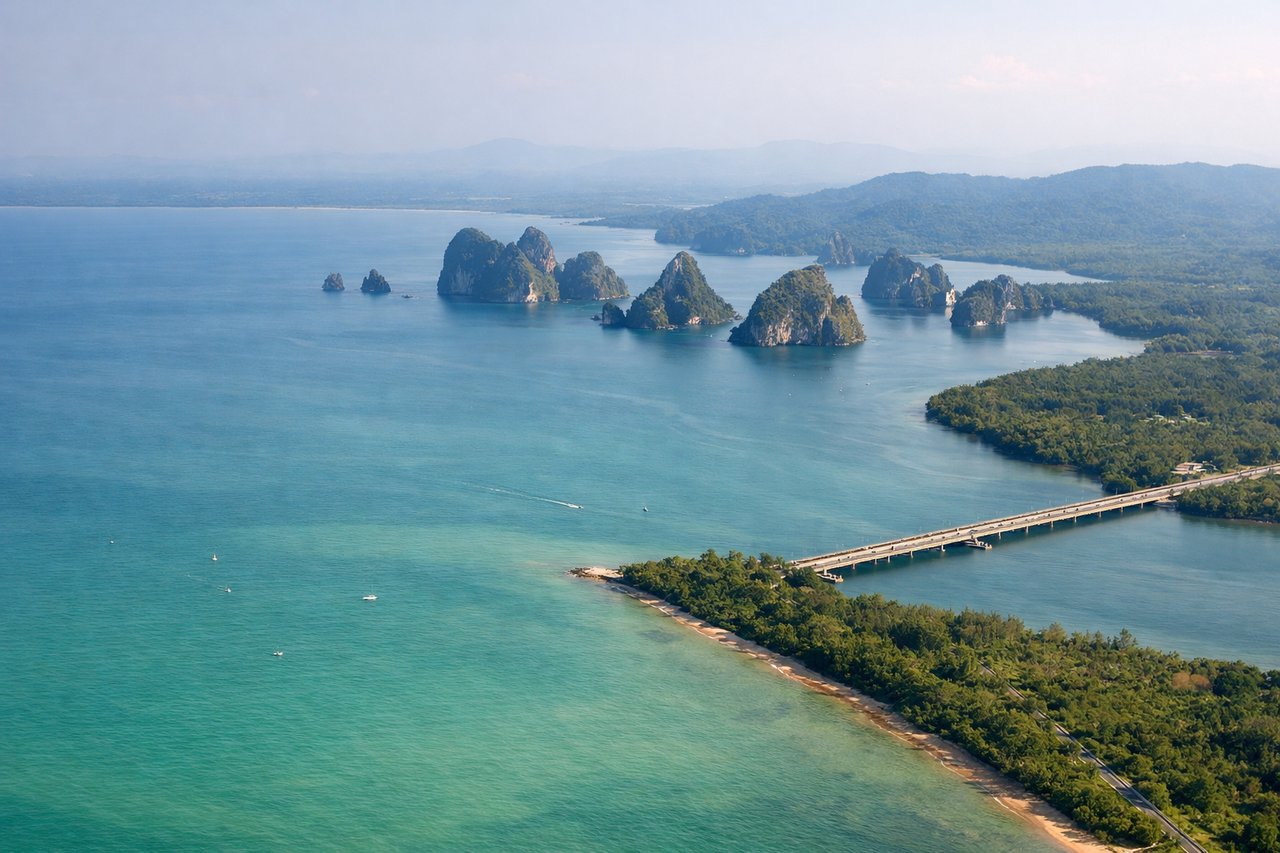
RIGHTRight seats face west-southwest during final approach to Phuket, providing views of the Andaman Sea, Phang Nga Bay's limestone karsts, and the Thai coastline. Left seats face inland over forested hills with less dramatic scenery.
Landmarks on this routeAll landmarks →
Will your flight be in sunlight?
See exactly which side of the plane gets sun and shade at your departure time.
About This Route
Which side of the plane should I sit on flying from Perth International (PER) to Phuket International (HKT)?
Sit on the Right side of the plane for the best views on flights from Perth to Phuket. While left offers better Perth departure views, right seats provide superior scenery during the longer final approach phase to Phuket, with the iconic Phang Nga Bay karsts and Andaman Sea being the flight's most visually distinctive feature. The landing experience outweighs the takeoff advantage.
What can I see during takeoff from Perth International in Perth?
During takeoff from Perth International (PER), sit on the Left side for the best views. Left seats face north-northwest on departure from Perth, offering views of the Indian Ocean coastline and the Darling Range escarpment as the aircraft climbs. Right seats face inland toward the flat Perth basin with minimal scenic interest. Notable sights include: Indian Ocean (immediate west), Darling Range (northeast escarpment), Swan River estuary, Perth city lights receding southward.
What can I see when landing at Phuket International in Phuket?
When landing at Phuket International (HKT), sit on the Right side for the best views. Right seats face west-southwest during final approach to Phuket, providing views of the Andaman Sea, Phang Nga Bay's limestone karsts, and the Thai coastline. Left seats face inland over forested hills with less dramatic scenery. Notable sights include: Andaman Sea, Phang Nga Bay limestone karsts, Phuket island's western beaches, coastal mangrove forests.
How long is the flight from Perth to Phuket?
The flight from Perth International (PER) to Phuket International (HKT) takes Approximately 5 hours 15 minutes.
What does the Perth to Phuket flight path pass over?
The flight path crosses the Indian Ocean northwestward, passing over the Strait of Malacca region. Notable features include the Nicobar Islands (visible as small dark landmasses if flying slightly east of direct route), the Andaman Islands (larger, more prominent if visible on the eastern side of the route), and the transition from open ocean to the shallow, island-dotted waters approaching Thailand's west coast. The Strait of Malacca itself—the narrow waterway between Malaysia and Sumatra—may be visible on the approach to Thailand, showing significant maritime traffic as one of the world's busiest shipping lanes.