While the PHX departure offers solid desert mountain views, the Barcelona coastal approach with the Mediterranean, harbor, and city grid provides a more dynamic and memorable payoff at the end of a long transatlantic flight.
Flight Path
The flight crosses the central and eastern United States, then a long stretch of open Atlantic Ocean before making landfall near the French or northern Spanish coast, with the Pyrenees sometimes visible in the distance before descent into Catalonia.
Great circle distance and headings ›

.jpg?width=600)


Phase by phase
Takeoff from PHX
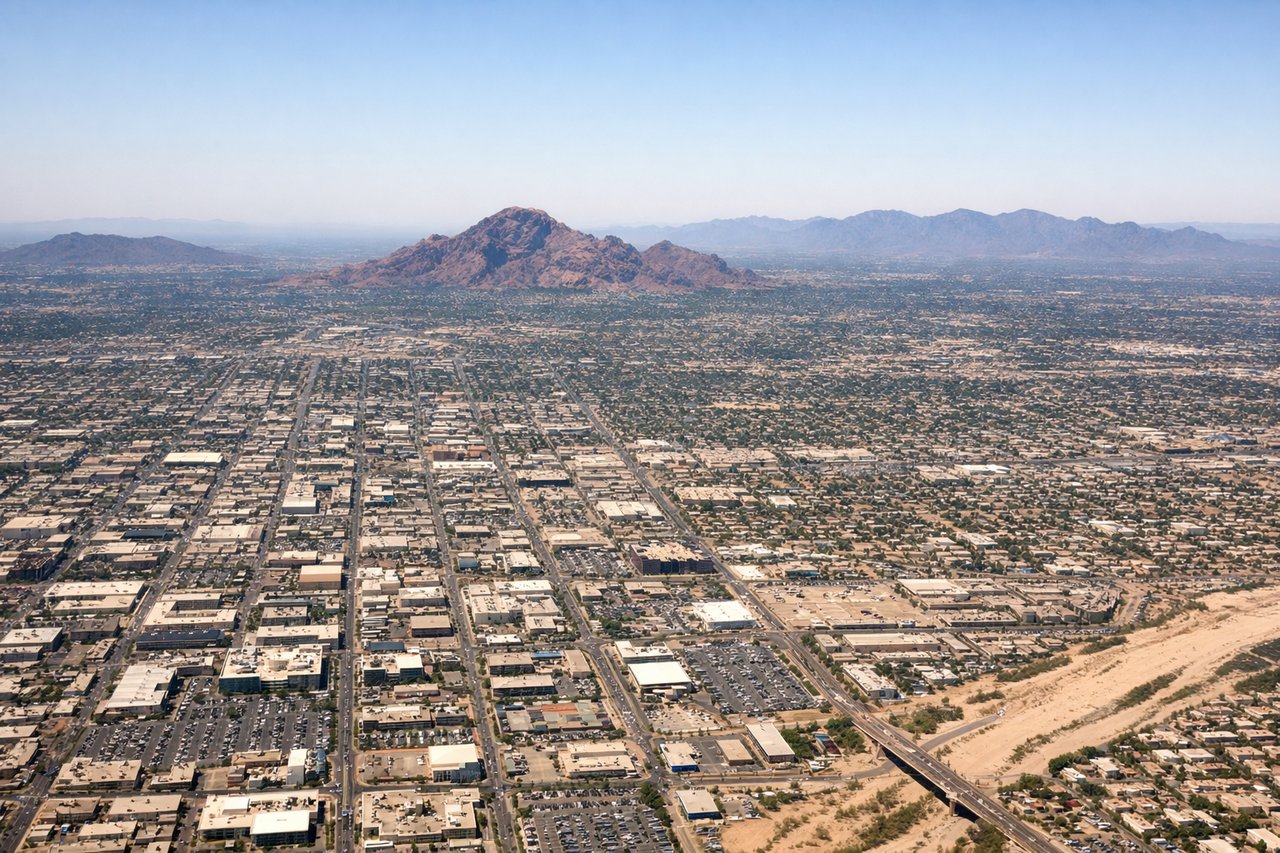
LEFTDeparting PHX to the east, a left-side window shows the McDowell Mountains and Four Peaks rising north of Scottsdale as the aircraft climbs, with Camelback Mountain's distinctive hump visible closer in. The desert terrain gives more visual texture than the flatter valley floor to the south.

Landing at BCN
RIGHTOn approach into BCN from the northeast, the right side offers views of the Mediterranean coastline and Barcelona's dense urban grid, including the harbor and beachfront, as the plane descends toward the coastal runways. This coastal-urban mix is more visually rewarding than inland Catalan farmland on the left.
Landmarks on this routeAll landmarks →
Will your flight be in sunlight?
See exactly which side of the plane gets sun and shade at your departure time.
About This Route
Which side of the plane should I sit on flying from Phoenix Sky Harbor International (PHX) to Barcelona (BCN)?
Sit on the Right side of the plane for the best views on flights from Phoenix to Barcelona. While the PHX departure offers solid desert mountain views, the Barcelona coastal approach with the Mediterranean, harbor, and city grid provides a more dynamic and memorable payoff at the end of a long transatlantic flight.
What can I see during takeoff from Phoenix Sky Harbor International in Phoenix?
During takeoff from Phoenix Sky Harbor International (PHX), sit on the Left side for the best views. Departing PHX to the east, a left-side window shows the McDowell Mountains and Four Peaks rising north of Scottsdale as the aircraft climbs, with Camelback Mountain's distinctive hump visible closer in. The desert terrain gives more visual texture than the flatter valley floor to the south. Notable sights include: Camelback Mountain, McDowell Mountains, Four Peaks, Scottsdale desert terrain.
What can I see when landing at Barcelona in Barcelona?
When landing at Barcelona (BCN), sit on the Right side for the best views. On approach into BCN from the northeast, the right side offers views of the Mediterranean coastline and Barcelona's dense urban grid, including the harbor and beachfront, as the plane descends toward the coastal runways. This coastal-urban mix is more visually rewarding than inland Catalan farmland on the left. Notable sights include: Mediterranean coastline, Barcelona harbor, La Barceloneta beach, city grid of L'Eixample.
How long is the flight from Phoenix to Barcelona?
The flight from Phoenix Sky Harbor International (PHX) to Barcelona (BCN) takes 10h 20m.
What does the Phoenix to Barcelona flight path pass over?
The flight crosses the central and eastern United States, then a long stretch of open Atlantic Ocean before making landfall near the French or northern Spanish coast, with the Pyrenees sometimes visible in the distance before descent into Catalonia.