The landing approach to Rome (right side) scores higher due to the dramatic volcanic Alban Hills, the Tiber River valley, and the Apennine Mountains providing significant terrain variety and recognizable landmarks. While Shanghai's departure offers urban density, the westbound cruise over central Asia and the Middle East is predominantly flat or desert terrain with minimal scenic features. The Rome approach delivers more consistent visual interest across the descent phase.
Flown PVG to CIA? Did we get it right?
Flight Path
Shanghai to Rome is 5,683 miles (9,146 km), a flight of about 11 hours 15 minutes.
The flight path crosses the Tian Shan mountains in Xinjiang, the Pamir Plateau, Hindu Kush range in Afghanistan, the Caspian Sea (northern shore), the Caucasus Mountains, the Black Sea, and the Balkans before reaching Italy. Most of the cruise phase over central Asia and the Middle East consists of high-altitude desert, steppe, and mountain plateaus with limited visual landmarks from typical cruising altitude.
Great circle distance and headings ›


Phase by phase
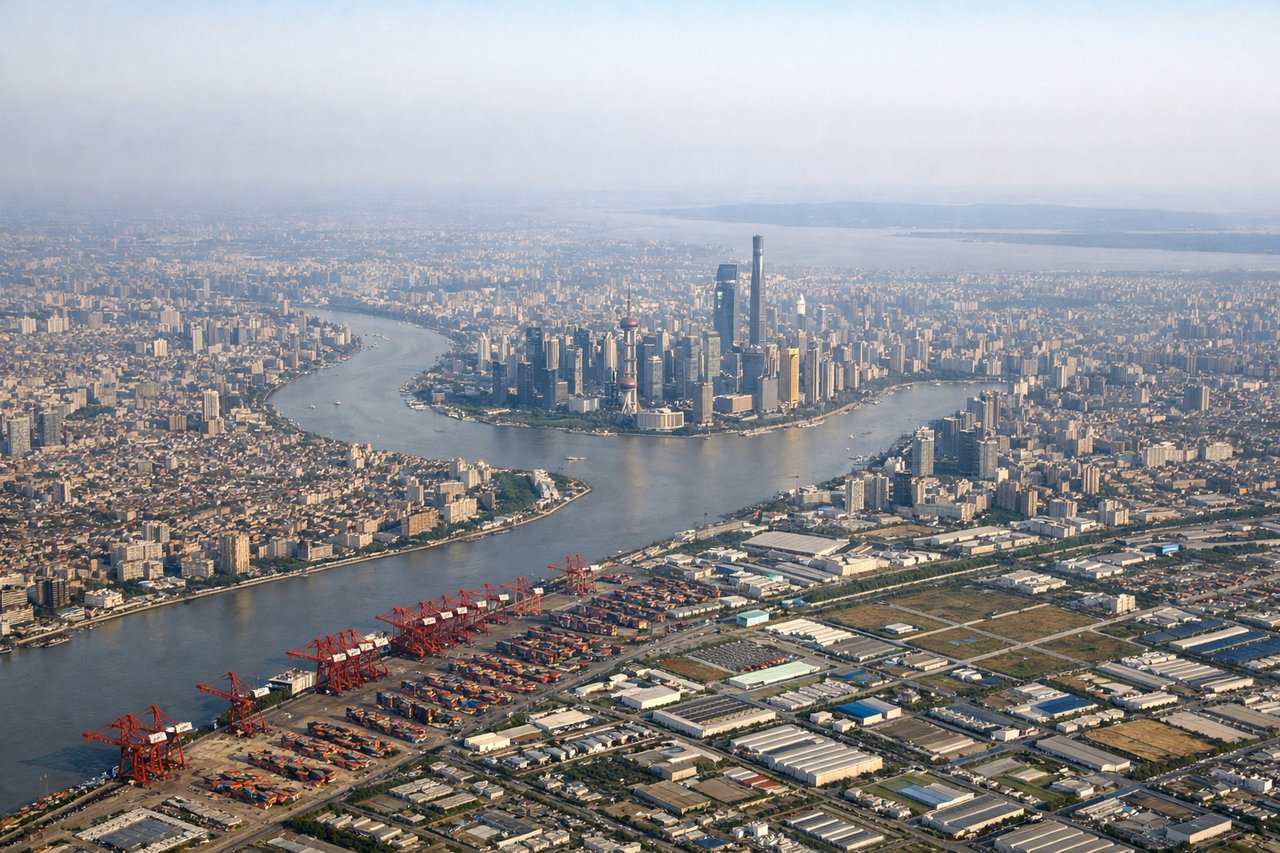
Takeoff from PVG
LEFTShanghai Pudong departure offers urban density and Huangpu River views during climb-out. The Yangtze River estuary and East China Sea coastline are visible on the left side as the aircraft gains altitude heading westbound.
Landing at CIA
RIGHTThe approach to Ciampino from the east offers views of the Alban Hills volcanic landscape, the Tiber River valley, and Rome's urban sprawl. The Apennine Mountains are visible on the right side during descent, and the approach path provides views of the Roman countryside and suburban development leading into the city.
Will your flight be in sunlight?
Pick a date and time in the Sun Map to watch the sun move across your whole flight.
About This Route
Which side of the plane should I sit on flying from Shanghai Pudong International (PVG) to Ciampino (CIA)?
Sit on the Right side of the plane for the best views on flights from Shanghai to Rome. The landing approach to Rome (right side) scores higher due to the dramatic volcanic Alban Hills, the Tiber River valley, and the Apennine Mountains providing significant terrain variety and recognizable landmarks. While Shanghai's departure offers urban density, the westbound cruise over central Asia and the Middle East is predominantly flat or desert terrain with minimal scenic features. The Rome approach delivers more consistent visual interest across the descent phase.
What can I see during takeoff from Shanghai Pudong International in Shanghai?
During takeoff from Shanghai Pudong International (PVG), sit on the Left side for the best views. Shanghai Pudong departure offers urban density and Huangpu River views during climb-out. The Yangtze River estuary and East China Sea coastline are visible on the left side as the aircraft gains altitude heading westbound. Notable sights include: Huangpu River and Shanghai skyline, Yangtze River estuary, East China Sea coastline, Hangzhou Bay.
What can I see when landing at Ciampino in Rome?
When landing at Ciampino (CIA), sit on the Right side for the best views. The approach to Ciampino from the east offers views of the Alban Hills volcanic landscape, the Tiber River valley, and Rome's urban sprawl. The Apennine Mountains are visible on the right side during descent, and the approach path provides views of the Roman countryside and suburban development leading into the city. Notable sights include: Alban Hills volcanic peaks, Tiber River valley, Apennine Mountains to the east, Rome urban sprawl and suburban development.
How long is the flight from Shanghai to Rome?
The flight from Shanghai Pudong International (PVG) to Ciampino (CIA) takes about 11 hours 15 minutes. The shortest flight path between them is 5,683 miles (9,146 km); winds and air traffic control usually add a few percent.
What does the Shanghai to Rome flight path pass over?
The flight path crosses the Tian Shan mountains in Xinjiang, the Pamir Plateau, Hindu Kush range in Afghanistan, the Caspian Sea (northern shore), the Caucasus Mountains, the Black Sea, and the Balkans before reaching Italy. Most of the cruise phase over central Asia and the Middle East consists of high-altitude desert, steppe, and mountain plateaus with limited visual landmarks from typical cruising altitude.