While Shanghai's departure is visually superior, Rome's landing approach over the Tiber valley, Alban Hills, and Campagna landscape provides more sustained scenic interest during the critical final descent phase. The right side captures the geological and historical geography of central Italy, whereas the left side is dominated by open ocean for most of the cruise phase. The landing experience outweighs the takeoff advantage.
Flight Path
The flight path crosses the Caspian Sea, Caucasus Mountains (visible from altitude on clear days), Anatolia and the Turkish plateau, the Mediterranean Sea, and the Italian peninsula. Notable landmarks along the route include the Elburz Mountains south of the Caspian, the Taurus Mountains in southern Turkey, and the Apennine Mountains in central Italy. The Mediterranean crossing offers extended ocean views with occasional visibility of Cyprus, Crete, and the Greek islands depending on flight level and atmospheric conditions.
Great circle distance and headings ›
.jpg?width=600)


Phase by phase
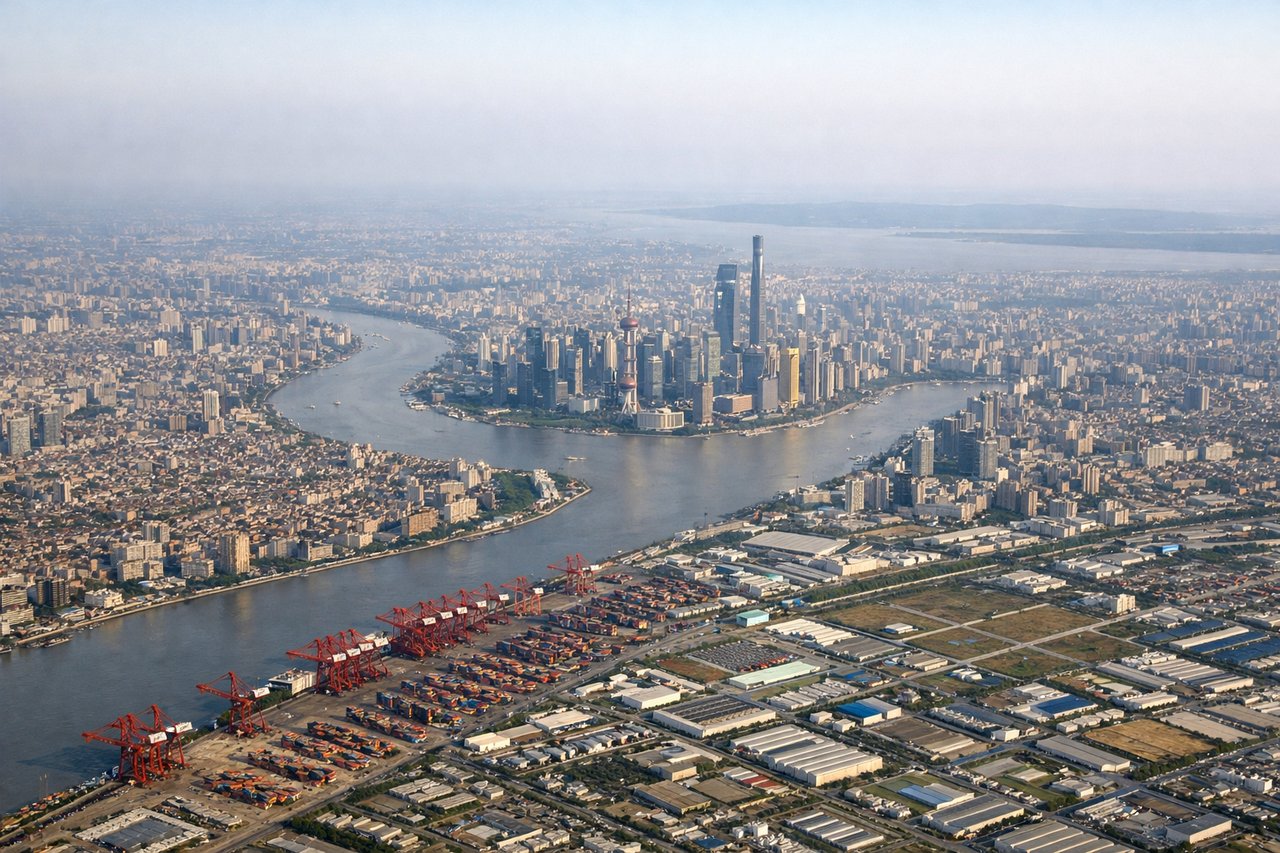
Takeoff from PVG
LEFTShanghai Pudong offers a dramatic urban departure with the Huangpu River, Pudong skyline, and East China Sea coastline visible immediately after climb-out. The right side departs over flat inland plains with minimal visual interest.
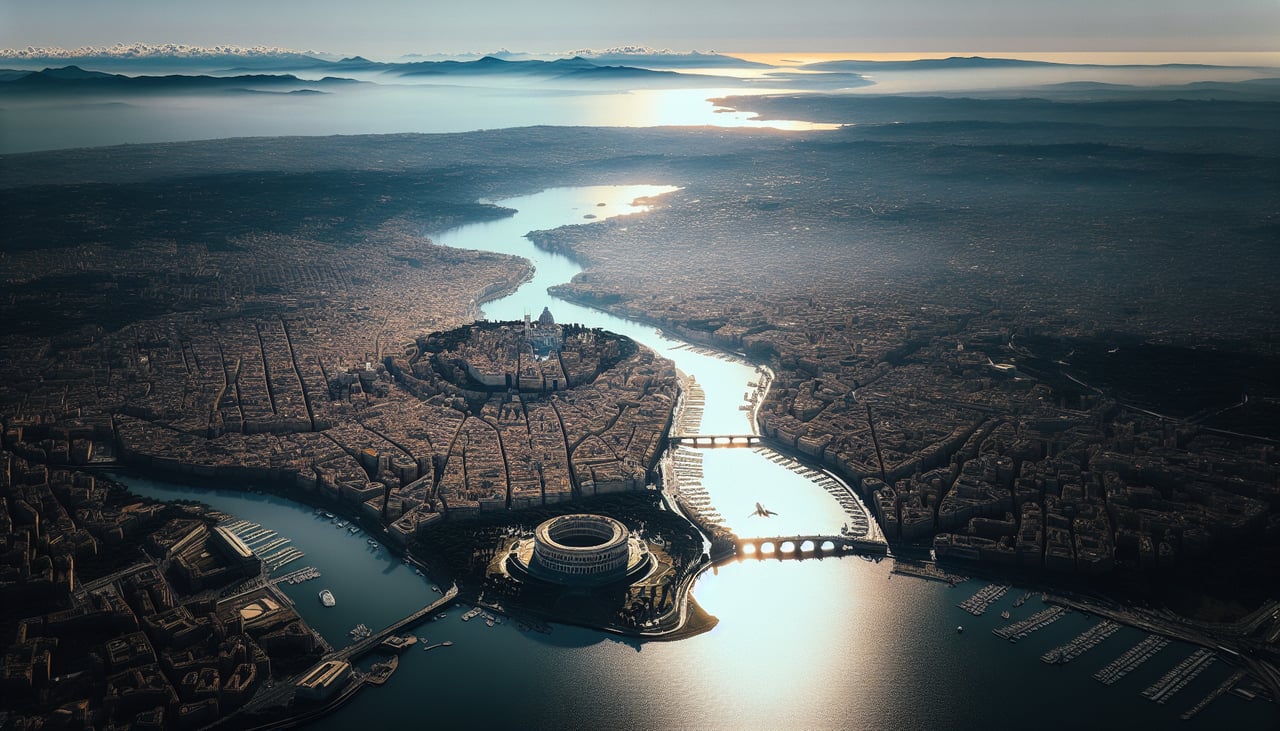
Landing at FCO
RIGHTThe approach to Rome Fiumicino from the east provides views of the Tiber River valley, the Alban Hills, and the Roman Campagna landscape. The right side captures the Tyrrhenian Sea coastline and the approach path over the Pontine Marshes. The left side offers only flat coastal plains and open water.
Landmarks on this routeAll landmarks →
Will your flight be in sunlight?
See exactly which side of the plane gets sun and shade at your departure time.
About This Route
Which side of the plane should I sit on flying from Shanghai Pudong International (PVG) to Fiumicino (FCO)?
Sit on the Right side of the plane for the best views on flights from Shanghai to Rome. While Shanghai's departure is visually superior, Rome's landing approach over the Tiber valley, Alban Hills, and Campagna landscape provides more sustained scenic interest during the critical final descent phase. The right side captures the geological and historical geography of central Italy, whereas the left side is dominated by open ocean for most of the cruise phase. The landing experience outweighs the takeoff advantage.
What can I see during takeoff from Shanghai Pudong International in Shanghai?
During takeoff from Shanghai Pudong International (PVG), sit on the Left side for the best views. Shanghai Pudong offers a dramatic urban departure with the Huangpu River, Pudong skyline, and East China Sea coastline visible immediately after climb-out. The right side departs over flat inland plains with minimal visual interest. Notable sights include: Huangpu River and Pudong financial district skyline, East China Sea coastline, Hangzhou Bay to the south.
What can I see when landing at Fiumicino in Rome?
When landing at Fiumicino (FCO), sit on the Right side for the best views. The approach to Rome Fiumicino from the east provides views of the Tiber River valley, the Alban Hills, and the Roman Campagna landscape. The right side captures the Tyrrhenian Sea coastline and the approach path over the Pontine Marshes. The left side offers only flat coastal plains and open water. Notable sights include: Tiber River valley and meanders, Alban Hills volcanic ridge, Roman Campagna agricultural landscape, Tyrrhenian Sea coastline.
How long is the flight from Shanghai to Rome?
The flight from Shanghai Pudong International (PVG) to Fiumicino (FCO) takes 11h 15m.
What does the Shanghai to Rome flight path pass over?
The flight path crosses the Caspian Sea, Caucasus Mountains (visible from altitude on clear days), Anatolia and the Turkish plateau, the Mediterranean Sea, and the Italian peninsula. Notable landmarks along the route include the Elburz Mountains south of the Caspian, the Taurus Mountains in southern Turkey, and the Apennine Mountains in central Italy. The Mediterranean crossing offers extended ocean views with occasional visibility of Cyprus, Crete, and the Greek islands depending on flight level and atmospheric conditions.