Shanghai to Milan is 5,668 miles (9,123 km), a flight of about 11 hours 30 minutes.
While takeoff offers good Shanghai delta views on the right, the landing approach into Milan on the left provides more dramatic and visually distinctive scenery—the Alps are a major highlight of this route. Left-side seats capture the most impressive natural feature of the entire flight.
Flight Path
The flight path crosses central Asia, passing over the Tian Shan mountains (visible on the right during the central portion), the Taklamakan Desert (vast tan expanse), the Pamir Plateau, Hindu Kush range, and eventually the Caspian Sea region. Over Europe, you'll cross the Ural Mountains, then the vast Eastern European Plain before reaching the Alps. The Caspian Sea is particularly striking if visible—a massive inland body of water appearing as a dark blue-gray mass against surrounding steppes. The transition from Asian highlands to European plains is gradual but noticeable around the Ural region.
Great circle distance and headings ›
.jpg?width=600)


.jpg?width=600)
Phase by phase
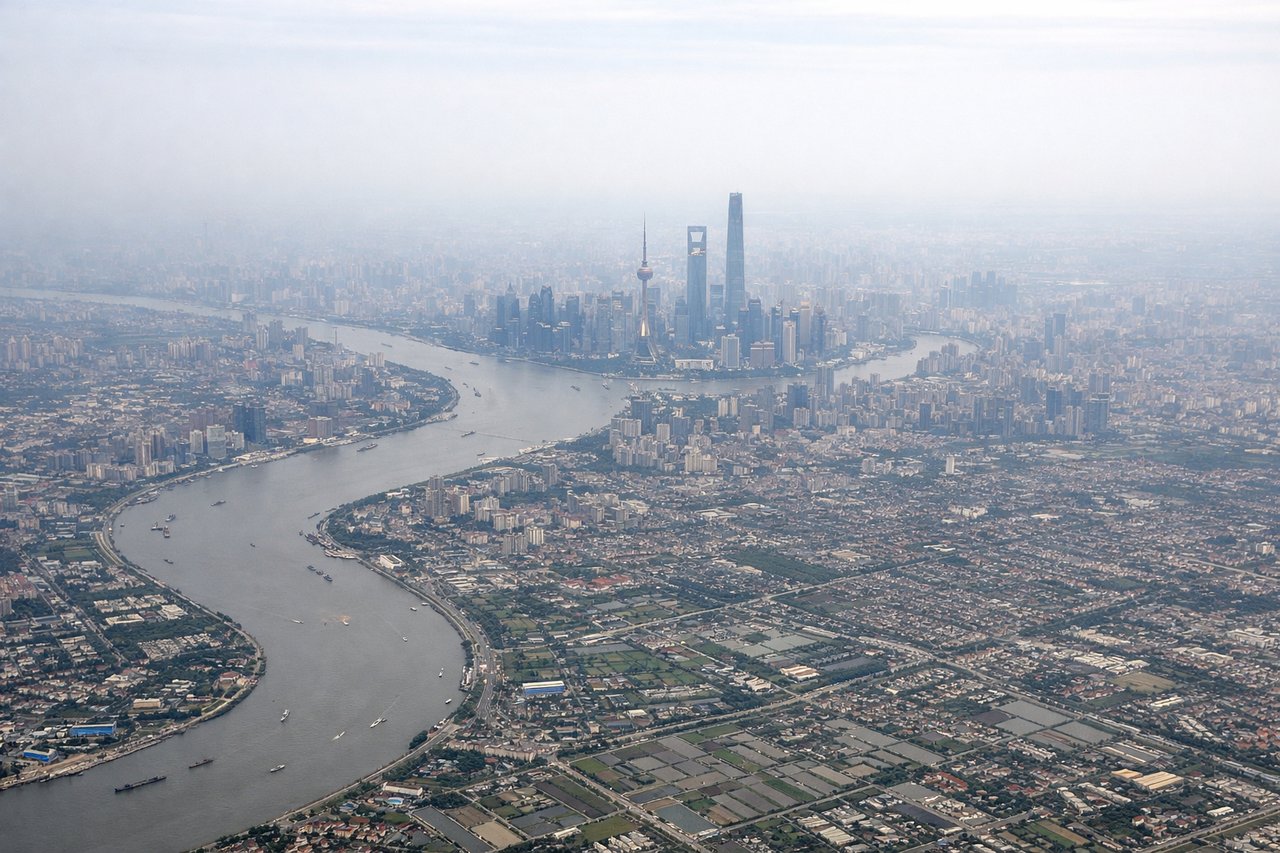
Takeoff from PVG
RIGHTRight-side seats offer views of the Yangtze River estuary and Shanghai's urban sprawl as you climb out westward. The river's massive delta system and the contrast between water and developed land are striking from altitude.
Landing at LIN
LEFTLeft-side seats provide excellent views during descent into Milan. You'll see the Alps rising dramatically to the north and west, and the Po River valley's agricultural grid spreading across the Lombardy plain—a striking contrast of mountains and flatland.
Landmarks on this routeAll landmarks →
Will your flight be in sunlight?
Pick a date and time in the Sun Map to watch the sun move across your whole flight.
About This Route
Which side of the plane should I sit on flying from Shanghai Pudong International (PVG) to Linate (LIN)?
Sit on the Left side of the plane for the best views on flights from Shanghai to Milan. While takeoff offers good Shanghai delta views on the right, the landing approach into Milan on the left provides more dramatic and visually distinctive scenery—the Alps are a major highlight of this route. Left-side seats capture the most impressive natural feature of the entire flight.
What can I see during takeoff from Shanghai Pudong International in Shanghai?
During takeoff from Shanghai Pudong International (PVG), sit on the Right side for the best views. Right-side seats offer views of the Yangtze River estuary and Shanghai's urban sprawl as you climb out westward. The river's massive delta system and the contrast between water and developed land are striking from altitude. Notable sights include: Yangtze River estuary, Hangzhou Bay to the south, Shanghai urban grid, East China Sea coastline.
What can I see when landing at Linate in Milan?
When landing at Linate (LIN), sit on the Left side for the best views. Left-side seats provide excellent views during descent into Milan. You'll see the Alps rising dramatically to the north and west, and the Po River valley's agricultural grid spreading across the Lombardy plain—a striking contrast of mountains and flatland. Notable sights include: Alps (Monte Rosa and surrounding peaks), Po River valley, Lombardy agricultural plains, Lake Como (if visible on clearer days).
How long is the flight from Shanghai to Milan?
The flight from Shanghai Pudong International (PVG) to Linate (LIN) takes about 11 hours 30 minutes. The shortest flight path between them is 5,668 miles (9,123 km); winds and air traffic control usually add a few percent.
What does the Shanghai to Milan flight path pass over?
The flight path crosses central Asia, passing over the Tian Shan mountains (visible on the right during the central portion), the Taklamakan Desert (vast tan expanse), the Pamir Plateau, Hindu Kush range, and eventually the Caspian Sea region. Over Europe, you'll cross the Ural Mountains, then the vast Eastern European Plain before reaching the Alps. The Caspian Sea is particularly striking if visible—a massive inland body of water appearing as a dark blue-gray mass against surrounding steppes. The transition from Asian highlands to European plains is gradual but noticeable around the Ural region.