The right side wins overall because the Miami arrival view of Biscayne Bay, South Beach, and PortMiami is one of the most visually striking urban coastal approaches in North America. The Shanghai departure on the left is excellent, but the right side also catches the Pacific coast of Japan during the transpacific leg and the Gulf of Mexico coastline on descent into Florida, giving it a slight edge across the full flight.
Flown PVG to MIA? Did we get it right?
Flight Path
Shanghai to Miami is 8,241 miles (13,262 km), a flight of about 16 hours.
The route typically tracks northeast over the East China Sea and the Japanese archipelago (Kyushu, Honshu visible below), then crosses the North Pacific at high latitudes near the Aleutian Island chain, followed by the Canadian Rockies and the Great Plains of the central United States, the Gulf of Mexico coastline of Louisiana and Florida, and finally the Florida Peninsula on descent into Miami
Great circle distance and headings ›


Phase by phase
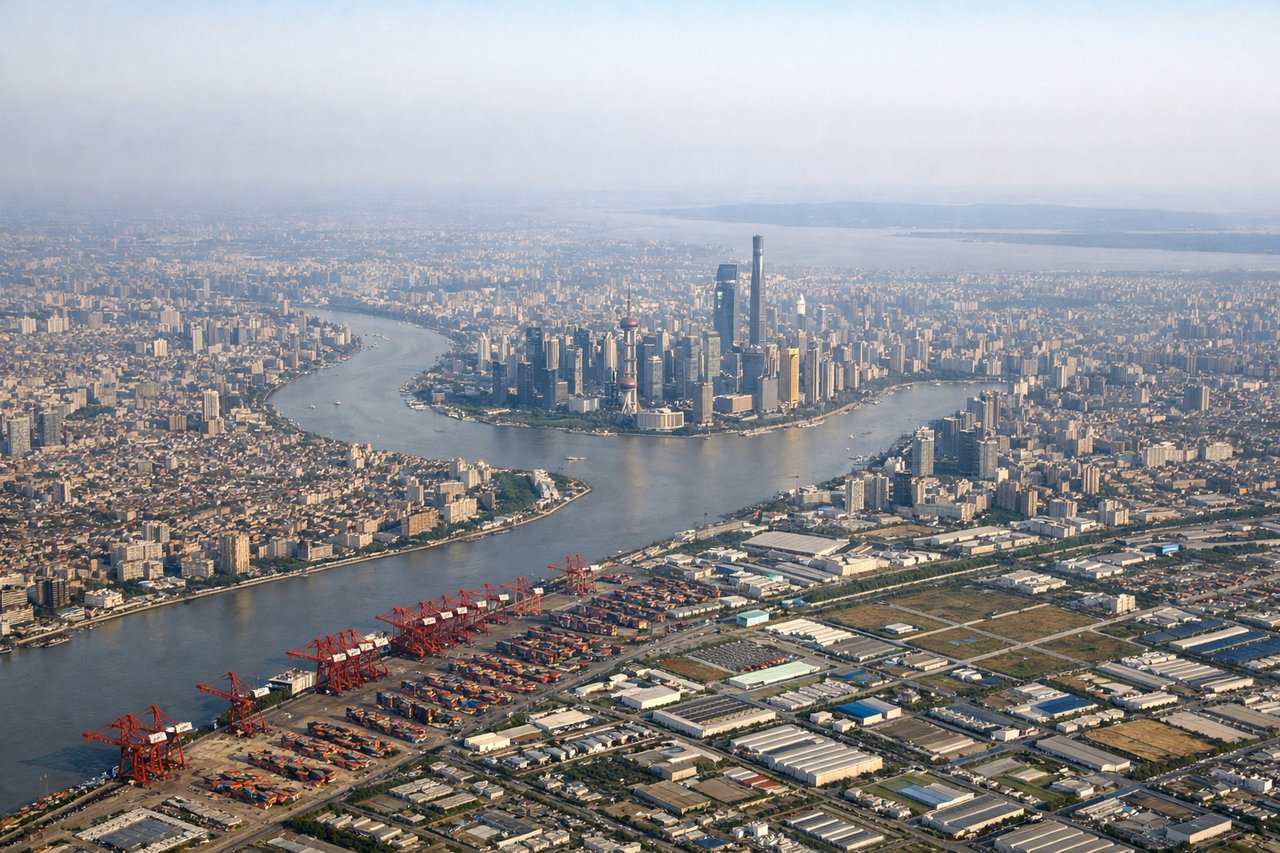
Takeoff from PVG
LEFTPVG's primary departure runways (34L/34R) head roughly northward, meaning a left-seat passenger faces west toward central Shanghai. You get a clear view of the Huangpu River snaking through the city, the Pudong skyline with the Oriental Pearl Tower and Shanghai Tower, and the dense urban grid of Puxi across the river.
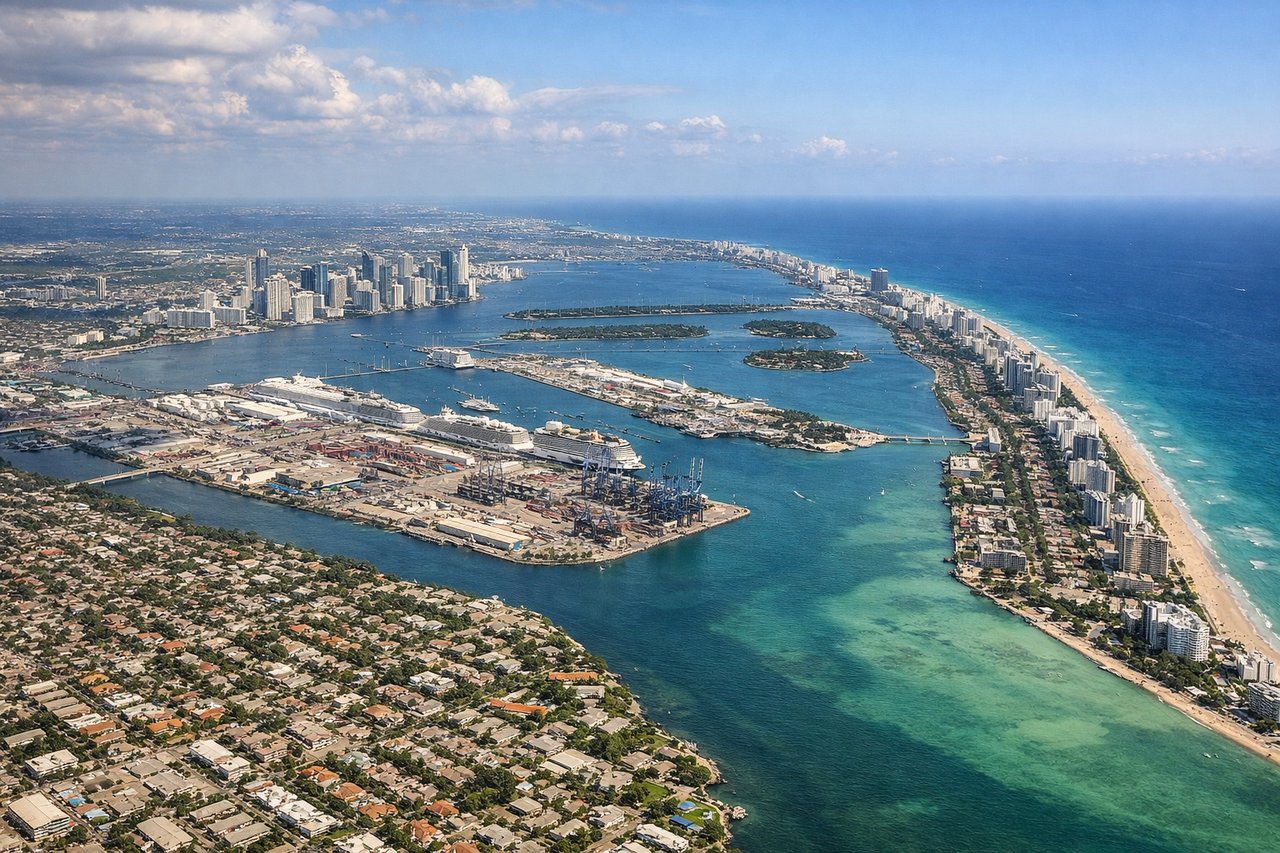
Landing at MIA
RIGHTMIA's primary arrival runways (08R/08L) bring aircraft in from the west heading east, so right-side passengers face south toward Biscayne Bay, the Miami Beach barrier island, and the Atlantic. You see the turquoise shallow waters of the bay, the Art Deco grid of South Beach, and the Port of Miami with cruise ships clearly visible.
Will your flight be in sunlight?
Pick a date and time in the Sun Map to watch the sun move across your whole flight.
About This Route
Which side of the plane should I sit on flying from Shanghai Pudong International (PVG) to Miami International (MIA)?
Sit on the Right side of the plane for the best views on flights from Shanghai to Miami. The right side wins overall because the Miami arrival view of Biscayne Bay, South Beach, and PortMiami is one of the most visually striking urban coastal approaches in North America. The Shanghai departure on the left is excellent, but the right side also catches the Pacific coast of Japan during the transpacific leg and the Gulf of Mexico coastline on descent into Florida, giving it a slight edge across the full flight.
What can I see during takeoff from Shanghai Pudong International in Shanghai?
During takeoff from Shanghai Pudong International (PVG), sit on the Left side for the best views. PVG's primary departure runways (34L/34R) head roughly northward, meaning a left-seat passenger faces west toward central Shanghai. You get a clear view of the Huangpu River snaking through the city, the Pudong skyline with the Oriental Pearl Tower and Shanghai Tower, and the dense urban grid of Puxi across the river. Notable sights include: Huangpu River and its bends through central Shanghai, Pudong CBD skyline (Shanghai Tower, Jin Mao, World Financial Center), Puxi historic waterfront (the Bund), Suzhou Creek confluence.
What can I see when landing at Miami International in Miami?
When landing at Miami International (MIA), sit on the Right side for the best views. MIA's primary arrival runways (08R/08L) bring aircraft in from the west heading east, so right-side passengers face south toward Biscayne Bay, the Miami Beach barrier island, and the Atlantic. You see the turquoise shallow waters of the bay, the Art Deco grid of South Beach, and the Port of Miami with cruise ships clearly visible. Notable sights include: Biscayne Bay turquoise shallows, Miami Beach barrier island and South Beach grid, Port of Miami (PortMiami) with cruise terminals, Virginia Key and Key Biscayne.
How long is the flight from Shanghai to Miami?
The flight from Shanghai Pudong International (PVG) to Miami International (MIA) takes about 16 hours. The shortest flight path between them is 8,241 miles (13,262 km); winds and air traffic control usually add a few percent.
What does the Shanghai to Miami flight path pass over?
The route typically tracks northeast over the East China Sea and the Japanese archipelago (Kyushu, Honshu visible below), then crosses the North Pacific at high latitudes near the Aleutian Island chain, followed by the Canadian Rockies and the Great Plains of the central United States, the Gulf of Mexico coastline of Louisiana and Florida, and finally the Florida Peninsula on descent into Miami