While the takeoff favors the left, the landing view from the right is more dramatic and geographically significant. The approach to Haneda with Tokyo Bay and Mount Fuji visible is a once-in-a-flight highlight that outweighs the coastal departure scenery.
Flown PWM to HND? Did we get it right?
Flight Path
Portland to Tokyo is 6,647 miles (10,698 km), a flight of about 14 hours.
The flight path crosses the North Pacific, passing north of the Hawaiian Islands (not visible—too far south of typical routing), then approaching Japan from the east over the Pacific. The most notable midpoint feature is the transition from open ocean to the Japanese archipelago's eastern coastline. Depending on exact routing, you may see the Izu Islands or Izu Peninsula as the aircraft begins descent toward Tokyo Bay. The approach corridor typically follows the Pacific coast before turning inland toward Haneda.
Great circle distance and headings ›

Phase by phase
Takeoff from PWM
LEFTLeft-side seats offer views of Casco Bay and the Atlantic coastline as the aircraft climbs northeast out of Portland. You'll see the rocky Maine coast, islands, and open ocean—the most visually distinctive features in the departure corridor.
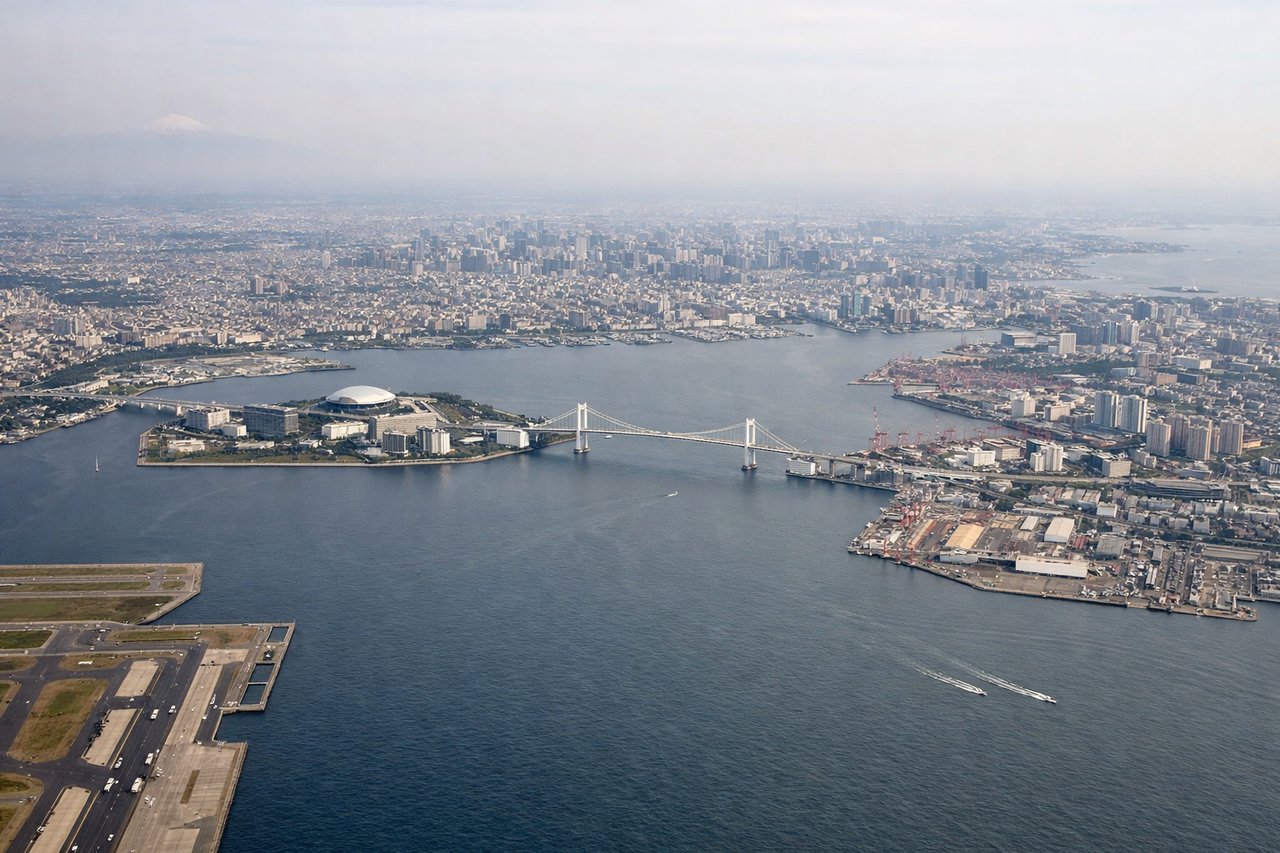
Landing at HND
RIGHTRight-side seats provide excellent views during the approach to Haneda. You'll see Tokyo Bay, the Kanto Plain's urban sprawl, and Mount Fuji (weather permitting) on the western horizon as you descend toward the airport on the bay's eastern edge.
Will your flight be in sunlight?
Pick a date and time in the Sun Map to watch the sun move across your whole flight.
About This Route
Which side of the plane should I sit on flying from Portland International Jetport (PWM) to Tokyo International (HND)?
Sit on the Right side of the plane for the best views on flights from Portland to Tokyo. While the takeoff favors the left, the landing view from the right is more dramatic and geographically significant. The approach to Haneda with Tokyo Bay and Mount Fuji visible is a once-in-a-flight highlight that outweighs the coastal departure scenery.
What can I see during takeoff from Portland International Jetport in Portland?
During takeoff from Portland International Jetport (PWM), sit on the Left side for the best views. Left-side seats offer views of Casco Bay and the Atlantic coastline as the aircraft climbs northeast out of Portland. You'll see the rocky Maine coast, islands, and open ocean—the most visually distinctive features in the departure corridor. Notable sights include: Casco Bay (with its scattered islands), Atlantic Ocean, Cape Elizabeth lighthouse area, Sebago Lake (visible further inland to the northwest).
What can I see when landing at Tokyo International in Tokyo?
When landing at Tokyo International (HND), sit on the Right side for the best views. Right-side seats provide excellent views during the approach to Haneda. You'll see Tokyo Bay, the Kanto Plain's urban sprawl, and Mount Fuji (weather permitting) on the western horizon as you descend toward the airport on the bay's eastern edge. Notable sights include: Tokyo Bay, Mount Fuji (western horizon), Kanto Plain urban grid, Haneda Airport runways and reclaimed land.
How long is the flight from Portland to Tokyo?
The flight from Portland International Jetport (PWM) to Tokyo International (HND) takes about 14 hours. The shortest flight path between them is 6,647 miles (10,698 km); winds and air traffic control usually add a few percent.
What does the Portland to Tokyo flight path pass over?
The flight path crosses the North Pacific, passing north of the Hawaiian Islands (not visible—too far south of typical routing), then approaching Japan from the east over the Pacific. The most notable midpoint feature is the transition from open ocean to the Japanese archipelago's eastern coastline. Depending on exact routing, you may see the Izu Islands or Izu Peninsula as the aircraft begins descent toward Tokyo Bay. The approach corridor typically follows the Pacific coast before turning inland toward Haneda.