The right side wins overall. The Tokyo Bay and city skyline departure is one of the most visually dramatic urban takeoffs in Asia. Over the Pacific, both sides are equally featureless ocean, but on descent into Maine the left side edges ahead for Casco Bay. Since the Tokyo departure is the flight's most spectacular visual moment and favors the right, that side takes the overall recommendation.
Flown HND to PWM? Did we get it right?
Flight Path
Tokyo to Portland is 6,647 miles (10,698 km), a flight of about 13 hours 30 minutes.
The great circle route arcs northeast over the North Pacific, passing south of the Aleutian Islands chain, crossing the Gulf of Alaska, then tracking over the Canadian Maritime provinces — Nova Scotia and New Brunswick — before descending into Maine. The Aleutian Islands may be faintly visible as dark volcanic outlines in the ocean on clear days. The Canadian Maritimes offer forested coastline and the Bay of Fundy before the final descent.
Great circle distance and headings ›

Phase by phase
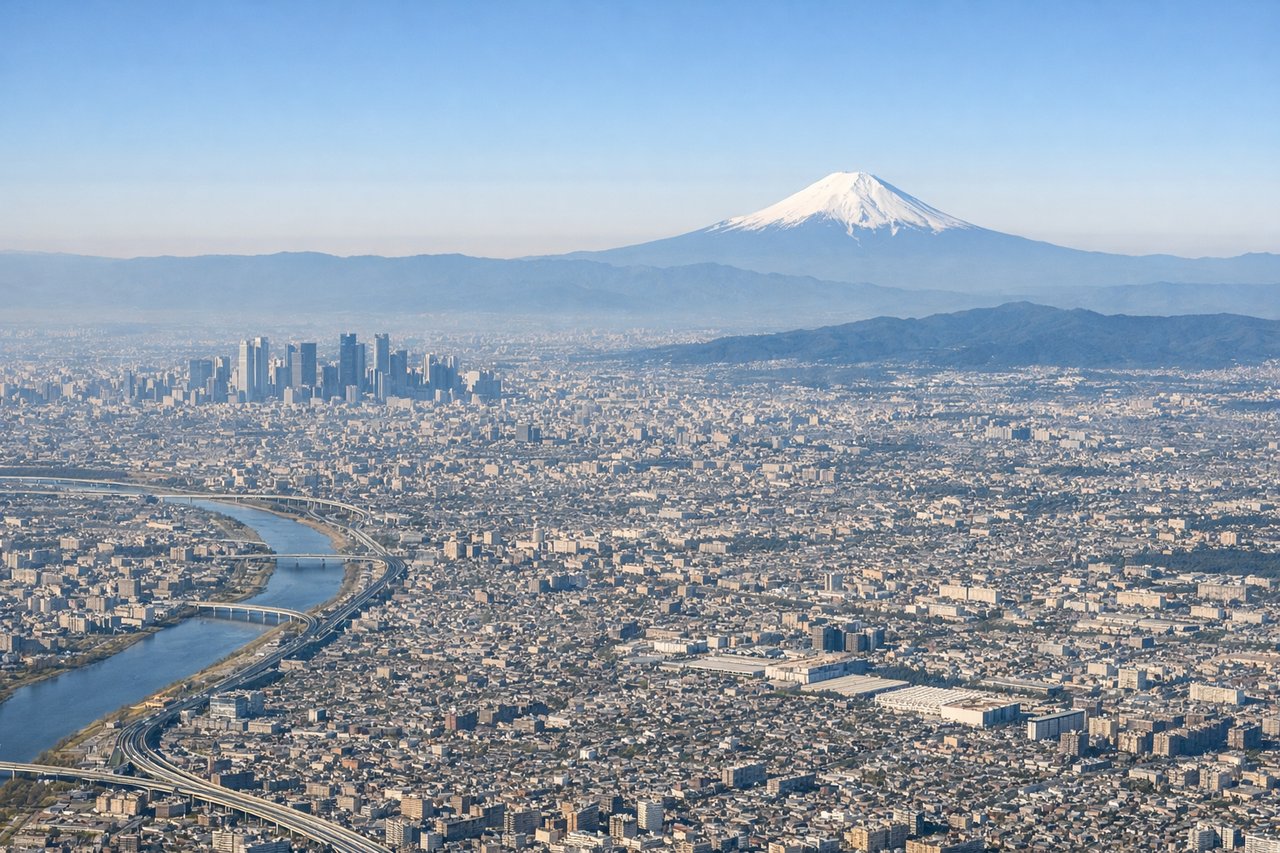
Takeoff from HND
RIGHTHND typically departs northward or eastward over Tokyo Bay. A right-side seat gives you the Tokyo skyline, including the dense urban grid of central Tokyo, Tokyo Tower, and the bay's waterway network. Left side faces the industrial port and less scenic western suburbs.
Landing at PWM
LEFTPWM approaches typically come from the southwest or west, landing on Runway 11. A left-side seat faces south, giving views of Casco Bay's island-dotted coastline, the Portland peninsula, and the Atlantic shoreline. The right side looks inland toward forested Maine hills with less visual interest.
Will your flight be in sunlight?
Pick a date and time in the Sun Map to watch the sun move across your whole flight.
About This Route
Which side of the plane should I sit on flying from Tokyo International (HND) to Portland International Jetport (PWM)?
Sit on the Right side of the plane for the best views on flights from Tokyo to Portland. The right side wins overall. The Tokyo Bay and city skyline departure is one of the most visually dramatic urban takeoffs in Asia. Over the Pacific, both sides are equally featureless ocean, but on descent into Maine the left side edges ahead for Casco Bay. Since the Tokyo departure is the flight's most spectacular visual moment and favors the right, that side takes the overall recommendation.
What can I see during takeoff from Tokyo International in Tokyo?
During takeoff from Tokyo International (HND), sit on the Right side for the best views. HND typically departs northward or eastward over Tokyo Bay. A right-side seat gives you the Tokyo skyline, including the dense urban grid of central Tokyo, Tokyo Tower, and the bay's waterway network. Left side faces the industrial port and less scenic western suburbs. Notable sights include: Tokyo Bay, central Tokyo skyline, Rainbow Bridge and Odaiba waterfront, Mount Fuji on the southwestern horizon (weather permitting).
What can I see when landing at Portland International Jetport in Portland?
When landing at Portland International Jetport (PWM), sit on the Left side for the best views. PWM approaches typically come from the southwest or west, landing on Runway 11. A left-side seat faces south, giving views of Casco Bay's island-dotted coastline, the Portland peninsula, and the Atlantic shoreline. The right side looks inland toward forested Maine hills with less visual interest. Notable sights include: Casco Bay and its islands, Portland peninsula and Old Port district, Atlantic Ocean coastline, Sebago Lake to the northwest.
How long is the flight from Tokyo to Portland?
The flight from Tokyo International (HND) to Portland International Jetport (PWM) takes about 13 hours 30 minutes. The shortest flight path between them is 6,647 miles (10,698 km); winds and air traffic control usually add a few percent.
What does the Tokyo to Portland flight path pass over?
The great circle route arcs northeast over the North Pacific, passing south of the Aleutian Islands chain, crossing the Gulf of Alaska, then tracking over the Canadian Maritime provinces — Nova Scotia and New Brunswick — before descending into Maine. The Aleutian Islands may be faintly visible as dark volcanic outlines in the ocean on clear days. The Canadian Maritimes offer forested coastline and the Bay of Fundy before the final descent.