While takeoff from Recife offers coastal scenery, the cruise phase over 1,100 km of relatively flat, featureless interior terrain dominates the flight. Right side's advantage comes from the distinctive and visually striking approach to Brasilia's modernist urban geometry and Paranoá Lake, which provides memorable scenery during the final descent. Both sides score equally on the monotonous cruise segment, but the landing experience tips the balance to the right.
Flight Path
The flight path crosses the interior plateau of northeastern and central Brazil. Notable features along the route include the Borborema Plateau (visible as elevated terrain in the first 30 minutes), the São Francisco River valley (crossing around the 1-hour mark, though often obscured by haze), and the transition from the semi-arid sertão region to the cerrado savanna. The landscape is predominantly flat to gently rolling, with sparse vegetation and scattered settlements. No major mountain ranges or dramatic terrain features are visible from cruise altitude on this route.
Great circle distance and headings ›Phase by phase
Takeoff from REC
LEFTLeft side (north/northwest) captures Recife's Atlantic coastline and urban harbor during initial climb, with the Capibaribe River estuary and beachfront visible. Right side faces inland immediately over flat suburban terrain with no distinctive features.
Landing at BSB
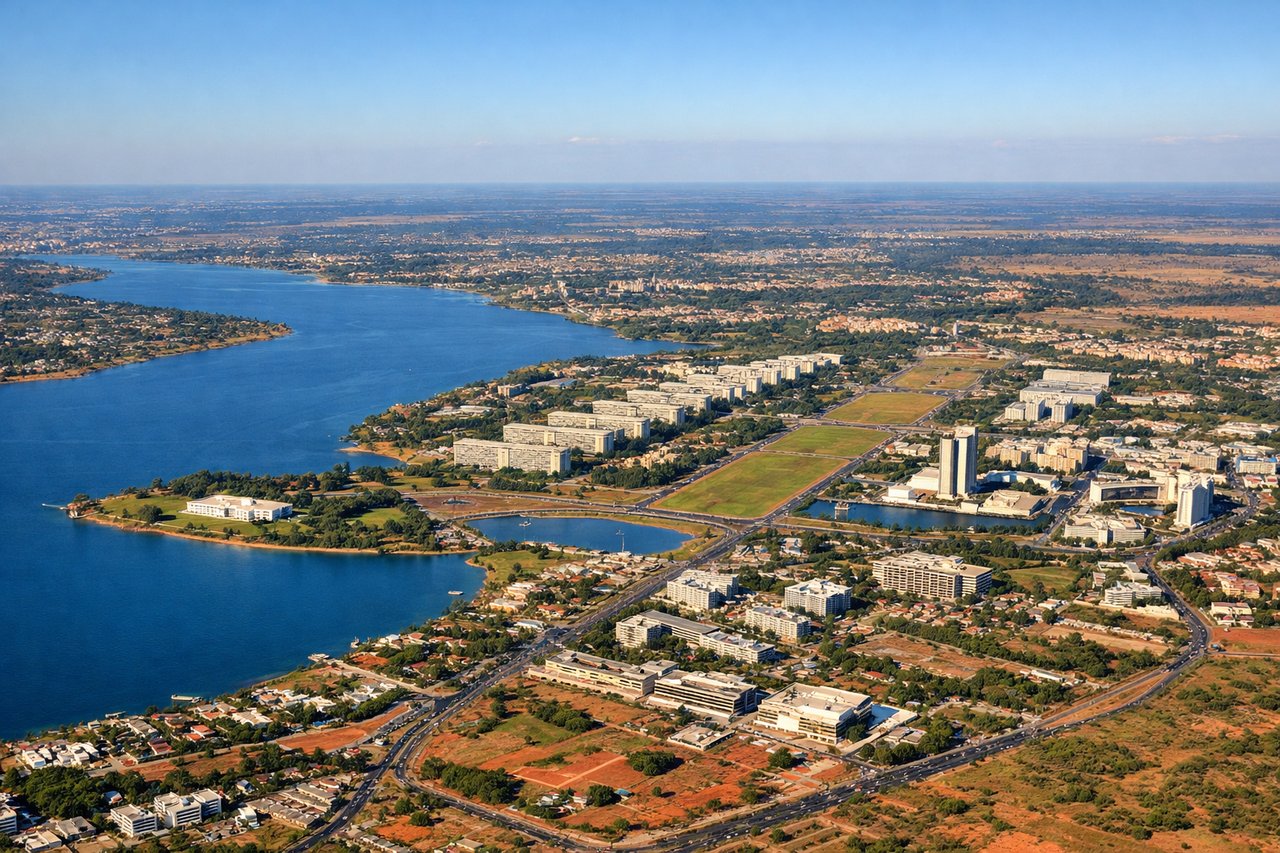
RIGHTRight side (east/southeast) during approach to Brasilia offers views of the city's distinctive modernist urban plan and the surrounding cerrado plateau landscape. Left side faces open plateau with minimal visual interest during descent.
Landmarks on this routeAll landmarks →
Will your flight be in sunlight?
See exactly which side of the plane gets sun and shade at your departure time.
About This Route
Which side of the plane should I sit on flying from Guararapes (REC) to Presidente Juscelino Kubitschek (BSB)?
Sit on the Right side of the plane for the best views on flights from Recife to Brasilia. While takeoff from Recife offers coastal scenery, the cruise phase over 1,100 km of relatively flat, featureless interior terrain dominates the flight. Right side's advantage comes from the distinctive and visually striking approach to Brasilia's modernist urban geometry and Paranoá Lake, which provides memorable scenery during the final descent. Both sides score equally on the monotonous cruise segment, but the landing experience tips the balance to the right.
What can I see during takeoff from Guararapes in Recife?
During takeoff from Guararapes (REC), sit on the Left side for the best views. Left side (north/northwest) captures Recife's Atlantic coastline and urban harbor during initial climb, with the Capibaribe River estuary and beachfront visible. Right side faces inland immediately over flat suburban terrain with no distinctive features. Notable sights include: Recife harbor and port facilities, Capibaribe River estuary, Atlantic coastline, urban beachfront districts.
What can I see when landing at Presidente Juscelino Kubitschek in Brasilia?
When landing at Presidente Juscelino Kubitschek (BSB), sit on the Right side for the best views. Right side (east/southeast) during approach to Brasilia offers views of the city's distinctive modernist urban plan and the surrounding cerrado plateau landscape. Left side faces open plateau with minimal visual interest during descent. Notable sights include: Brasilia's geometric urban layout (Plano Piloto), Paranoá Lake, surrounding cerrado vegetation, modernist government buildings and monuments.
How long is the flight from Recife to Brasilia?
The flight from Guararapes (REC) to Presidente Juscelino Kubitschek (BSB) takes 2h 15m.
What does the Recife to Brasilia flight path pass over?
The flight path crosses the interior plateau of northeastern and central Brazil. Notable features along the route include the Borborema Plateau (visible as elevated terrain in the first 30 minutes), the São Francisco River valley (crossing around the 1-hour mark, though often obscured by haze), and the transition from the semi-arid sertão region to the cerrado savanna. The landscape is predominantly flat to gently rolling, with sparse vegetation and scattered settlements. No major mountain ranges or dramatic terrain features are visible from cruise altitude on this route.