While the takeoff offers Iceland's unique volcanic scenery, the landing approach to Newark provides more visually compelling urban and water features. Right-side seats capture both the dramatic Hudson River and Manhattan skyline during descent, making the overall journey more rewarding for window-seat viewers.
Flown RKV to EWR? Did we get it right?
Flight Path
Reykjavik to Newark is 2,618 miles (4,213 km), a flight of about 5 hours 15 minutes.
The flight path crosses the North Atlantic, passing over the Denmark Strait (between Iceland and Greenland), then over open ocean with no major visible landmarks. Greenland's eastern coast may be visible from altitude on clear days, appearing as a distant, snow-covered landmass on the northern horizon during the mid-flight portion. The majority of the transatlantic crossing offers only ocean and sky.
Great circle distance and headings ›

Phase by phase
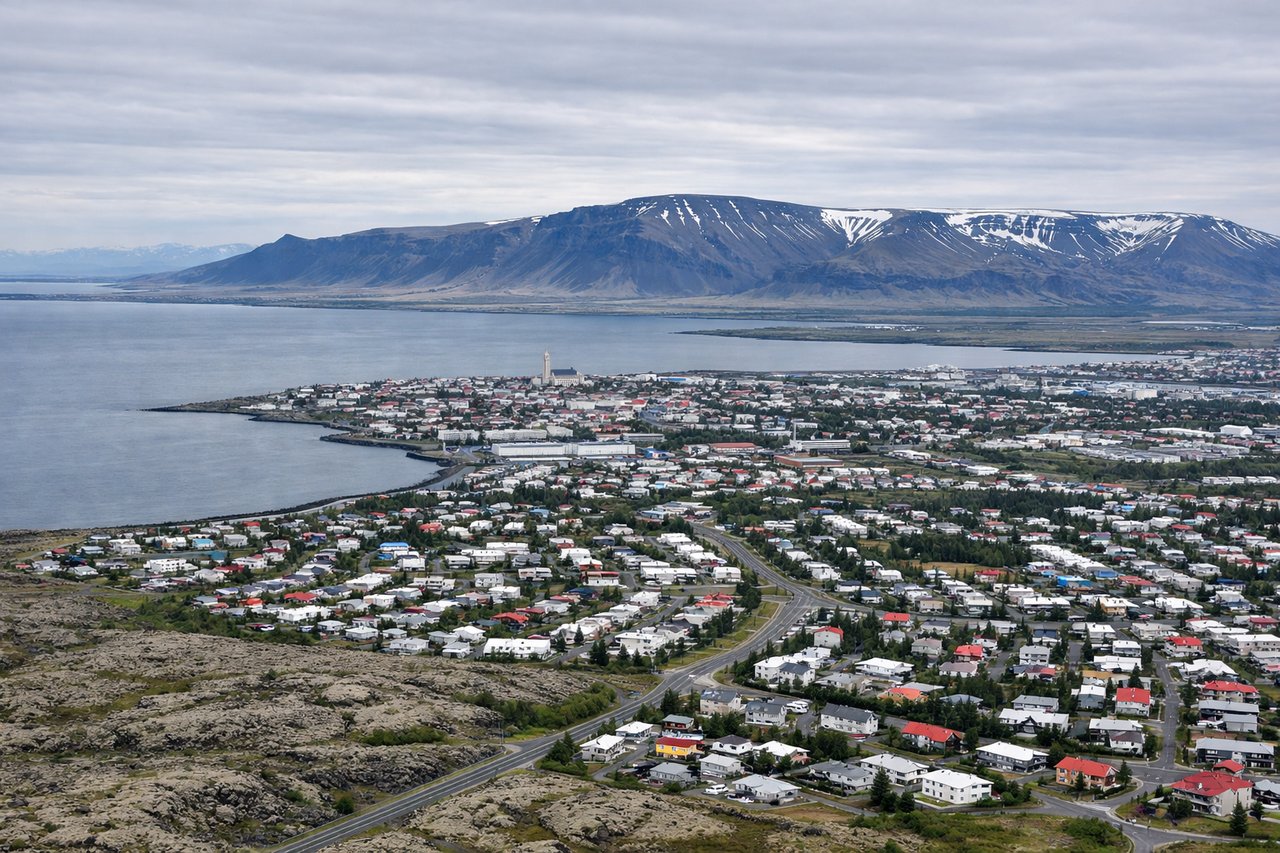
Takeoff from RKV
LEFTLeft-side seats face northwest and north during initial climb, offering views of Iceland's dramatic volcanic landscape and glaciated peaks. Right-side seats face southeast toward open Atlantic, which is visually less distinctive.

Landing at EWR
RIGHTRight-side seats face west and southwest during approach to Newark, providing views of the Hudson River, Manhattan skyline, and New Jersey's urban landscape. Left-side seats face the Atlantic and less distinctive terrain.
Will your flight be in sunlight?
Pick a date and time in the Sun Map to watch the sun move across your whole flight.
About This Route
Which side of the plane should I sit on flying from Reykjavik (RKV) to Newark Liberty International (EWR)?
Sit on the Right side of the plane for the best views on flights from Reykjavik to Newark. While the takeoff offers Iceland's unique volcanic scenery, the landing approach to Newark provides more visually compelling urban and water features. Right-side seats capture both the dramatic Hudson River and Manhattan skyline during descent, making the overall journey more rewarding for window-seat viewers.
What can I see during takeoff from Reykjavik in Reykjavik?
During takeoff from Reykjavik (RKV), sit on the Left side for the best views. Left-side seats face northwest and north during initial climb, offering views of Iceland's dramatic volcanic landscape and glaciated peaks. Right-side seats face southeast toward open Atlantic, which is visually less distinctive. Notable sights include: Reykjanes Peninsula lava fields (dark basalt terrain immediately west), Esja mountain range (north of Reykjavik, snow-capped), Hengill geothermal area (visible steam plumes to northeast).
What can I see when landing at Newark Liberty International in Newark?
When landing at Newark Liberty International (EWR), sit on the Right side for the best views. Right-side seats face west and southwest during approach to Newark, providing views of the Hudson River, Manhattan skyline, and New Jersey's urban landscape. Left-side seats face the Atlantic and less distinctive terrain. Notable sights include: Hudson River (wide waterway separating New Jersey from Manhattan), Manhattan skyline (dense cluster of tall buildings), Newark Bay and surrounding industrial areas, New Jersey Meadowlands (flat, developed landscape).
How long is the flight from Reykjavik to Newark?
The flight from Reykjavik (RKV) to Newark Liberty International (EWR) takes about 5 hours 15 minutes. The shortest flight path between them is 2,618 miles (4,213 km); winds and air traffic control usually add a few percent.
What does the Reykjavik to Newark flight path pass over?
The flight path crosses the North Atlantic, passing over the Denmark Strait (between Iceland and Greenland), then over open ocean with no major visible landmarks. Greenland's eastern coast may be visible from altitude on clear days, appearing as a distant, snow-covered landmass on the northern horizon during the mid-flight portion. The majority of the transatlantic crossing offers only ocean and sky.