While landing favors the right, the dramatic Icelandic departure on the left—with active geothermal features, volcanic terrain, and coastal cliffs—outweighs the more subtle Finnish archipelago views on approach. The takeoff experience is more visually distinctive.
Flown RKV to HEL? Did we get it right?
Flight Path
Reykjavik to Helsinki is 1,497 miles (2,409 km), a flight of about 3 hours 15 minutes.
The flight crosses the Norwegian Sea heading southeast. Around the midpoint (roughly 1.5 hours out), the aircraft passes north of the Faroe Islands (usually not visible due to distance and cloud cover at cruise altitude). The route then crosses open ocean with no significant landmarks visible until approaching the Scandinavian mainland. As the flight nears Finland, the coastline of southern Sweden becomes visible on the horizon, followed by the Stockholm archipelago region (far to the south, not directly on route), and finally the Finnish coast and Gulf of Finland islands during descent.
Great circle distance and headings ›


Phase by phase
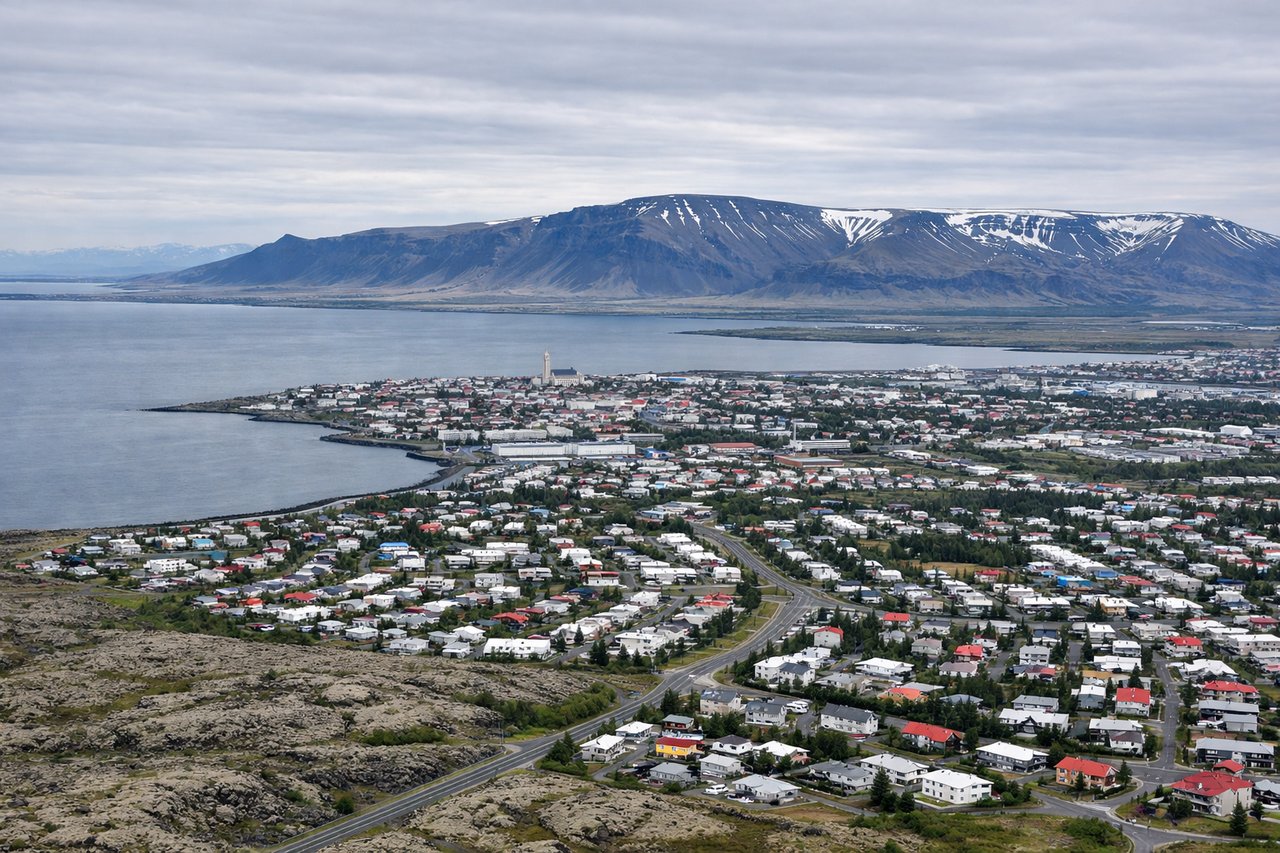
Takeoff from RKV
LEFTRKV typically departs runway 01 (northbound) or 19 (southbound). Left seats face west/northwest during northbound departure, capturing Iceland's western coastline, Faxa Bay, and the dramatic volcanic terrain inland. Right seats see only ocean. For southbound departure on 19, left still has the advantage of seeing the Reykjanes Peninsula's geothermal features and coastal cliffs.
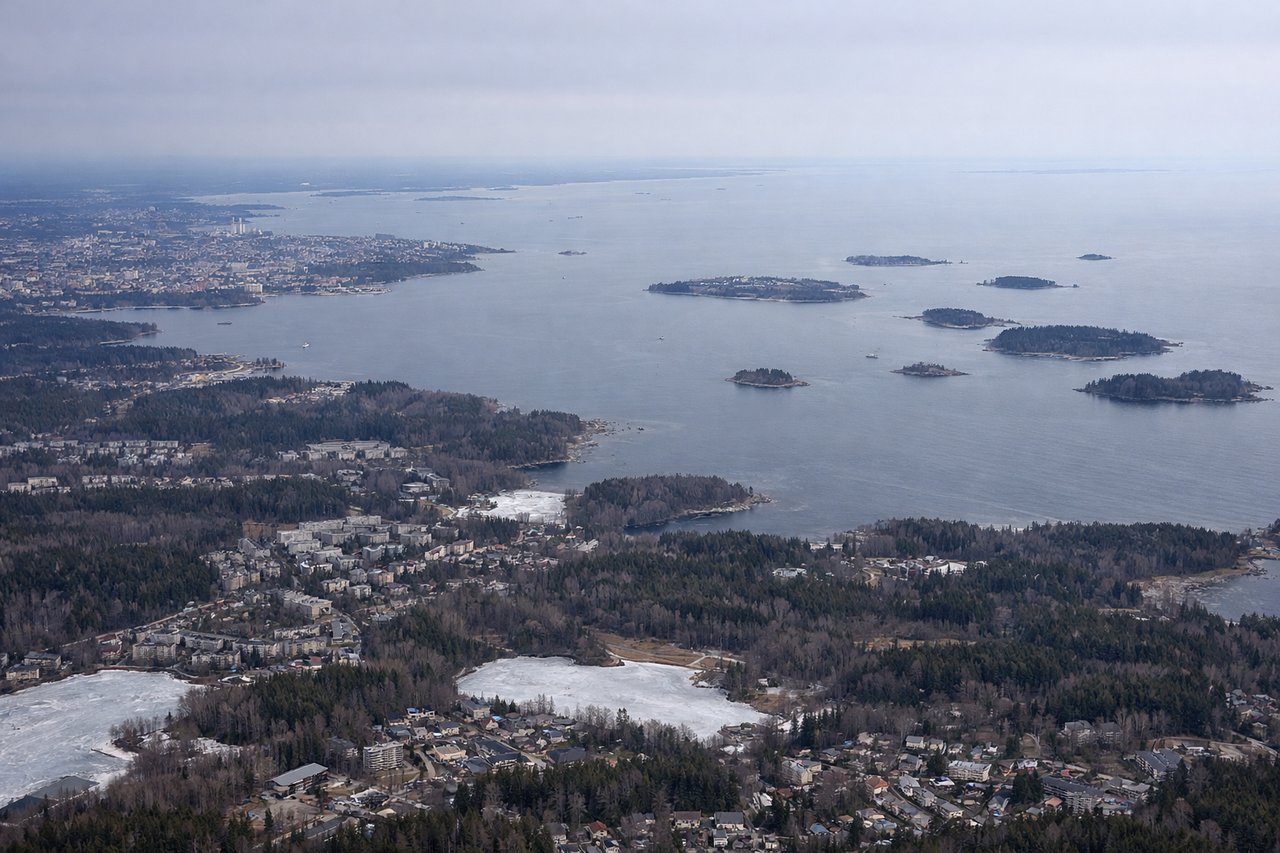
Landing at HEL
RIGHTHEL uses runways 04R/22L and 04L/22R. Approaching from the west (typical for RKV arrivals), aircraft descend on westerly headings. Right seats face north during descent, showing the Finnish archipelago, the Gulf of Finland's northern shore, and the approach path over water and islands. Left seats see only the southern landscape.
Will your flight be in sunlight?
Pick a date and time in the Sun Map to watch the sun move across your whole flight.
About This Route
Which side of the plane should I sit on flying from Reykjavik (RKV) to Helsinki Vantaa (HEL)?
Sit on the Left side of the plane for the best views on flights from Reykjavik to Helsinki. While landing favors the right, the dramatic Icelandic departure on the left—with active geothermal features, volcanic terrain, and coastal cliffs—outweighs the more subtle Finnish archipelago views on approach. The takeoff experience is more visually distinctive.
What can I see during takeoff from Reykjavik in Reykjavik?
During takeoff from Reykjavik (RKV), sit on the Left side for the best views. RKV typically departs runway 01 (northbound) or 19 (southbound). Left seats face west/northwest during northbound departure, capturing Iceland's western coastline, Faxa Bay, and the dramatic volcanic terrain inland. Right seats see only ocean. For southbound departure on 19, left still has the advantage of seeing the Reykjanes Peninsula's geothermal features and coastal cliffs. Notable sights include: Faxa Bay (immediate water body below), Reykjanes Peninsula with its distinctive lava fields and geothermal steam vents, Snæfellsjökull volcano (visible as a distant peak on the horizon to the northwest on clear days), Hengill geothermal area inland.
What can I see when landing at Helsinki Vantaa in Helsinki?
When landing at Helsinki Vantaa (HEL), sit on the Right side for the best views. HEL uses runways 04R/22L and 04L/22R. Approaching from the west (typical for RKV arrivals), aircraft descend on westerly headings. Right seats face north during descent, showing the Finnish archipelago, the Gulf of Finland's northern shore, and the approach path over water and islands. Left seats see only the southern landscape. Notable sights include: Gulf of Finland (primary water body), Sipoonlahti Bay (the inlet immediately north of Helsinki), Helsinki city center and harbor district (visible as urban grid on the southern shore), Nuuksio National Park forests (dark green forested areas to the north).
How long is the flight from Reykjavik to Helsinki?
The flight from Reykjavik (RKV) to Helsinki Vantaa (HEL) takes about 3 hours 15 minutes. The shortest flight path between them is 1,497 miles (2,409 km); winds and air traffic control usually add a few percent.
What does the Reykjavik to Helsinki flight path pass over?
The flight crosses the Norwegian Sea heading southeast. Around the midpoint (roughly 1.5 hours out), the aircraft passes north of the Faroe Islands (usually not visible due to distance and cloud cover at cruise altitude). The route then crosses open ocean with no significant landmarks visible until approaching the Scandinavian mainland. As the flight nears Finland, the coastline of southern Sweden becomes visible on the horizon, followed by the Stockholm archipelago region (far to the south, not directly on route), and finally the Finnish coast and Gulf of Finland islands during descent.