Reykjavik to Le Tourquet is 1,272 miles (2,048 km), a flight of about 3 hours 10 minutes.
While takeoff offers Iceland's volcanic drama on the left, the landing approach provides sustained views of the English Channel, coastal geography, and the transition from sea to land—more visually varied than the return flight's monotonous North Atlantic crossing.
Flight Path
The flight crosses the North Atlantic at cruise altitude (31,000-35,000 feet). No significant landmarks are visible during the mid-ocean portion. The route passes south of the Faroe Islands and north of the British Isles. As the aircraft approaches continental Europe, the Scottish Highlands and Lake District become visible on the left (port) side around 1 hour before landing. The North Sea is crossed in the final descent phase, with the Frisian Islands and Dutch/German coastline visible briefly before turning toward Le Touquet in northern France.
Great circle distance and headings ›
.jpeg?width=600)

Phase by phase
Takeoff from RKV
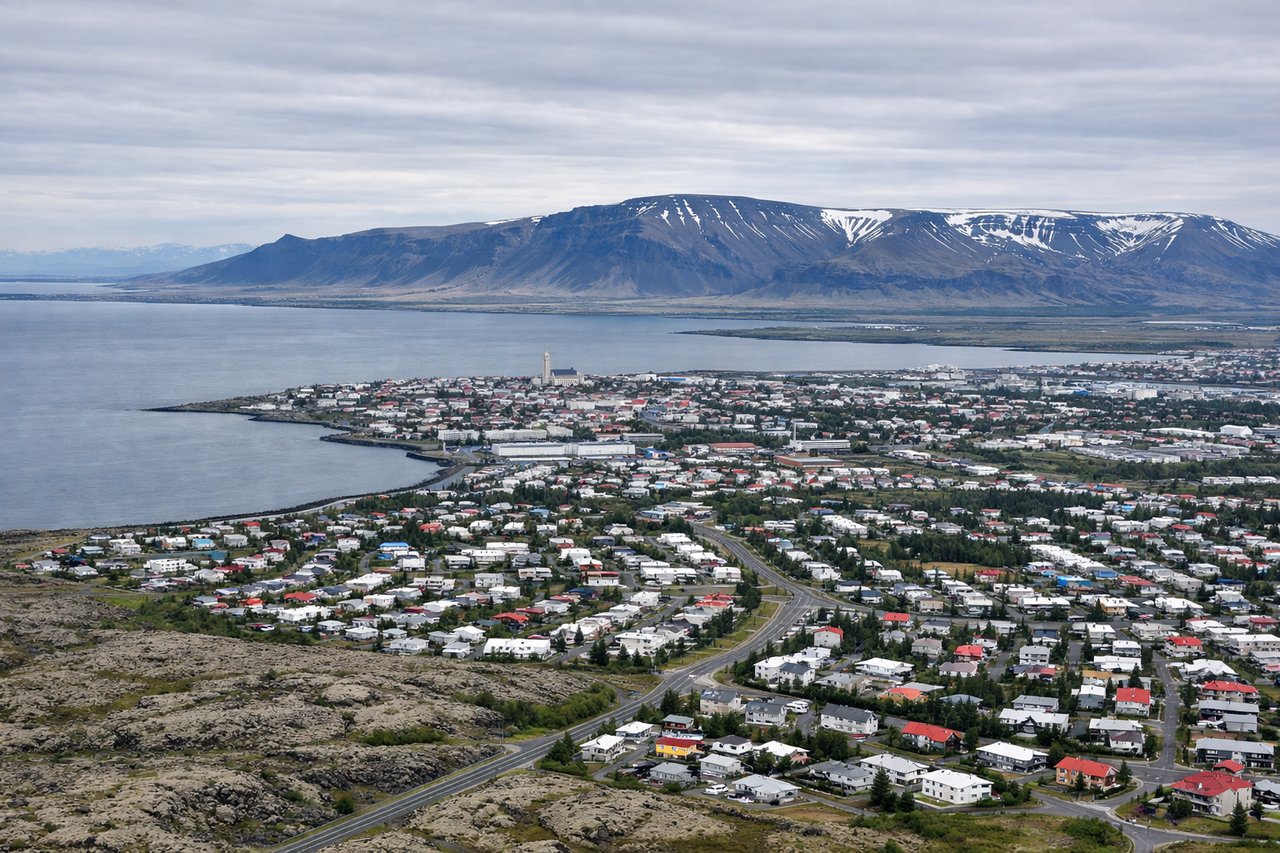
LEFTRKV typically departs runway 01 (northbound) or 02 (northeast). Left seats face west and northwest, capturing Iceland's dramatic volcanic landscape and the Reykjanes Peninsula's lava fields immediately after climb-out. Right seats see the less distinctive inland plateau.
Landing at LTQ
RIGHTLe Touquet's runway 04 (northeast approach) or runway 22 (southwest approach) determine final views. Right seats on a typical northeast approach see the English Channel, the Pas-de-Calais coastline, and the contrast between the French agricultural interior and the coastal cliffs. Left seats see inland farmland only.
Landmarks on this routeAll landmarks →
Will your flight be in sunlight?
Pick a date and time in the Sun Map to watch the sun move across your whole flight.
About This Route
Which side of the plane should I sit on flying from Reykjavik (RKV) to Le Touquet Paris Plage (LTQ)?
Sit on the Right side of the plane for the best views on flights from Reykjavik to Le Tourquet. While takeoff offers Iceland's volcanic drama on the left, the landing approach provides sustained views of the English Channel, coastal geography, and the transition from sea to land—more visually varied than the return flight's monotonous North Atlantic crossing.
What can I see during takeoff from Reykjavik in Reykjavik?
During takeoff from Reykjavik (RKV), sit on the Left side for the best views. RKV typically departs runway 01 (northbound) or 02 (northeast). Left seats face west and northwest, capturing Iceland's dramatic volcanic landscape and the Reykjanes Peninsula's lava fields immediately after climb-out. Right seats see the less distinctive inland plateau. Notable sights include: Reykjanes Peninsula lava fields (dark basalt terrain), Mount Keilir (distinctive cone volcano), Faxaflói Bay to the northwest, Blue Lagoon geothermal area (visible as bright turquoise water body).
What can I see when landing at Le Touquet Paris Plage in Le Tourquet?
When landing at Le Touquet Paris Plage (LTQ), sit on the Right side for the best views. Le Touquet's runway 04 (northeast approach) or runway 22 (southwest approach) determine final views. Right seats on a typical northeast approach see the English Channel, the Pas-de-Calais coastline, and the contrast between the French agricultural interior and the coastal cliffs. Left seats see inland farmland only. Notable sights include: English Channel (Manche) with visible shipping traffic, Pas-de-Calais white chalk cliffs near Cap Gris-Nez, Le Touquet's beach and promenade, agricultural grid pattern of northern France.
How long is the flight from Reykjavik to Le Tourquet?
The flight from Reykjavik (RKV) to Le Touquet Paris Plage (LTQ) takes about 3 hours 10 minutes. The shortest flight path between them is 1,272 miles (2,048 km); winds and air traffic control usually add a few percent.
What does the Reykjavik to Le Tourquet flight path pass over?
The flight crosses the North Atlantic at cruise altitude (31,000-35,000 feet). No significant landmarks are visible during the mid-ocean portion. The route passes south of the Faroe Islands and north of the British Isles. As the aircraft approaches continental Europe, the Scottish Highlands and Lake District become visible on the left (port) side around 1 hour before landing. The North Sea is crossed in the final descent phase, with the Frisian Islands and Dutch/German coastline visible briefly before turning toward Le Touquet in northern France.