San Francisco to Albany is 2,553 miles (4,108 km), a flight of about 5 hours 15 minutes.
Left side wins at both ends of the flight. During the transcontinental cruise, the left side also faces south, giving views of the Sierra Nevada, Great Basin, and Rocky Mountain ranges as distant ridgelines, while the right side looks north into less dramatic terrain over Nevada and Wyoming.
Flight Path
After departing SFO, the route crosses the Sierra Nevada (visible as a major snow-capped range over central California), then the Great Basin desert of Nevada and Utah, the Rocky Mountains over Colorado or Wyoming, the Great Plains of Nebraska and Iowa, the Mississippi River, the Great Lakes region south of Lake Erie, and finally the Appalachian Mountains of Pennsylvania before descending into the Hudson Valley.
Great circle distance and headings ›


.jpg?width=600)

.jpeg?width=600)
Phase by phase
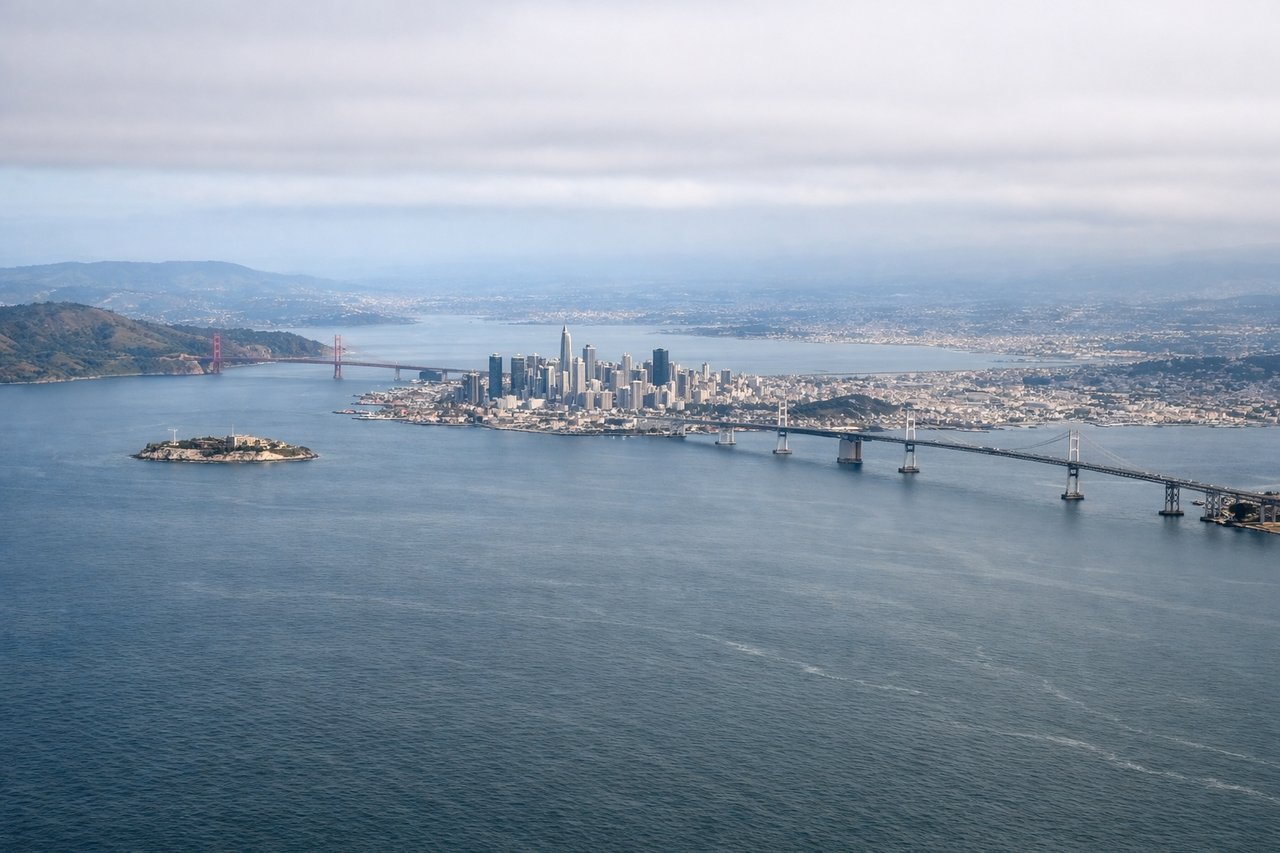
Takeoff from SFO
LEFTSFO's primary departure runways (28L/28R) head westward over the Bay before turning. A left-side seat gives you San Francisco Bay, the city skyline, and the Bay Bridge as the aircraft banks northeast. The Golden Gate and Marin Headlands are also visible to the northwest on the left side during the turn.
Landing at ALB
LEFTAlbany airport sits just west of the Hudson River, and typical approaches from the west or southwest on runway 01/19 put the Hudson River Valley and the Catskill Mountains on the left side. The left seat gives a clear view down the Hudson corridor and the city of Albany along the river's western bank.
Landmarks on this routeAll landmarks →
Will your flight be in sunlight?
Pick a date and time in the Sun Map to watch the sun move across your whole flight.
About This Route
Which side of the plane should I sit on flying from San Francisco International (SFO) to Albany International (ALB)?
Sit on the Left side of the plane for the best views on flights from San Francisco to Albany. Left side wins at both ends of the flight. During the transcontinental cruise, the left side also faces south, giving views of the Sierra Nevada, Great Basin, and Rocky Mountain ranges as distant ridgelines, while the right side looks north into less dramatic terrain over Nevada and Wyoming.
What can I see during takeoff from San Francisco International in San Francisco?
During takeoff from San Francisco International (SFO), sit on the Left side for the best views. SFO's primary departure runways (28L/28R) head westward over the Bay before turning. A left-side seat gives you San Francisco Bay, the city skyline, and the Bay Bridge as the aircraft banks northeast. The Golden Gate and Marin Headlands are also visible to the northwest on the left side during the turn. Notable sights include: San Francisco Bay, Bay Bridge, San Francisco city skyline, Marin Headlands.
What can I see when landing at Albany International in Albany?
When landing at Albany International (ALB), sit on the Left side for the best views. Albany airport sits just west of the Hudson River, and typical approaches from the west or southwest on runway 01/19 put the Hudson River Valley and the Catskill Mountains on the left side. The left seat gives a clear view down the Hudson corridor and the city of Albany along the river's western bank. Notable sights include: Hudson River, Albany city center, Catskill Mountains, Adirondack foothills.
How long is the flight from San Francisco to Albany?
The flight from San Francisco International (SFO) to Albany International (ALB) takes about 5 hours 15 minutes. The shortest flight path between them is 2,553 miles (4,108 km); winds and air traffic control usually add a few percent.
What does the San Francisco to Albany flight path pass over?
After departing SFO, the route crosses the Sierra Nevada (visible as a major snow-capped range over central California), then the Great Basin desert of Nevada and Utah, the Rocky Mountains over Colorado or Wyoming, the Great Plains of Nebraska and Iowa, the Mississippi River, the Great Lakes region south of Lake Erie, and finally the Appalachian Mountains of Pennsylvania before descending into the Hudson Valley.