San Francisco to Anchorage is 2,014 miles (3,242 km), a flight of about 3 hours 45 minutes.
Left side wins both ends of the flight. During the cruise over the Gulf of Alaska and the Alaska coastline, the left side also faces south toward the open Pacific and the rugged coastal mountain ranges of British Columbia and Southeast Alaska, which are more visually interesting than the open ocean view on the right.
Flight Path
The flight tracks northwest over the Pacific Coast, crossing the Oregon and Washington coastlines, then the British Columbia coast with its fjords and the Coast Mountains. Over Southeast Alaska, the St. Elias Mountains and Wrangell-St. Elias ranges are visible, including some of the largest non-polar glaciers in the world such as the Malaspina Glacier. The Kenai Peninsula and the outer edge of Cook Inlet mark the final descent into Anchorage.
Great circle distance and headings ›

Phase by phase
Takeoff from SFO
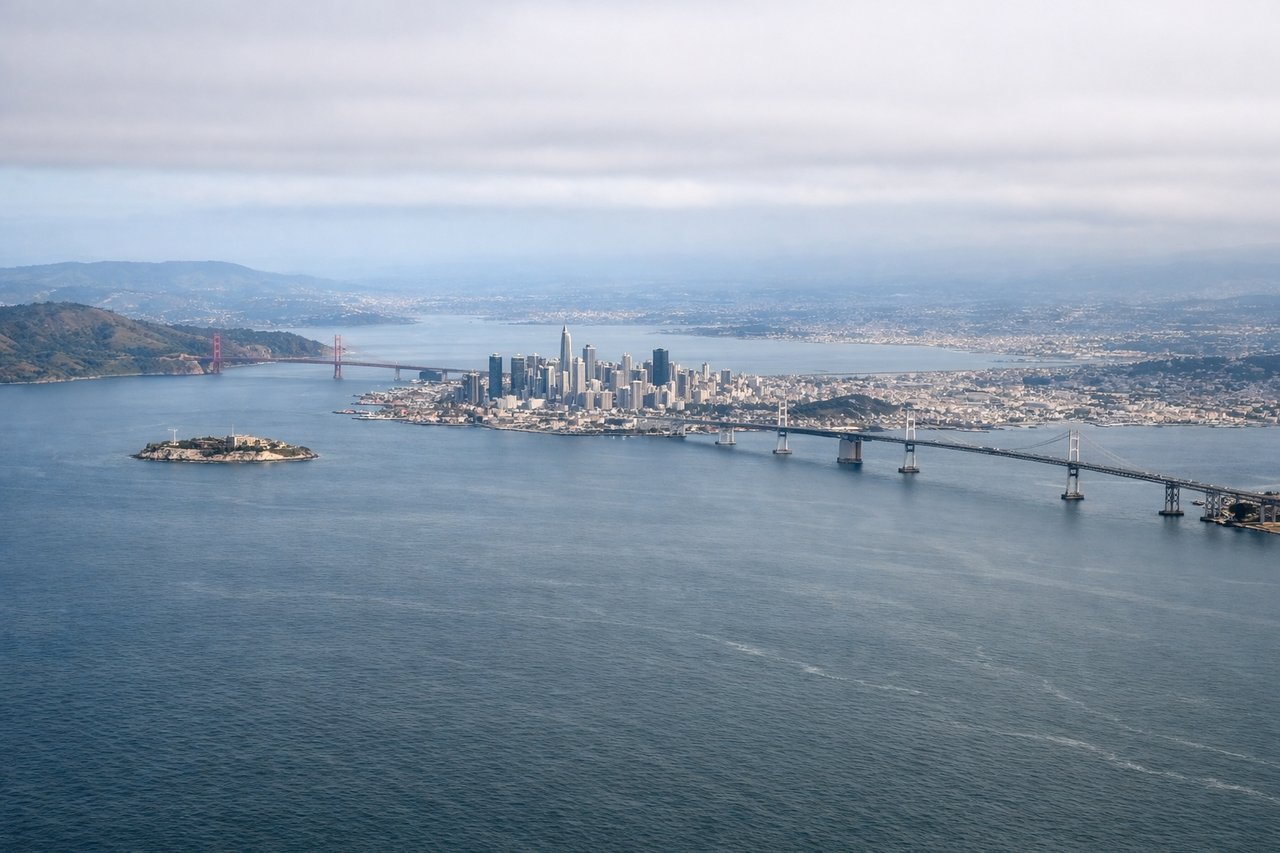
LEFTSFO's primary departures head northwest or north over the Bay. Left side gives you San Francisco city, the Bay Bridge, and the Golden Gate Bridge as you climb out over the water. Right side faces east toward the East Bay hills and Oakland, which is less dramatic.
Landing at EDF
LEFTElmendorf approaches typically come in from the south or east. Left side on approach gives you Cook Inlet, the Alaska Range with Denali visible on clear days to the northwest, and the Chugach Mountains framing Anchorage. Right side faces east toward the Chugach range but misses the dramatic inlet and city layout.
Landmarks on this routeAll landmarks →
Will your flight be in sunlight?
Pick a date and time in the Sun Map to watch the sun move across your whole flight.
About This Route
Which side of the plane should I sit on flying from San Francisco International (SFO) to Elmendorf Afb (EDF)?
Sit on the Left side of the plane for the best views on flights from San Francisco to Anchorage. Left side wins both ends of the flight. During the cruise over the Gulf of Alaska and the Alaska coastline, the left side also faces south toward the open Pacific and the rugged coastal mountain ranges of British Columbia and Southeast Alaska, which are more visually interesting than the open ocean view on the right.
What can I see during takeoff from San Francisco International in San Francisco?
During takeoff from San Francisco International (SFO), sit on the Left side for the best views. SFO's primary departures head northwest or north over the Bay. Left side gives you San Francisco city, the Bay Bridge, and the Golden Gate Bridge as you climb out over the water. Right side faces east toward the East Bay hills and Oakland, which is less dramatic. Notable sights include: Golden Gate Bridge, San Francisco downtown skyline, Marin Headlands, Angel Island.
What can I see when landing at Elmendorf Afb in Anchorage?
When landing at Elmendorf Afb (EDF), sit on the Left side for the best views. Elmendorf approaches typically come in from the south or east. Left side on approach gives you Cook Inlet, the Alaska Range with Denali visible on clear days to the northwest, and the Chugach Mountains framing Anchorage. Right side faces east toward the Chugach range but misses the dramatic inlet and city layout. Notable sights include: Cook Inlet, Chugach Mountains, Knik Arm, Anchorage city grid.
How long is the flight from San Francisco to Anchorage?
The flight from San Francisco International (SFO) to Elmendorf Afb (EDF) takes about 3 hours 45 minutes. The shortest flight path between them is 2,014 miles (3,242 km); winds and air traffic control usually add a few percent.
What does the San Francisco to Anchorage flight path pass over?
The flight tracks northwest over the Pacific Coast, crossing the Oregon and Washington coastlines, then the British Columbia coast with its fjords and the Coast Mountains. Over Southeast Alaska, the St. Elias Mountains and Wrangell-St. Elias ranges are visible, including some of the largest non-polar glaciers in the world such as the Malaspina Glacier. The Kenai Peninsula and the outer edge of Cook Inlet mark the final descent into Anchorage.