The departure scenery from SFO is more visually distinctive and iconic than the landing approach into São Paulo. The Golden Gate Bridge, Bay, and Marin Headlands offer unmatched visual drama during climb-out, while the landing approach is primarily urban sprawl with less dramatic natural features.
Flown SFO to GRU? Did we get it right?
Flight Path
San Francisco to Sao Paulo is 6,479 miles (10,427 km), a flight of about 11 hours.
The flight crosses the continental United States over the Rocky Mountains (visible from altitude as a series of north-south trending ridges), then passes over the Gulf of Mexico as a vast blue expanse, and finally approaches South America over the Caribbean and northern coast of Venezuela and Colombia before turning southeast toward Brazil. The Amazon Basin appears as an enormous expanse of dense green forest canopy. As the flight approaches São Paulo, the Brazilian plateau terrain transitions from rainforest to agricultural lands and then to the urbanized São Paulo metropolitan region.
Great circle distance and headings ›


Phase by phase
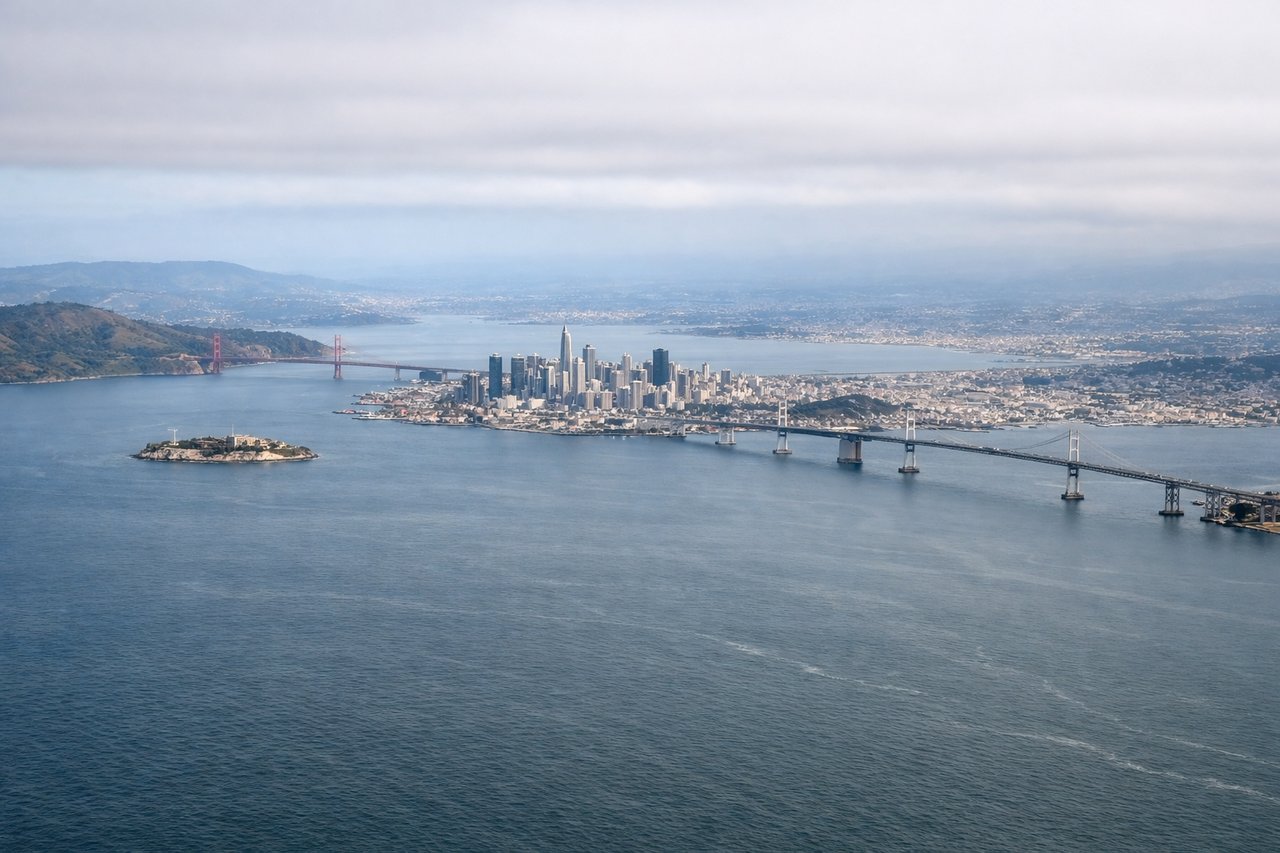
Takeoff from SFO
LEFTLeft-side seats offer views of the San Francisco Bay, Golden Gate Bridge, and the Marin Headlands during the northwesterly departure climb. Right side faces inland toward the East Bay hills with less dramatic scenery.
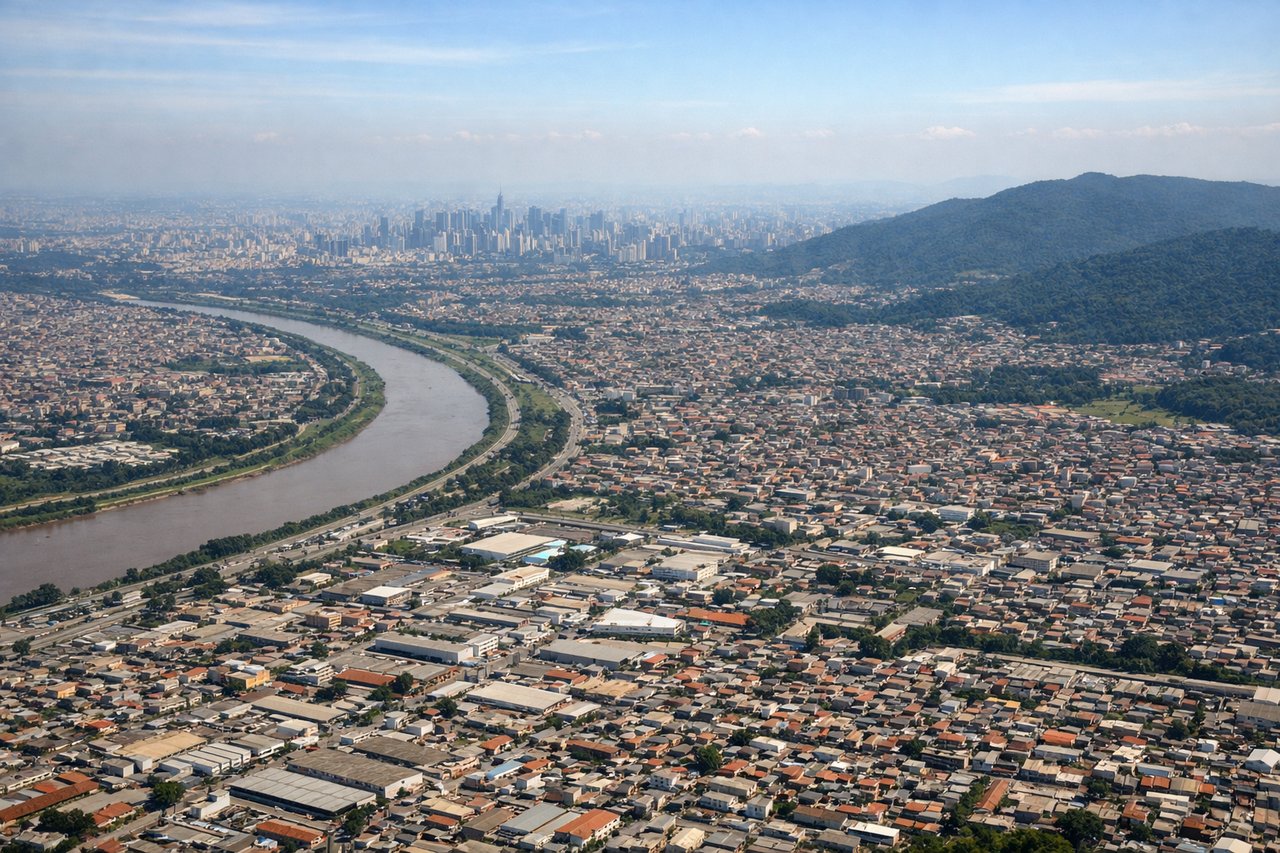
Landing at GRU
RIGHTRight-side seats provide views of the Paraíba River valley, the Serra da Cantareira mountains, and the approach into the São Paulo metropolitan area. The descent path typically brings the right side into view of the surrounding plateau terrain.
Will your flight be in sunlight?
Pick a date and time in the Sun Map to watch the sun move across your whole flight.
About This Route
Which side of the plane should I sit on flying from San Francisco International (SFO) to Guarulhos (GRU)?
Sit on the Left side of the plane for the best views on flights from San Francisco to Sao Paulo. The departure scenery from SFO is more visually distinctive and iconic than the landing approach into São Paulo. The Golden Gate Bridge, Bay, and Marin Headlands offer unmatched visual drama during climb-out, while the landing approach is primarily urban sprawl with less dramatic natural features.
What can I see during takeoff from San Francisco International in San Francisco?
During takeoff from San Francisco International (SFO), sit on the Left side for the best views. Left-side seats offer views of the San Francisco Bay, Golden Gate Bridge, and the Marin Headlands during the northwesterly departure climb. Right side faces inland toward the East Bay hills with less dramatic scenery. Notable sights include: San Francisco Bay, Golden Gate Bridge, Marin Headlands, Pacific Ocean coastline.
What can I see when landing at Guarulhos in Sao Paulo?
When landing at Guarulhos (GRU), sit on the Right side for the best views. Right-side seats provide views of the Paraíba River valley, the Serra da Cantareira mountains, and the approach into the São Paulo metropolitan area. The descent path typically brings the right side into view of the surrounding plateau terrain. Notable sights include: Serra da Cantareira mountains, Paraíba River valley, São Paulo urban sprawl, Guarulhos plateau.
How long is the flight from San Francisco to Sao Paulo?
The flight from San Francisco International (SFO) to Guarulhos (GRU) takes about 11 hours. The shortest flight path between them is 6,479 miles (10,427 km); winds and air traffic control usually add a few percent.
What does the San Francisco to Sao Paulo flight path pass over?
The flight crosses the continental United States over the Rocky Mountains (visible from altitude as a series of north-south trending ridges), then passes over the Gulf of Mexico as a vast blue expanse, and finally approaches South America over the Caribbean and northern coast of Venezuela and Colombia before turning southeast toward Brazil. The Amazon Basin appears as an enormous expanse of dense green forest canopy. As the flight approaches São Paulo, the Brazilian plateau terrain transitions from rainforest to agricultural lands and then to the urbanized São Paulo metropolitan region.