San Francisco to Midland is 1,207 miles (1,943 km), a flight of about 2 hours 55 minutes.
Left side wins both ends of the flight. Departing SFO you get San Francisco Bay and the city, and arriving MAF you get the Midland urban area and Permian Basin oil fields. The mid-flight view over the Sierra Nevada and Mojave also favors the left/south side for mountain terrain.
Flight Path
After departing SFO the route crosses the San Joaquin Valley, then the southern Sierra Nevada range near Fresno. It then passes over the Mojave Desert in southern California, crosses into Arizona over the Sonoran Desert, and enters New Mexico before reaching the flat Permian Basin of west Texas. The Sierra Nevada crossing offers the most dramatic scenery mid-flight, with rugged granite peaks and ridgelines visible from altitude.
Great circle distance and headings ›


.jpeg?width=600)


.jpg?width=600)
Phase by phase
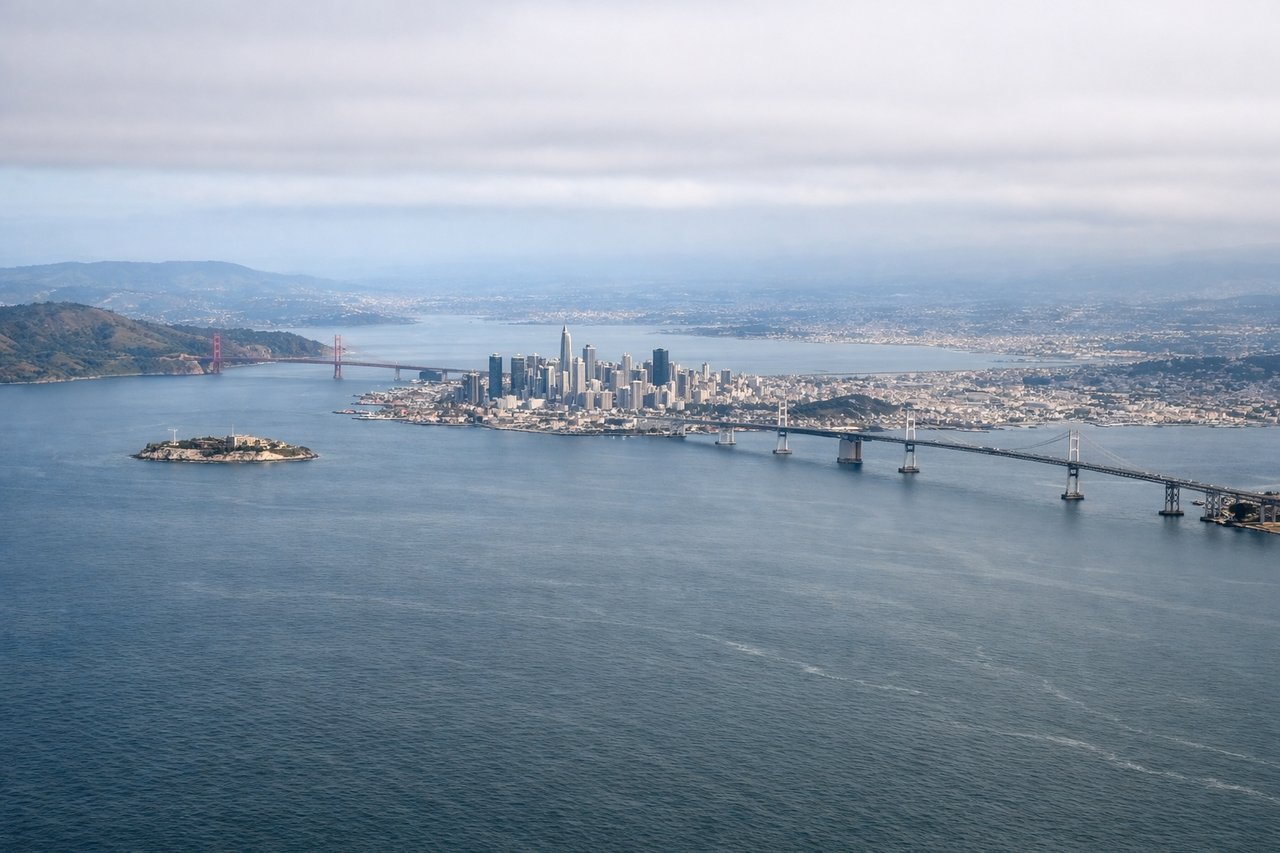
Takeoff from SFO
LEFTSFO's primary departure runways (28L/28R) head west over the bay before turning southeast. A left/south-facing seat captures San Francisco Bay, the city skyline, and the Peninsula as you climb out. Right seats face north toward the East Bay hills with less dramatic scenery.
Landing at MAF
LEFTMAF typically uses runways 16L/16R or 10, with approaches from the north or northwest. A left/south-facing seat on approach gives you the best view of the Permian Basin's flat terrain and the Midland-Odessa urban sprawl. The right side faces open desert scrubland with little of interest.
Landmarks on this routeAll landmarks →
Will your flight be in sunlight?
Pick a date and time in the Sun Map to watch the sun move across your whole flight.
About This Route
Which side of the plane should I sit on flying from San Francisco International (SFO) to Midland International (MAF)?
Sit on the Left side of the plane for the best views on flights from San Francisco to Midland. Left side wins both ends of the flight. Departing SFO you get San Francisco Bay and the city, and arriving MAF you get the Midland urban area and Permian Basin oil fields. The mid-flight view over the Sierra Nevada and Mojave also favors the left/south side for mountain terrain.
What can I see during takeoff from San Francisco International in San Francisco?
During takeoff from San Francisco International (SFO), sit on the Left side for the best views. SFO's primary departure runways (28L/28R) head west over the bay before turning southeast. A left/south-facing seat captures San Francisco Bay, the city skyline, and the Peninsula as you climb out. Right seats face north toward the East Bay hills with less dramatic scenery. Notable sights include: San Francisco Bay, San Francisco city skyline and downtown, San Mateo-Hayward Bridge, Santa Cruz Mountains ridge.
What can I see when landing at Midland International in Midland?
When landing at Midland International (MAF), sit on the Left side for the best views. MAF typically uses runways 16L/16R or 10, with approaches from the north or northwest. A left/south-facing seat on approach gives you the best view of the Permian Basin's flat terrain and the Midland-Odessa urban sprawl. The right side faces open desert scrubland with little of interest. Notable sights include: Midland city grid, Odessa to the southwest, Permian Basin oil field pump jacks and tank farms, flat Chihuahuan Desert scrubland.
How long is the flight from San Francisco to Midland?
The flight from San Francisco International (SFO) to Midland International (MAF) takes about 2 hours 55 minutes. The shortest flight path between them is 1,207 miles (1,943 km); winds and air traffic control usually add a few percent.
What does the San Francisco to Midland flight path pass over?
After departing SFO the route crosses the San Joaquin Valley, then the southern Sierra Nevada range near Fresno. It then passes over the Mojave Desert in southern California, crosses into Arizona over the Sonoran Desert, and enters New Mexico before reaching the flat Permian Basin of west Texas. The Sierra Nevada crossing offers the most dramatic scenery mid-flight, with rugged granite peaks and ridgelines visible from altitude.